On Saturday, November 21, the Liberation collective organizes, in collaboration with Secret Futebol Club, Football Rebels, an exhibition and a party to honor footballers, footballers and fans who fought injustice in the society of their time. The exhibition collects eleven stories of courage and determination, illustrated by Gianluca Costantini and set in different countries and times, expressing the strength of liberation that football expresses.
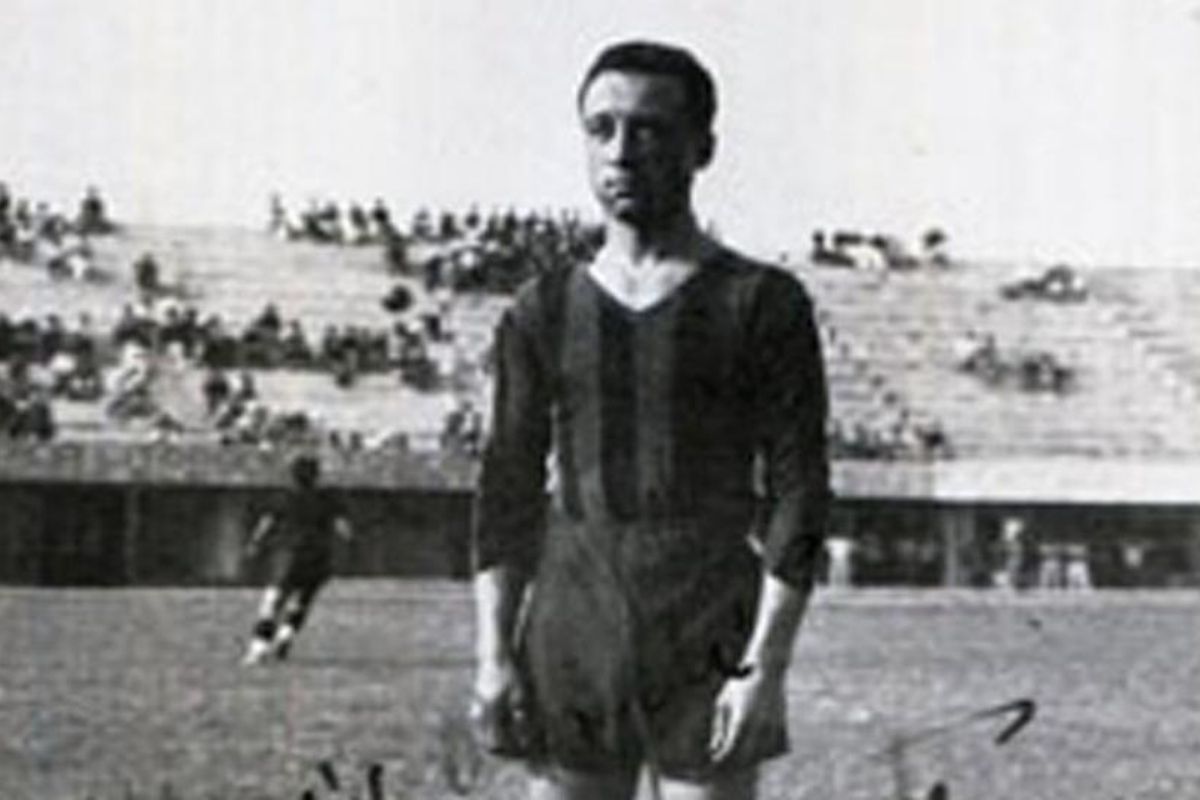
For this reason, we will launch the Curva Bruno Neri, an ultras band for all those who recognize themselves in these values, entitled to Bruno Neri (1910-1944), the footballer of Fiorentina who in 1931 refused to make the compulsory fascist greeting during the inauguration of the new stadium. Neri joined the Resistance and was killed by the Nazis in 1944. In addition to him, other partisan players were: Michele Moretti, among those who executed Mussolini in 1945; Armando Frigo, killed by the Germans in 1943 with the card of Fiorentina in the pocket; the socialist Vittorio Staccione, who died in the concentration camp of Mauthausen-Gusen in 1945; Giuseppe Peruchetti who fought in the Langhe with Raf Vallone, a footballer and then famous actor; Giacomo Losi, flag of Rome and partisan bracket. Similar to them was the story of Rino Della Negra (1923–1944), born in France by Italian parents: a member of the Red Star FC of Jules Rimet, joined the French Resistance and was executed by the Nazis in 1944. The Red Star named him a stadium tribune.
Outside Europe, other players fought against colonialism and dictatorships. Rachid Mekhloufi left the French national team in 1958 and founded the Algerian National Liberation Front, which fought for independence. In South America, Chilean star Carlos Caszely publicly refused to shake hands to dictator Augusto Pinochet and paid his personal choice (the mother was tortured) and football (was the first ever kicker at the World Cup). In Brazil under the dictatorship of the 1980s, the players of the Corinthians of São Paulo, led by Sócrates, self-managed with the Corinthian Democracy; their group of fans Gaviões from Fiel keeps the spirit alive, as when he challenged, in 2022, the supporters of Bolsonaro.
Tribunes are also not neutral. In Hamburg, the supporters of St. Pauli FC kicked out the neo-Nazi groups from the curve and had the club adopt the motto “Kein Fußball den Faschisten” (No football for the fascists). In Egypt, the Ultras Ahlawy, formed in the hard years of the Mubarak regime, in 2011 contributed to the Tahrir Square protests that lowered the regime: for this reason, the police let rival fans in 2012 kill 72 of them.
In football as elsewhere, women always had to fight. In the 1920s, the Dick, Kerr Ladies Football Club became a phenomenon that attracted up to 50,000 spectators: an affront to the Football Association, which marginalized female football until 1971. The star of the team was Lily Parr, an LGBT icon who in 2002 was the only woman in the English Football Hall of Fame. In 2007, Khalida Popal assumed the task of creating the women’s football national of Afghanistan: Taliban and obscurantism forced her to leave the country, and was decisive in saving teammates when the Taliban returned to power in 2021. In the USA, instead, five women’s national team players had to quote their federation to see a male-like wage. Among them, Megan Rapinoe also supported Colin Kaepernich’s protest kneeling during the national anthem.
The last story concerns the idea of football in which we believe and that we want to promote: the antiracist worlds and popular football. The first were born in 1997 as an attempt to involve the ultras in the redefinition of their identity, removing them to the extreme right where many had taken refuge. Popular football is based on the idea that this sport belongs to its fans and not to millionaire companies: they are an example amateur club, like the Paco Rigore of Turin, which promotes inclusiveness and respect for 30 years, or the Sant’Ambroeus of Milan, composed of refugees. These teams are based on anti-fascist and anti-racist statutes.
L’articolo Football of those who rebelled proviene da IlNewyorkese.