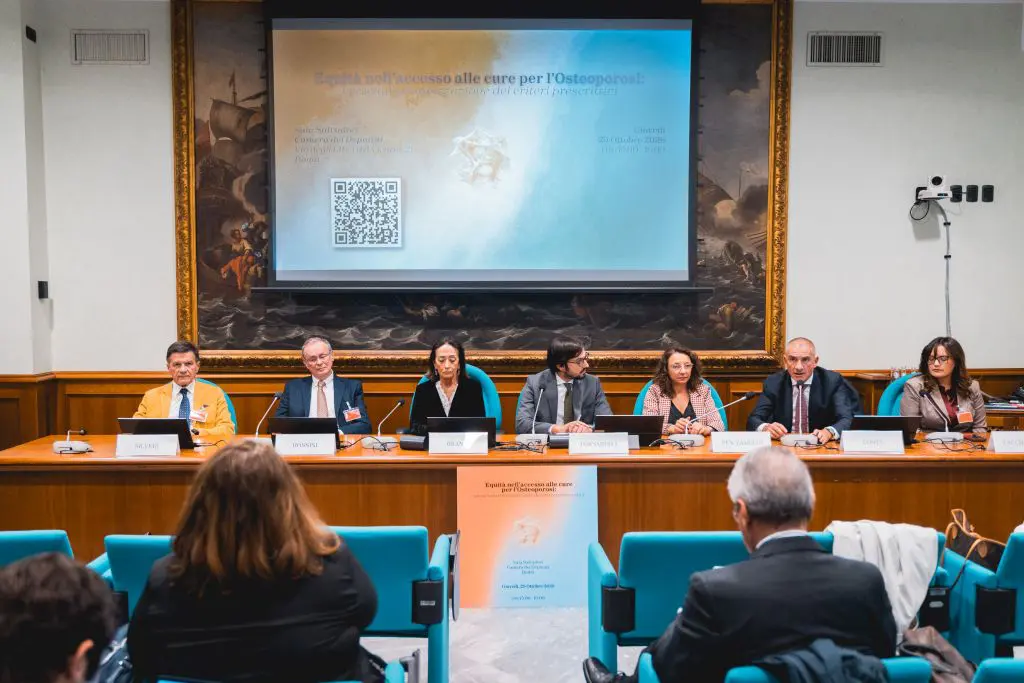
ROMA (ITALPRESS) – Today, at the Sala Salvadori of the Chamber of Deputies, the institutional event “Equity in access to treatment for Osteoporosis: towards harmonization of prescriptive criteria”. The initiative, realized with the non-conditional contribution of Accord Healthcare Italy and EG Italia Gruppo STADA, brought together representatives of the Institutions, clinical experts and members of the leading scientific societies and associations of reference. During the event, the dedicated policy paper has been presented, which gathers proposals to improve the knowledge of the pathology, the assessment of the risk of fracture and the continuity of the pathways. Senator Ylenia Zambi, Secretary of the 10th Commission of the Senate of the Republic and promoter of the intergroup fractures from fragility, recalled the role of the Institutions in promoting greater attention to bone health: “ Osteoporosis and fractures from fragility have significant consequences on people’s health and autonomy. It is important that these needs find space in health planning and that the comparison between institutions, professionals and associations will help to identify concrete answers. In order to ensure timely treatment, it is necessary to increase the knowledge of the pathology between citizens and professionals, in order to strengthen the diagnosis and ensure the patients an appropriate takeover.” Gabriella Facchinetti, First Researcher of the National Clinical Center Governance and Excellence of the Cures of the Higher Institute of Health, recalled the value of the welfare paths: “The prevention of new fractures requires effective links between the management of the acute event, the assessment of bone fragility and the following follow-up. Clear paths and collaboration among professionals can strengthen a grip consistent with the needs of the person.” Professor Maria Luisa Brandi, Member of the Ossea SIOT Fratture Committee and President of the Fratture Observatory from Fragility, emphasised the recognition of the disease: “ osteoporosis can remain invisible for a long time and frailty fracture is not always recognized as a signal requiring a bone health assessment. Strengthening public and institutional awareness is essential to promote early diagnosis and prevent new events.” Maurizio Rossini, Past President SIOMMMS and CEO SIR, highlighted the need to consider the overall profile of the person in therapeutic decisions: “The risk assessment of fracture must integrate clinical history, densitometry and other individual factors. The appropriateness and continuity of care require adequate training paths and a specialized arrangement, also in order to be able to sustain, in the future, an extension of the contribution of general medicine in the prescription of anabolic therapies”. The role of associations and support for adherence were at the heart of the intervention of Ferdinando Silveri, National Vice President FEDIOS: “People and caregiver must be able to count on clear information and accessible references throughout the route. Associations help bring to the attention of the institutions the daily difficulties and can help to identify useful tools to support adherence to therapies.” The Policy Paper proposes addresses aimed at institutions to consolidate knowledge of pathology, make risk assessment more homogeneous, promote appropriate access to treatments and strengthen collaboration between general medicine, specialists and territorial services. The document also considers follow-up, telemedicine and support tools for adherence between elements that can contribute to welfare continuity.
– photo press office Esperia Advocacy –(ITALPRESS).