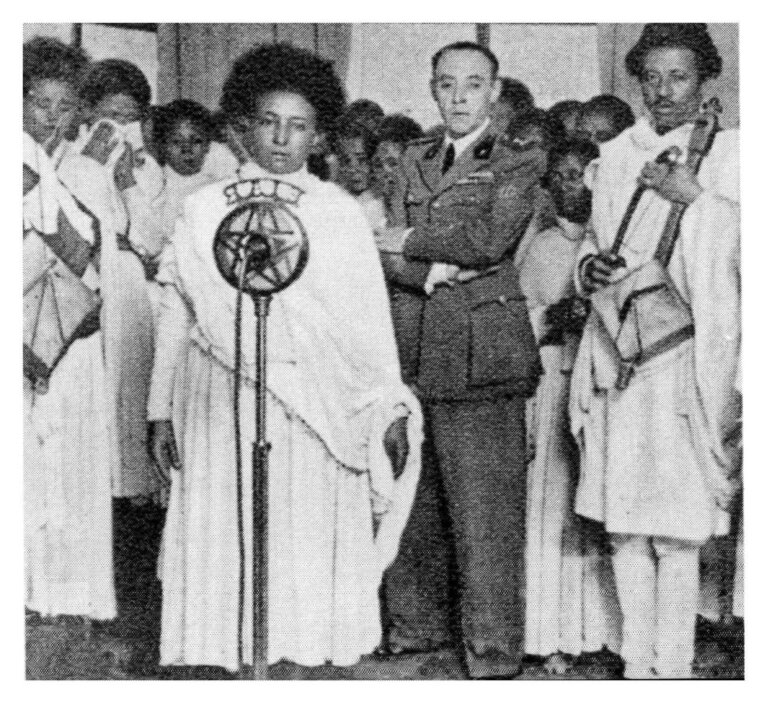
When you think of Italy in the twentieth century it is hard to think of it as a colonial power: nothing to do with the French, Spanish or English domains between Asia and Africa, decidedly more extensive than the small possessions conquered with a remarkable war effort from the Italians in Libya, Ethiopia and Eritrea. But this does not mean that the Kingdom of Italy did not have colonial myriads, and today many historical reconstructions allow us to better understand how the Italian colonialist machine was moving and, acanto her, that propagandist.
The relationship between Italian music and colonialism is the subject of a series of academic studies that have begun to show its centrality. Also for this reason the conference “Music and Italian Colonialism”, scheduled on 17 April 2026 at the Casa Italiana Zerilli-Marimò, cultural center of New York University dedicated to the promotion of Italian culture. The initiative, organized by Isabella Abbonizio, Nicola Cipani and Isabella Livorni, is presented as the first appointment entirely dedicated to this theme and takes place during a whole day, from 10:00 to 18:30, with interventions in English.
The starting point is the music, which was not only a decorative element of colonial experience but an active instrument in the construction and diffusion of the Italian imperial ideology, especially during the expansion in East Africa between the 1920s and 1940s. Recent studies – including those of Abbonizio and Gianpaolo Chiriacò – have highlighted how popular repertoires, theatrical works and cultivated compositions helped to define a colonial imaginary, conveying racialized representations and narratives functional to internal consensus. The conference will analyze these dynamics from multiple angles, including the role of music as a documentation and mediation device in cultural contacts between Italians and local populations.
The program is divided into three main sessions. The first, “Sonic Agency and Colonial Memory in Italian East Africa”, addresses the theme of colonial memory through Ethiopian and Eritrean perspectives, with interventions such as the director Tamara Dawit and researcher Yemane Demissie, who analyze respectively the relationship between music, power and memory and musical practices during the fascist occupation in Ethiopia. The second session focuses on the ethnographic recordings made in the 1930s, including the collections then merged into the “Ethiopiques” record series, today considered among the main sound sources for the study of East African music. The focus is on the tensions related to the restitution and contemporary reinterpretation of materials produced in a colonial context.
The last part of the day is dedicated to the relationship between music, propaganda and narrative construction of the empire. The interventions analyze, among other aspects, the role of musical criticism during fascism, the presence of colonial themes in the musical theatre and the case of the “imperial hymn” never completed by Ildebrando Pizzetti in 1937. The conference is therefore part of the series “Race, Migration, Italy”, promoted by the Italian House in collaboration with the departments of Italian Studies and Music of NYU and the Ragusa Foundation for the Humanities, with the aim of deepening the connections between Italian history, migrations and racial dynamics.
L’articolo The music in colonial Italy, explained at the Casa Italiana Zerilli-Marimò proviene da IlNewyorkese.