ROMA (ITALPRESS) – Research on bioengineered heart valves developed by Antonio D’Amore (Ri.MED Foundation, University of Pittsburgh and University of Palermo) gains a new, decisive international recognition with the award of an R01 grant from the US National Institutes of Health.
The winning idea of the project, entitled “Structural Biomimicry to Improve Engineered Heart Valve Leaflet Function and Remodeling”, lies in the application of structural biomimetic principles for the development of a new generation of heart valves.
The objective is to overcome the intrinsic limits of the current prostheses, developing valve replacements able to integrate perfectly into the organism, to satisfy its mechanical stresses and to promote the correct cellular remodeling after the implant. The financing program, characterized by extremely competitive selection criteria, will be supported in particular by the National Heart, Lung, and Blood Institute (NHLBI) and will guarantee a total economic support of 3.045.679 dollars.
The research activities will lead to the University of Pittsburgh as a beneficiary body, under the direction of D’Amore himself as Principal Investigator. Co-Investigators of the project are Giovanni Ferrari (Columbia University NYC), William Wagner (University of Pittsburgh) and Garret Coyan (Vanderbilt University). Although the grant is formally assigned to the University of Pittsburgh, the project is born from a research path built through an international network of collaborations that involves, in addition to the American atheist, UPMC, ISMETT, Ri.MED Foundation and University of Palermo.
“I wish to express a special thanks to the Ri.MED Foundation, whose support was fundamental to the development of the research line that led to this project. The research path has grown thanks to the complementarity of the skills present between Ri.MED University of Pittsburgh, UPMC, ISMETT and University of Palermo, demonstrating how collaboration between institutions can generate great impact results,” commented Antonio D’Amore.
This project is in fact the natural continuation of the research line that D’Amore has been carrying out successfully for years within the Ri.MED Foundation, and that it has already earned 3 important funding from the European Research Council (ERC), as well as many other awards and awards. Technologically, the efforts of the team will focus on both the structure of innovative processes of robotic production and their preclinical validation.
Automation will faithfully replicate the complex geometric microarchitecture of valve stems, studying the biological mechanisms that regulate the formation of the live fabric. The prosthesis is designed to act as a temporary scaffold: once grafted, it guides the natural regeneration of the patient’s cells and dissolves progressively, leaving in its place an autologous heart tissue, vital and able to adapt over time. The ambition is to contribute to the development of ever more effective and durable valve replacements, able to integrate with the body and adapt over time.
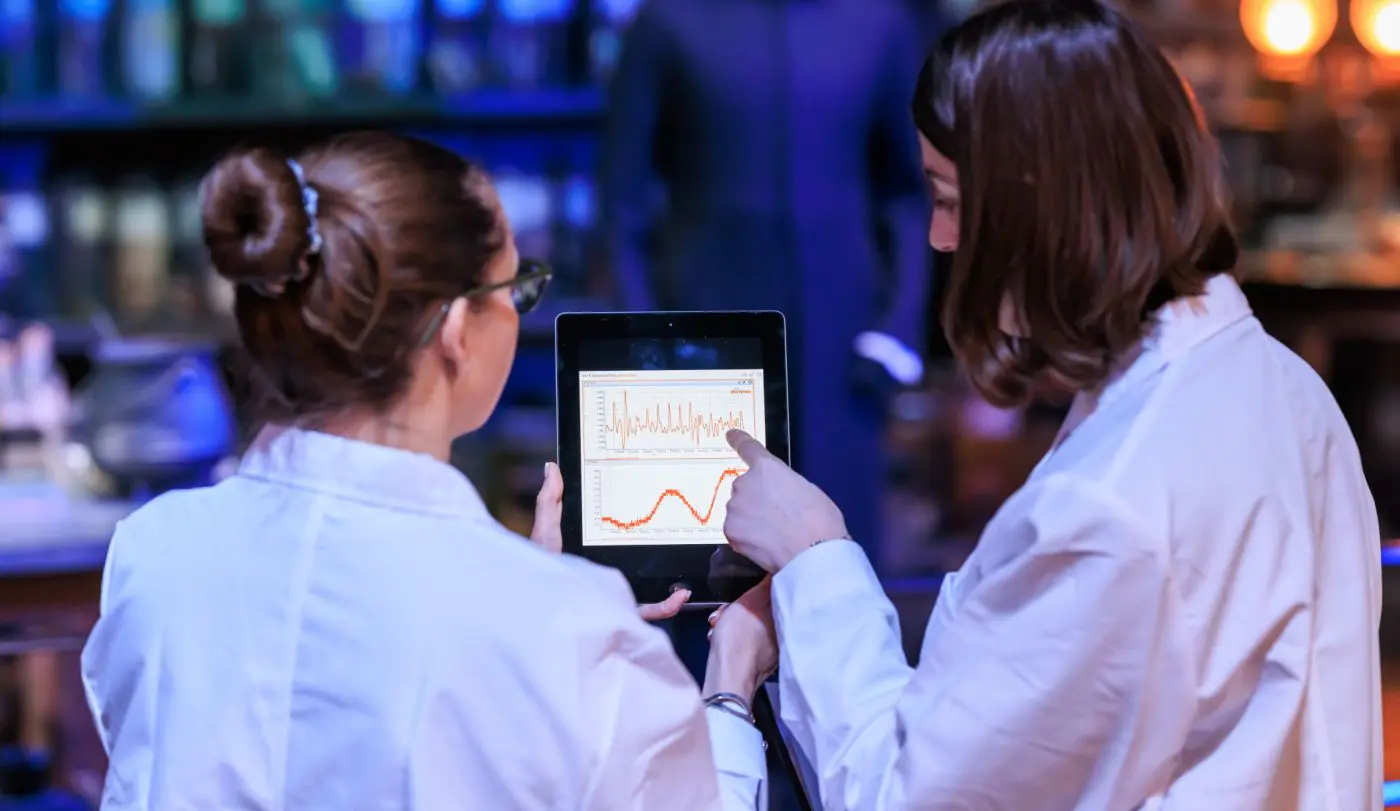
– Photo of repertoire Ipa Agency –
(ITALPRESS).