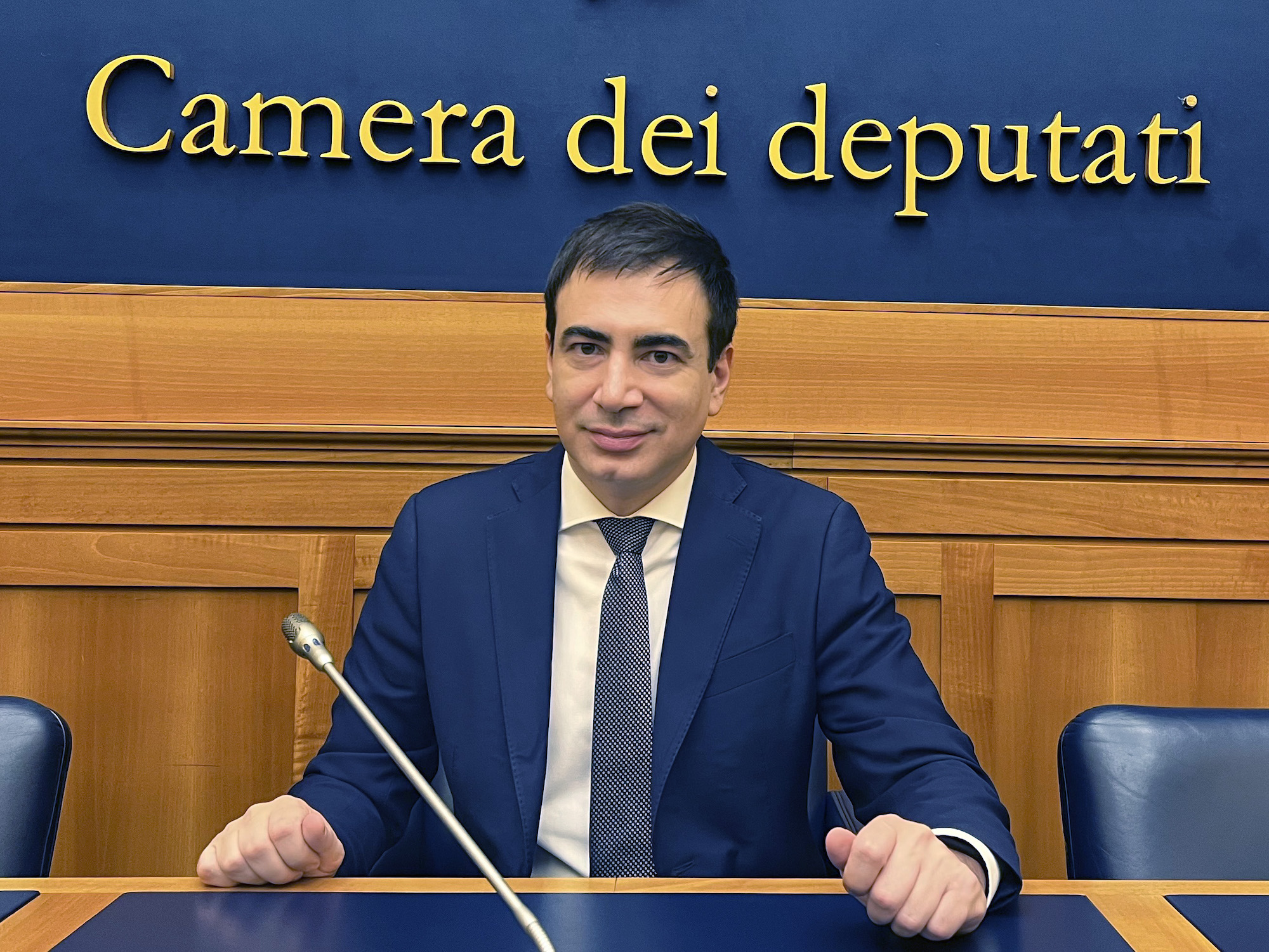
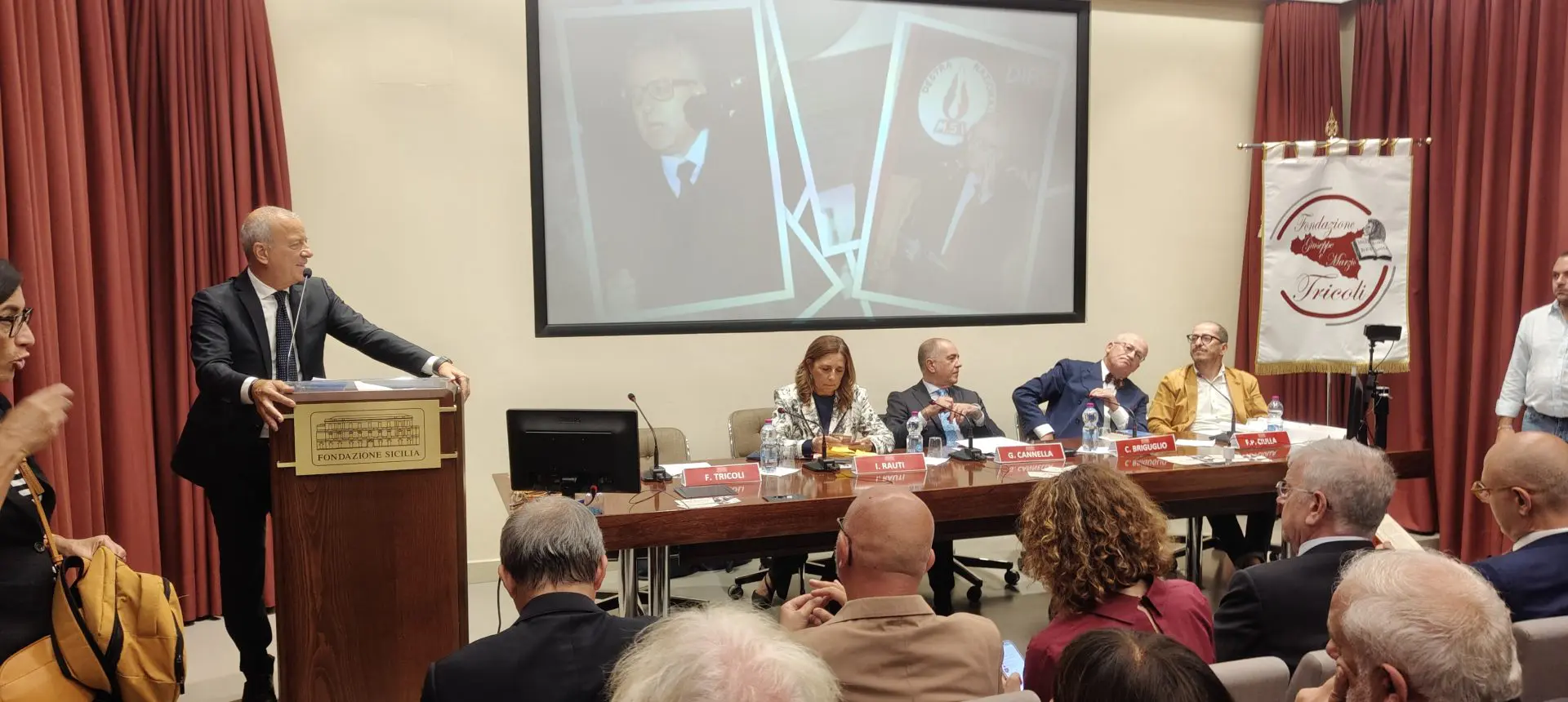
PALERMO (ITALPRESS) – Not only the celebration of a central character in the history of the Italian right of the second twentieth century, but a round trip in what was his thought, battles and inheritance that he would leave to the next generations. In Villa Zito in Palermo was held the conference “Pino Rauti 100 years after birth. The man, the politician, the intellectual and the ideas”: to organize the Giuseppe and Marzio Tricoli Foundation, which involved in the event a series of political and intellectual personalities who knew closely the former representative of the Msi and followed the teaching. The initiative is part of a series of events that, throughout Italy, celebrate the hundred years since its birth. Among the present Isabella Rauti, daughter of Pino and undersecretary of Defense and president of the Centro Studi Pino Rauti: with her, among others, undersecretary of Culture Giampiero Cannella, the deputy of Brothers of Italy Carolina Varchi and Senator Raoul Russo; to moderate the work is Fabio Tricoli, president of the Giuseppe Foundation and Marzio Tricoli.
“In November, the centenary of my father’s birth – says Isabella Rauti – We are organizing a series of events that will go beyond the end of this year, in Rome there will be the presentation to the Chamber of Acts with parliamentary and political speeches, as well as with a documentary exhibition. It is a growing demand for organizing cultural, intellectual and analysis meetings on its figure: Pino Rauti had an adventurous life, almost like a novel, of which few know the traits; we know more about the political rauti, which left many writings and many concentric traces of his thought. These traces are the cultural and political formation, which has always put in the first place in front of also the search for consent, the formation of the ruling class, a habit to the study, the idea that the Msi should be bearer not only of values but of an alternative political model that was a third way beyond the realized socialism, Marxism, communism and the nineteenth century labels of right and left: a social model, community, solidarity, with the present.
The tribute to Pino Rauti, explains Tricoli, is “overy, especially by an institution like the Tricoli Foundation which has in the historical memory and in the memory of the Italian right one of its main objectives. Rauti was a charismatic leader, a man who is still remembered for his ability, cultural thickness, charisma, intellectual strength even before politics to forge entire ruling classes as well as so many young militants: talking about him today is a tribute, but also a way to understand how current his thought was especially regarding the ability to predict migratory phenomena and talk about Europa-nation at a time when there were only Usa and Urppos blocks. There is also the theme of ecologism, which on the right at that time seemed like an heresy: he was a great leader, still today deserves to be remembered. We will do this together with Isabella Rauti and the Pino Rauti Study Centre, who honored us with this initiative: there are many political representatives to remind him and talk about him by telling the personal relationship and the political importance he had in the history of the Msi and in the cultural formation of the ruling classes of the Italian right”. The president of the Tricoli Foundation then dwells on the relationship between Father Giuseppe and Pino Rauti: “They have always been on different positions, if not opposed, within the Msi: the strength of the right-wing thought, however, was precisely this dialectic made of confrontation and confrontation within the congresses, but with a political and cultural thickness that today is hard to see in the congresses and debates of the current parties; all in the end reached a political synthesis that turned into great ideas, which still resist today. Pino Rauti had the great ability to anticipate the issue of migration and Islamization of society: until fifty years ago it was poorly imagined, today it is a reality with which we compare daily with all the falls we know about the plans of security, school and work. My memory is that of a contrast, from which ideas, projects and visions of the world have emerged of a cultural and intellectual thickness today difficult to find in politics”.
In drawing a profile of Pino Rauti, Cinnamon defines it as “a contemporary character: its cultural figure is that of a thinker, an ideology and an intellectual who in past years had already seen the pitfalls of our contemporaneity through the study of ethical and ecological themes and migration flows. In years that seemed far from current problems, he had already identified the aspects on which politics had to question and find solutions: he offered analysis and solutions to problems that do not have a political connotation, but concern the whole country”.
He echoes Varchi, according to which the former Msi exponent “represents a unicum in the Italian political scene: he managed to pass to history not only for actions, but for his ideas. I believe that this is the most important figure of his life and political career, as well as what we really do today: his ideas still pose questions on the true vision of politics. Europe and the Mediterranean were present in its action and in its ideal, today we try to decline them also in Sicily and in Palermo: its battles were the environment and an economy and that put to the center man and not consumption; they are still current battles, to demonstrate that they must be the ideas to move politics and not the contrary. He is still a very contemporary character: what he wrote and the questions he posed on the role of man within society are now more alive than ever. Politics must have the courage to prioritize the vision of everyday issues, ordinary administration, retro-bottega debates, applications: Pino Rauti on this was the master”.
From the ‘rautian’ of the first hour, Russo points out that “I approach a generation in which he launched his challenge to conquer the Msi secretariat after the end of almirantism: for me Rauti arrived at the moment when I entered politics, following an old person but who for us young people had an extremely far-sighted and contemporary vision. He taught us a method: politics is research of change following not necessarily fashions or compromise, but the dream. This can happen through study and political proposition: we are now declining it, it was among the precursors of a thought that allowed the Italian right to go to the government”.