ROMA (ITALPRESS) – Despite the imposition of duties by the US administration, in 2025 the Italian trade exchange with the rest of the world recorded a surplus of 50.7 billion. Exports of valued goods increased by 3.3%, imports by 3.1%. The flows have evidenced different dynamics for areas of destination and origin: exports have been more lively for EU countries (+4.2%), less for extra-EU ones (+2.4%); opposite trend for imports, with purchases from the extra-EU area that have recorded a wider increase (+3.4%) than those from the EU (+2.9%). This is what emerges from the Istat report on the competitiveness of the productive sectors.
In 2025, among the largest European economies, only Italy has evidenced an increase (though considerable) of exports to the United States (+7.2%), in the face of a reduction for all other countries. Compared to the main European partners, Italy appears more exposed to non-EU markets both for exports (48.2% export share to this area in 2025), and for imports (43.4% of the total value of Italian imports came from non-EU countries).
Compared to the main EU partners, the Italian exhibition is wider also towards the United States which absorb in 2025 10.8% of the Italian exports of goods, second target market after Germany (11.4%). Italy’s share of purchases from the United States is more limited (6%), but in 2025 the dynamic of imports was particularly lively (about +30%), much higher than recorded in other major European countries and acceleration after the entry into force in August of the US-EU trade agreement.
With regard to the exchange with China, in 2025 the value of total Italian imports increased strongly compared to the previous year (+17.2%); the importance of this market for the purchases of Italy from abroad has become wider (weight for 10.3% of total Italian exports) than observed for Germany (7.5), France (6.6) and Spain (8.8), confirming a long-term trend of Chinese penetration to Italy. In addition, the importance of Chinese production inputs for Italian manufacturing has increased by 60% from 2017 to 2025.
An econometric estimate points out that the imposition of new duties on exports of goods had, on the Italian export of 2025, negative but modest effects: to a doubling of the actual average rates corresponds a non-export growth of 3.2%, with a heterogeneous impact among the different groups of products. From a simulation realized from the international input-output tables, in the theoretical hypothesis of a zeroing of exports in the United States the Italian GDP would be reduced by 1.1% (about 20 billion): 0.8% generated by direct effects, 0.3% by indirect effects.
Approximately one third of the total effect (almost 7 billion) would result from the sectors most exposed to this market (chemistry, pharmaceutical, products from non-metallic minerals, metallurgy, metal products and machinery). Strategic dependence on foreign supplies also has a country risk component: about 60% of Italian imports of strategic products come from countries at political risk “half” or “high”. In 2023, companies importing foreign-dependent products (i.e. scarce and little replaceable for the Italian production system) were just 583 but employing about 175 thousand employees and generating about 23 billion added value and 130 billion turnover; over a third operated in trade, 13% in machinery.
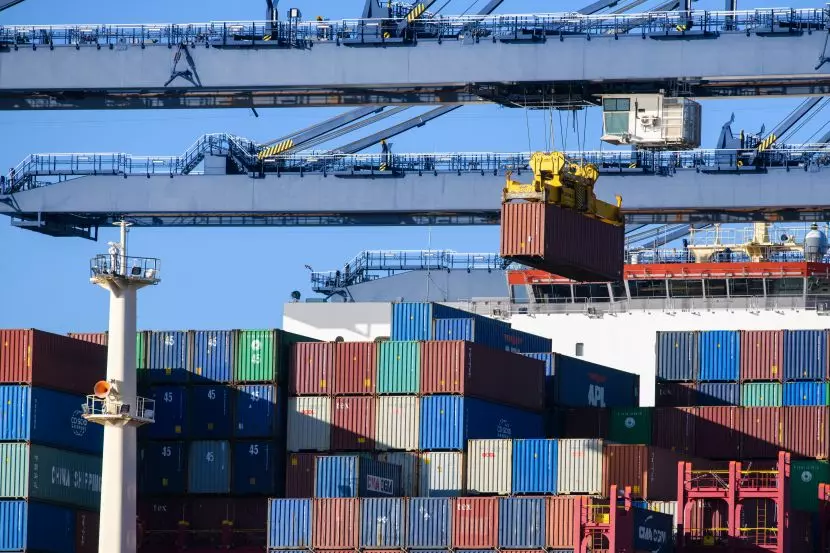
– Photo IPA Agency –
(ITALPRESS).