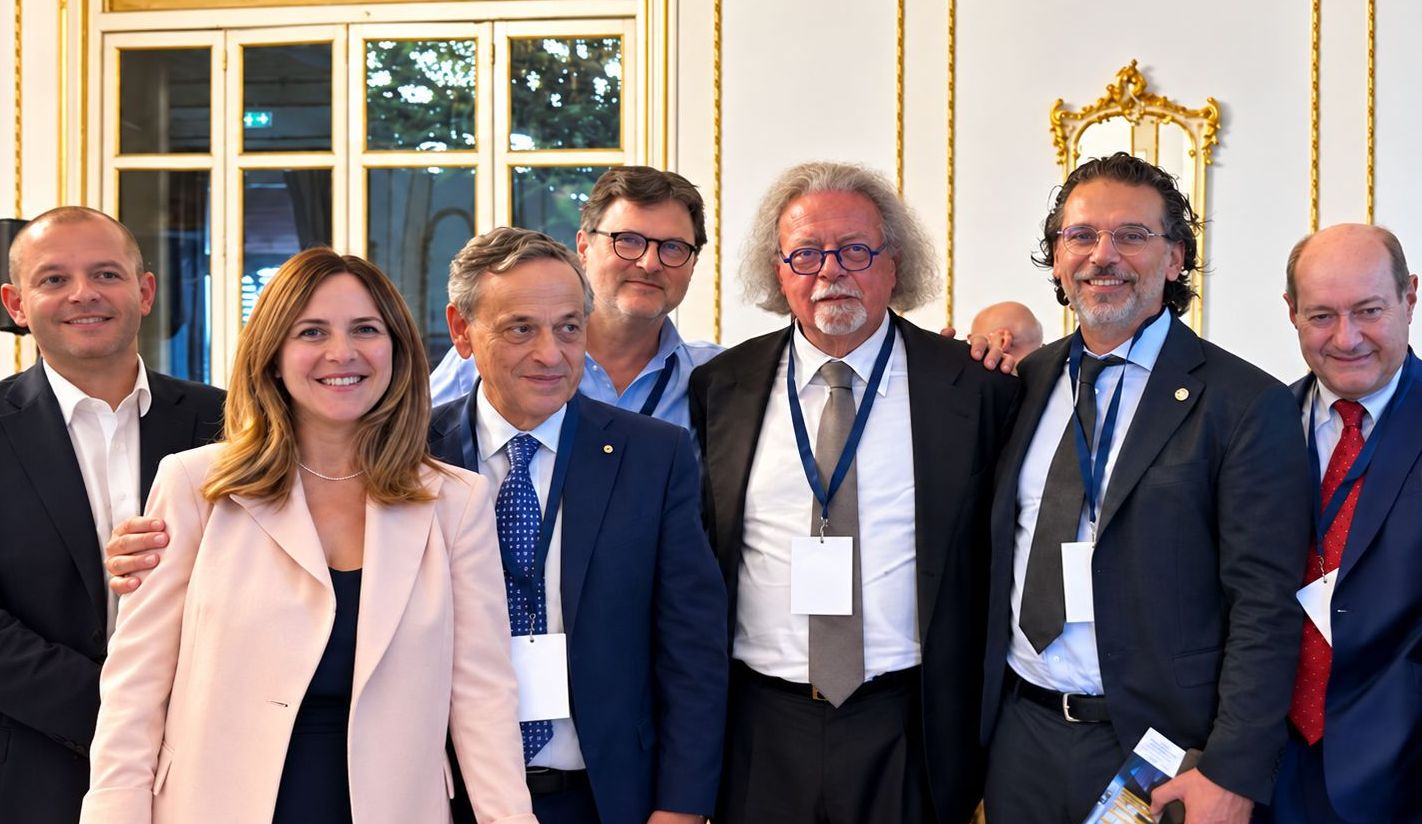
PALERMO (ITALPRESS) – “The reorganization of general medicine cannot ignore the correct application of the national collective agreement (Acn), which should be read in its entirety and not through individual provisions. The relationship between activity in medical studies and presence in the Houses of the community must be clarified on the organizational level, avoiding overlaps that risk subtracting time to patient care. We cannot continue to measure the work of the family doctor only through the opening hours of the ambulancemen, ignoring the performance and activities documented by the computer flows. The new remuneration systems linked to the achievement of the objectives also require scientifically based indicators and an appropriate economic recognition to professionals. The national level has the task of building contractual instruments, but their effectiveness depends on the ability of regional representations to translate them into operational solutions.” This was said by Silvestro Scotti, national president of the Italian General Medical Federation (Fimmg), at the congress “Next Stop Evolution MMG – Regions of Italy in comparison”, which took place from 23 to 24 October at the Congress Centre of the Official Club of Palermo. “In Sicily, a phase of concrete confrontation has finally opened with the Health Department, which has recognized the central role of general medicine and the need to overcome the separation between hospital and territory to operate in continuity. Open questions remain, from the organization of districts to new models of assistants, but the dialogue must be translated into operational decisions, not limited to a formal negotiation”, explained the president of the Order of Doctors of Palermo Toti Amato (component of the national director Fnomceo), present at the congress together with the vice-president Luigi Spicola. “The reform of general medicine must strengthen territorial assistance without weakening the network of medical studies. The single role must be consolidated, correcting the aspects that do not work. But without adequate and structural resources, any reform is likely to remain on paper. We cannot ask the general medicine for new responsibilities without ensuring the conditions to exercise them. The challenge is to make the profession more attractive for young people and to offer citizens stronger, accessible and close to their needs,” said Niccolò Biancalani, national secretary-general Fimmg. At the centre of the two days, the comparison between institutions, unions and health care about the reform of territorial assistance, the unique role of family doctors, territorial functional aggregations (Aft), community houses and regional organizational models to improve the care of patients. Scientific manager Luigi Tramonte, flanked by Roberto Barone, Angelo Casano, Andrea Curti Gialdino, Adriana Di Gregorio, Federica Fundarò, Noemi Lopes, Annalisa Vetri and Giuseppe Zagami. On the results of the Sicilian supplementary agreement Luigi Tramonte, regional secretary Fimmg. “The Afts are finally becoming operational. In Palermo we started on July 1st and, thanks to computer systems, we are learning to share information and to work on team. But they serve nursing and administrative personnel, whose presence we managed to enter into the regional agreement. We have also obtained economic results, from the extension of allowances to colleagues entitled to increases for those operating in the smaller islands. Now we must complete the implementation of the agreement and recover the delay with respect to other regions.”The work has deepened the application of the Ministerial Decree 77 of 2022, the Houses of the Community, the unique role and the different regional experiences, even with respect to the deadlines of the National Resumption and Resilience Plan (Pnrr). A round table, modwas by Carlo Curatola, Noemi Lopes and Salvatore Requirez, compared the models of proximity assistance. “ Territorial aggregations must promote the sharing of instruments and pathways, maintaining direct relationship with patients and improving the accessibility of services and the management of chronic pathologies. It serves an organization that allows you to identify the most fragile patients, schedule controls and share clinical information among professionals. The Afts can help us to overcome a fragmented management of care, but they need dedicated personnel and IT tools that dialogue with each other,” said Lopes, general medical doctor, adviser of the Order of doctors of Palermo and national Deputy Secretary-General Fimmg. The seven scientific sessions dealt with depression and chronic pain, chronic obstructive chronic broncopneumopathy (Bpco), vaccination against influenza, herpes zoster, pneumococco, human papillomavirus (Hpv) and sincitial respiratory virus, cardionefrometabolic syndrome, type 2 diabetes, cholesterol and cardiovascular risk, sarcopenia, superficial and deep flow venous trombosis. To complete the program, practical laboratories on dermatoscopy, ultrasound, spirometry, computerized clinical folder, telemedicine for glycemic monitoring and suture techniques. As part of the session “The cardionefrometabolic syndrome: new therapeutic opportunities”, Giovanni Merlino, a doctor of general medicine, explained the updating of 2025 of the European guidelines on the management of Ldl cholesterol. The treatment, he explained, “must be customized according to the cardiovascular risk. In high and high-risk patients it is essential to quickly reach the targets, combining multiple drugs when needed. After acute coronary syndrome, four-six-week Ldl cholesterol control allows you to verify the effectiveness of therapy and modify it. The family doctor guarantees the continuity of controls and adherence to care, while territorial aggregations can arrange calls and a continuous take-up.” -photo press office Order of doctors of Palermo-
(ITALPRESS).