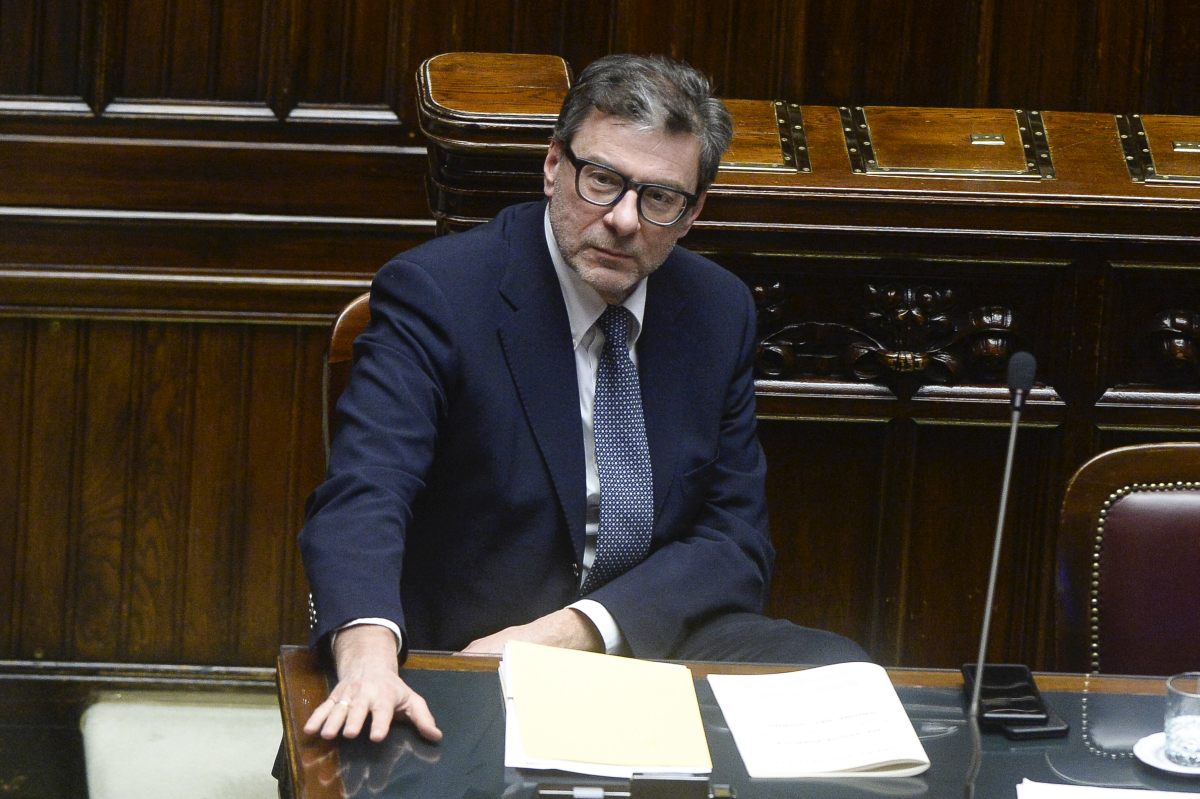
ROMA (ITALPRESS) – “As regards the strengthening of the ability to defend and security, even in order to comply with the commitments made during the NATO summit held in The Hague last June, it seems crucial to wait for the results of the estimate of the deficit of 2025 that Istat will notify the European Commission in March. If this is less than 3%, the proceeding from the excessive deficit procedure would be activated: This would confirm the intention and content of the Public Finance Programme Document, i.e. the increase of spending on security and defence gradually with an impact on GDP, which can grow up to 0.5 percentage points by the end of the three-year period, covered by the budgetary law.” So the Minister of Economy, Giancarlo Giorgetti, at the question time in the Senate. “In this regard, to the extent that – thanks to the activation of the national safeguard clause – a path of growth of net expenditure will be tolerated broader because of the only greater expenses in defence and security, the increase in expenditure envisaged would not entail any renunciation of expenses dedicated to the main social priorities,” he explained. “As regards financing, it should be noted that the plan for the SAFE European instrument, presented by Italy to a maximum of EUR 14.9 billion, is still under review together with the plans submitted by the other Member States of the European Union.” Giorgetti recalled that “Accession to the SAFE programme entails a long-term dilation of the restitution of the relative loan compared to the emissions of public debt securities, as well as the savings resulting from the differential in the interest rate paid. At the same time, it implies the need to submit to a series of substantive and procedural rules that limit the discretion of individual member states.” In addition, “more indirect benefits may result from effects such as strengthening coordination cooperation with other partners and integrating the value chain at EU level, as well as from contributing to growth in the industrial sector.”.
Giorgetti then points out that “the activation of the safeguard clause is functionally linked to the SAFE tool, but is independent of this. The safeguard clause provides that, under exceptional circumstances, where the European Commission explicitly included the present geopolitical context, a Member State may request the Council to temporarily deviate from the net expenditure route defined in its medium-term structural plan. As a result of the flexibility in derogation, the activation of the clause would not require the publication of a new medium-term budgetary structural plan, but would nevertheless imply a request for deviation from the programmatic objectives of Parliament.”.
– photo IPA Agency –
(ITALPRESS).