There is one thing I keep admiring in my work with Italians looking at the United States: a genuine enthusiasm, made of curiosity, courage and desire to build something new. It’s one of the most beautiful aspects of my job. America continues to attract those who imagine a different future, and this momentum is often the engine of success stories. But, as in every important journey, it serves preparation. And when it fails, even the most promising dream can encounter avoidable obstacles.
The story of Marco begins as that of many Italians attracted by the call of America. One-way ticket for New York, a backpack, some savings and an idea that seems logical: “Being with the ETA, I express my opportunity, I speak with people in the field. If everything rows, then I ask for a visa». A small DIY strategy that, until a few years ago, was told as a means of trick with which to tastare the ground.
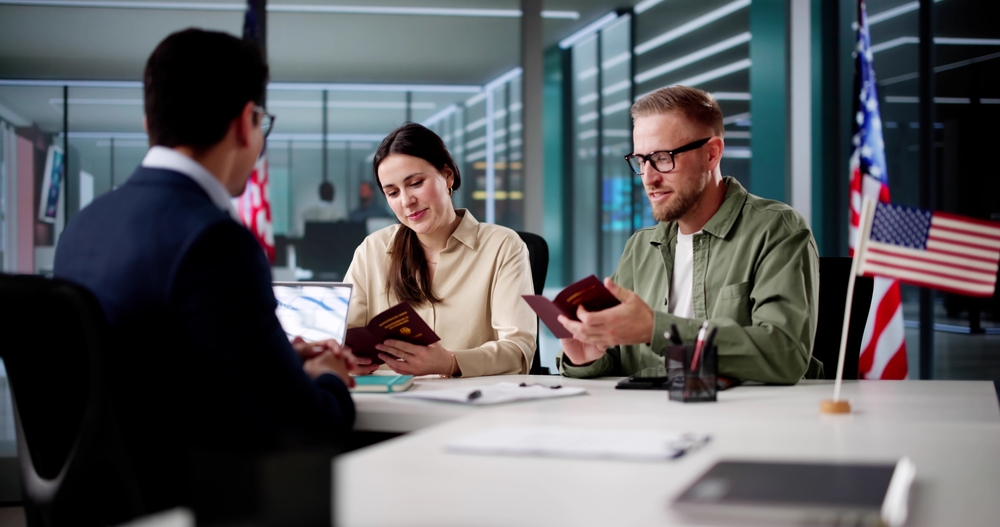
But that morning, passport control, nothing went as planned. Close questions, a long wait, an unconvinced officer. Marco left the airport with a warning and a clear feeling that, at the next entrance, the ETA might not be enough. It is not an isolated case: in recent months, I listened to various similar stories, and some passengers were not as lucky.
I am Fabiana Zangara, an immigration lawyer in the United States, and for years I have transformed the dreams of Italians into concrete paths beyond the ocean.
It is precisely Marco’s story that inspired me to tell three of the most common mistakes I see today committing when talking about immigration to the United States – errors that do not arise from lack of will, but from incomplete information or an excess of trust in a system that, in recent years, has become more attentive and demanding.
Primo errore: sottovalutare il fattore tempo
In the United States, the working times of visa practices do not follow the reassuring logic of a calendar: rather resemble the irregular circuit of an electrocardiogram. Oscillano without warning, stretch, suddenly accelerate, then stop again. And they almost never coincide with the expectations of those looking from afar. Many think they can handle it in a few weeks; others discover only the last that renewing their visa requires the same meticulous preparation of a new question. Translations, penal certificates, business plan, corporate documents, reference letters: nothing of this is improvised. To arrive late means to expose yourself to delays, forced breaks, unscheduled trips and, in worst cases, to real life breaks.
Secondo errore: presentare una documentazione insufficiente
Here there is a simple, almost brutal rule: “If it is not documented, it did not happen.” Officers don’t play, check. In the most technical visas – E-2, O-1, EB-2 NIW – the weight of the evidence is enormous. It is not enough to be qualified: We must demonstrate it in an orderly, coherent and convincing manner. Solid practice avoids doubts, reduces risks and accelerates the process. A weak dossier, on the other hand, almost inevitably opens it to the request for additional evidence, with lost weeks and further stress.
Terzo errore: non raccontare bene la propria storia
Immigration is right, of course, but it is also narrative. An officer knows nothing about your industry: does not know the professional path that has brought you there, nor the dynamics of your investment, does not know why your project might have an impact in the United States. It is the applicant – or his lawyer – to make everything readable, clear, logical. A well built practice connects points and anticipates doubts, building a story that explains why you, because right now and why in this country.
Ultimately, the difference does not make her fortune, but the solidity with which it presents itself. The stories that come far are those supported by facts, by conscious choices and a preparation that leaves no room to chance.
Therefore, teaching is simple: prepare your visa applications as if there is no other opportunity to explain. Because, beyond myths and shortcuts, one thing is certain: America does not reward those who improvise, but rewards those who demonstrate to be ready.
L’articolo Getting a visa in America is a matter of preparation proviene da IlNewyorkese.