My teachers said: «Why write another book? Look at you in the mirror,” they said, “and ask if it is really necessary to add more to the unmanageable mass of what is already printed for the market and for the public”.
Instead, for this essay on Garlasco, I had no doubt. I thought about it for a long time and the explosion of the case on all the Italian media has convinced me that, there, in the Po Valley, not too far from Milan, the machine of the truth of Italian democracy had arose and impantanata not only on the procedural and strictly legal level, but also regarding the entire investigative apparatus.
Tens of people, in various ways, invade all day the means of communication, from the old dear TV to the new dear web, discussing on thousands of details that increasingly confuse the central point for citizens — I repeat — of a democracy: how to get to a truth acceptable on a terrible crime, that in which the young Chiara Poggi lost his life on August 13, 2007.
The objective truth today? No: on Stasi, who was definitively convicted and served ten years in prison, there are still reasonable doubts from many. In addition, the Prosecutor of Pavia has recently deposited an immense prosecutorial castle against Andrea Sempio, who, however, had come out, is not known as, illeso from the first investigation.
Now there will be a trial and you will see. Far from me the idea of condemning it in advance: it would be a mistake among horrors, in a story made of stains, DNA, shoes, prints and bicycles, elements that once seem to indicate one thing and another time another.
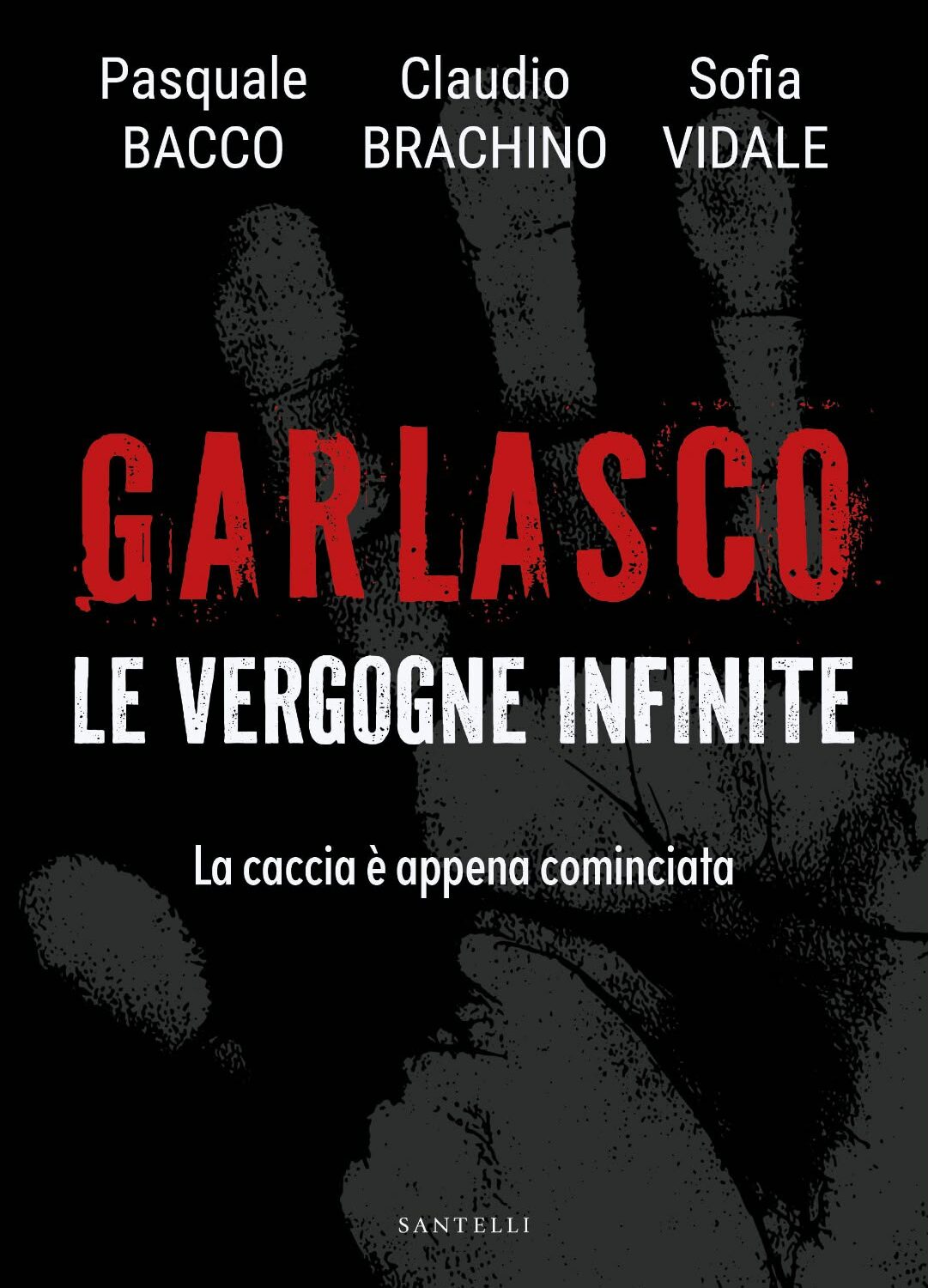
In the book, besides my voice, of political-judicial cutting, there are two other voices. The young and very strict criminologa Sofia Vidale has faced and explained one or two clamorous holes of this long and troubled affair, rebuilding the profiles of the likely killers and their hypothetical motivations. She dwelt on the victim as never before: not morally, as many have done, but to obtain from the dynamics of the murder the missing clues to arrive at a solution.
And then the authoritative Pasquale Bacco, responsible for the scientific necklace of Santelli, the publisher who publishes the volume, analyzes in a simple way, for the public, one by one, all the elements of the crime scene.
Three independent voices, therefore, for a wise puzzle useful to guide one of the most intricate stories of Italy in recent decades.
We chose a curtain that opens on the back of the cover. In the black shadow of the scene there is a violent crime and too many versions. Ours is an open book, which we want to update to an epilogue that we hope positive for all of us, members of a democracy in which we feel safer only if we know the truth.
L’articolo Garlasco, Italy proviene da IlNewyorkese.