Today, thanks to IWC, I bring you into one of the most interesting realities of this new frontier: Vast, Californian company selected by NASA among the five calls to design the space station of the future.
The context is clear: the International Space Station has an expiry date set around 2030. After more than thirty years of activity, a historical era of space exploration will be closed. And from that moment a new phase will open: that of the privatization of the low earth orbit.
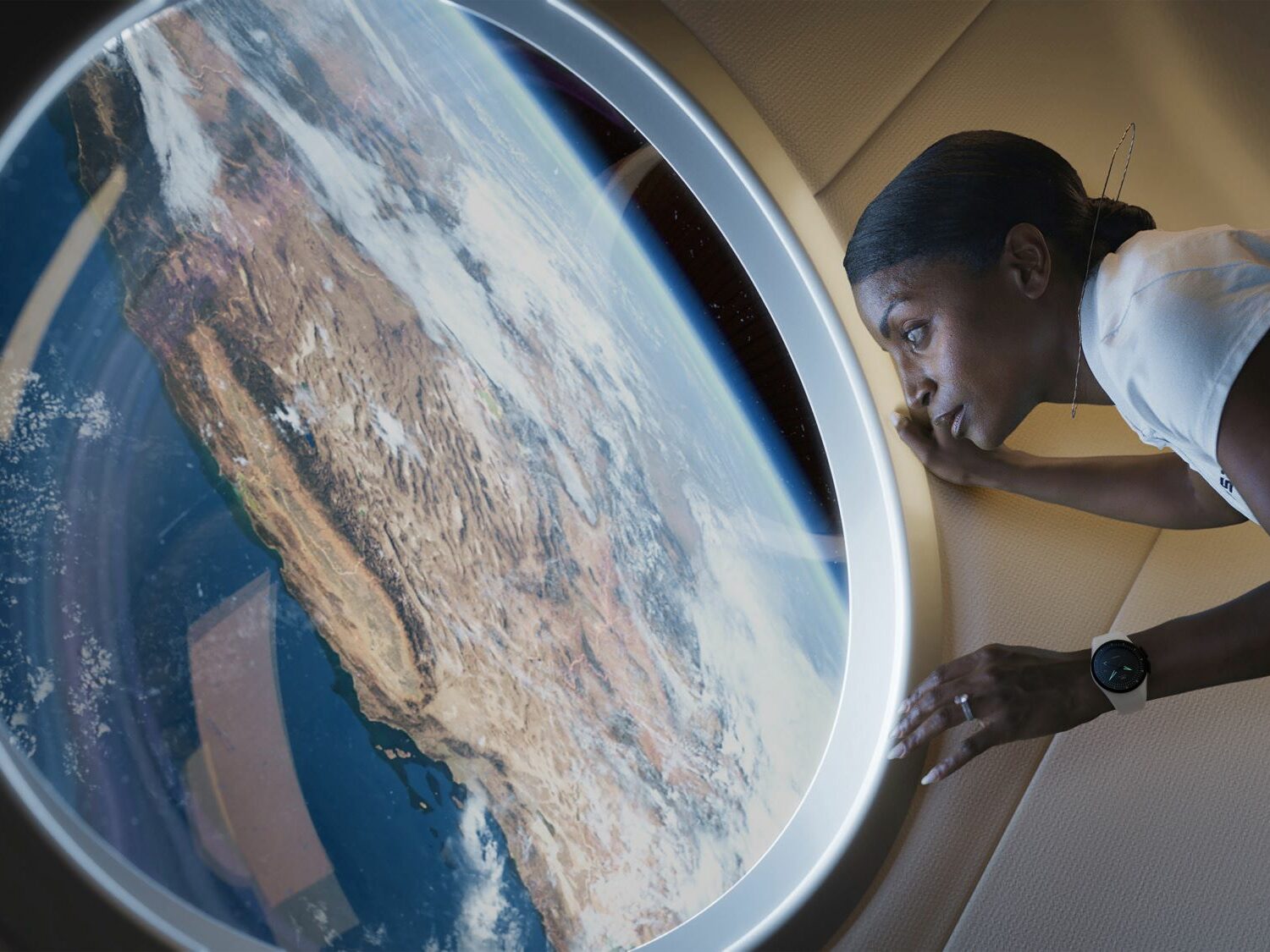
Not only institutional missions, but travel, research and experimentation also entrusted to private operators. In other words: the marketing of space. In this scenario the Vast project is inserted: a modular station, designed to be operational in the coming years. The first step will be the launch of the initial module Haeven-1 – scheduled around 2027 – followed by a series of progressive missions until the complete realization of the station.
A new way of living space, more accessible, more commercial, but also more competitive. We could also see the first prototype: a futuristic, essential, almost cinematic design. An object that already seems to belong to tomorrow, ready to transform the very idea of permanence in space.
“Haven-1 remains a scientific laboratory, but it also becomes a human experience. Looking at the future, the design will be increasingly central even in the commercialization of space. It will not be enough to work: it will be well designed for people. We have already shown that this approach is necessary. Now the challenge is to make it grow: larger stations, more customization, more capacity. The future? A balance between Earth and space, between technology and humanity.”.
Today we no longer ask ourselves how to survive in space, but how to live well. We studied the experience of the International Space Station and spoke with astronauts to understand real problems: for example, sleeping in space. Without gravity the body does not feel “safe”, so we have designed systems to improve sleep. We have introduced natural materials, softer lights, cozy surfaces: elements that on Earth we give for discount, but that in space make the difference between surviving and living really well. Another theme is the rhythm in space you can see up to 16 sunrises and sunsets a day. For this we work on lights and environments that help the body understand when it is time to rest.
The clock also has a role: it is not only a tool, but a connection with the Earth, with time and with the loved ones. It helps to feel connected.” Hillary Coe, Chief Design and Marketing Officer. And in this vision of the future also enters time – literally. IWC works on a completely new technology to measure it in space, where gravity and speed change the rules we are used to on Earth.
“When our XPL technical division has developed the Pilot’s Venturer Vertical Drive, it has not simply adapted the design of an existing clock for use in space. It started from a white sheet and worked to define from scratch what a tool clock for astronauts should offer in terms of functionality, ease of use, time display and material execution. Every single detail of this watch has been specially optimized to meet the specific requirements of human space flight and timekeeping in space. For us it was essential to put the final clock in the expert hands of real space professionals. After being rigorously tested by our partner Vast, the Pilot’s Venturer Vertical Drive became the first IWC watch to get the certification for space flight,” explains Chris Grainger-Herr, CEO of IWC Schaffhausen.
A detail that tells the scope of this revolution well: it is not just about going into space, but about learning to really live there.
L’articolo From ISS to Haven-1, the new space time has already started proviene da IlNewyorkese.