PALERMO (ITALPRESS) – After the inauguration of the new Regional Centre for the diagnosis and care of the endometriosis of the Arnas Civico of Palermo, the director of the Antonio Maiorana structure, interviewed by Italpress, recalls the deepest sense of the project. Not only suitable environments and advanced technologies, but a load-taking model built on the centrality of the person. Because endometriosis is not an equal disease for all women and can affect the pain and “biological memory” of chronic pain, fertility, relational life, work and motherhood project.
In addition to surgery and assistance, today the Centre is also engaged on an additional line of innovative research, conducted with the Higher Institute of Health (Iss) and the University of Messina, oriented to assess new therapeutic strategies. The first data are encouraging and open an important perspective on the front of possible non-hormonal care.
Professor Maiorana, after the inauguration of the Centre, what is the main message you want to get to women?
The message is that the woman must no longer feel alone in a fragmented path. We have created a beautiful, welcoming, technologically adequate structure, with an operating room of the highest level and spaces dedicated to training. But the real point is not only the quality of the environments, but what it is necessary to do so that the person is really in the center. Today we have become rather good at treating the disease, it becomes more difficult to cure the person. The challenge is to take a step further, building for each woman a personalized path, because endometriosis never manifests in the same way and cannot be treated with an equal scheme for all.
Endometriosis can remove years of quality of life, can condition relationships, work, sexuality and motherhood. The most advanced medicine is not only the one that has the best technologies, but the one that knows how to use skills and innovation to quickly build a tailored care.
What does it mean to put the person in the center and not just pathology?
The centrality of the person is not a claim. It translates into a team that revolves around the woman with its multiple individual needs, not in a single performance. It requires the integrated work of gynecologists, surgeons, pain therapists, gastroenterologists, urologists, physiotherapists, psychologists and other professionals involved according to clinical needs. Endometriosis can involve different organs and have very different consequences. For this the answer must be multidisciplinary and built case by case. This involves listening to symptoms, assessing the impact of the disease on daily life, reproductive desire, pain and patient accompaniment over time. To this you must add the need to extend listening and taking into account the partner or family members who may ask us for support.
What makes this Center different from a normal specialist clinic?
The difference is the overall grip. An outpatient can give a visit, a diagnosis, a therapy. A regional center must accompany the woman, coordinate specialists, program treatment, follow pain, protect fertility, offer surgery when serving, activate rehabilitation and psychological support when indicated, collect data, do research and train professionals. The change of step is the passage from the isolated performance to the path. All this in light of the extensive clinical experience and continuous attention to scientific updates.
What is one of the most difficult aspects of the disease?
When it lasts for years, pain can become itself a disease. The simple surgical removal of injuries, in some cases, is not enough to turn it off. There is a component linked to the functioning of the pathways of pain and to the “central awareness” that is the phenomenon in which the brain areas stimulated by continuous and lasting painful impulses change in a plastic way, perpetuating the algic feeling regardless of the peripheral stimuli that harm the brain. For this complex mechanism the central nervous system, after being stressed for so long, can continue to evoke pain even when the initial cause has already been treated. In addition to this there are also psychological mechanisms and we are studying in particular that of “rumination”. It is a complex and repetitive dysfunctional mental process, in which the patient continually focuses on his own painful symptoms, their possible causes and their catastrophic consequences. It should be explained well and dealt adequately because it does not mean that pain is imaginary or psychological. On the contrary, it means recognizing that it is real and requires specific skills, up to highly specialized approaches.
The pain, on the other hand, should not be trivialized nor reduced to the only emotional dimension because a woman who lives for years with chronic pelvic pain can also develop anxiety, fear until the loss of confidence in her body. And this does not authorize anyone to liquidate his pain as “psychological”. The emotional component should be welcomed and treated when needed, but pain has biological, neurological, inflammatory and functional bases. The task of a specialist center is exactly this. Don’t give quick answers, but look for the cause, understand the mechanisms and integrate the therapies.
How to protect the reproductive project of a woman with endometriosis?
Many women come to design a pregnancy at a time of life in which endometriosis may have already produced negative effects on fertility and especially on the ovarian reserve. This is why it is important to make early diagnosis and to evaluate the possibility of preserving fertility, until it also arrives at the cryoconservation of ovocytes, so that the patient can have more chances to realize in the future his desire for motherhood. It is not an automatic choice for all, but the care of endometriosis cannot ignore the woman’s life plan.
The Centre will also develop research. In which direction are you working?
A recent and promising line, conducted in collaboration with the Istituto Superiore di Sanità (Iss) and the University of Messina, covers the study of some extracts of Mediterranean plants and their possible actions on endometriosis cells. We are evaluating in experimental models the effect of natural substances extracted from plants such as, for example, the verbasco and olive. The first experimental data are very encouraging, but must be confirmed with scientific rigour. It is an interesting area because it looks at possible non-hormonal care for endometriosis. We are in the preclinical research phase, not in front of therapies already available.
How much does it count to train professionals on such a complex disease?
It matters a lot. Endometriosis has been for too long underrated, diagnosed late, confused with generic disorders or “normal” pains. Training serves to change clinical culture. Disable menstrual pain, pain during relationships, intestinal disorders or cyclic urinary disorders, difficulty in conceiving should not be minimized. They must become signals to be recognized soon. Forming means creating a network of professionals who speak the same language, reducing diagnosis times and improving the quality of the grip.
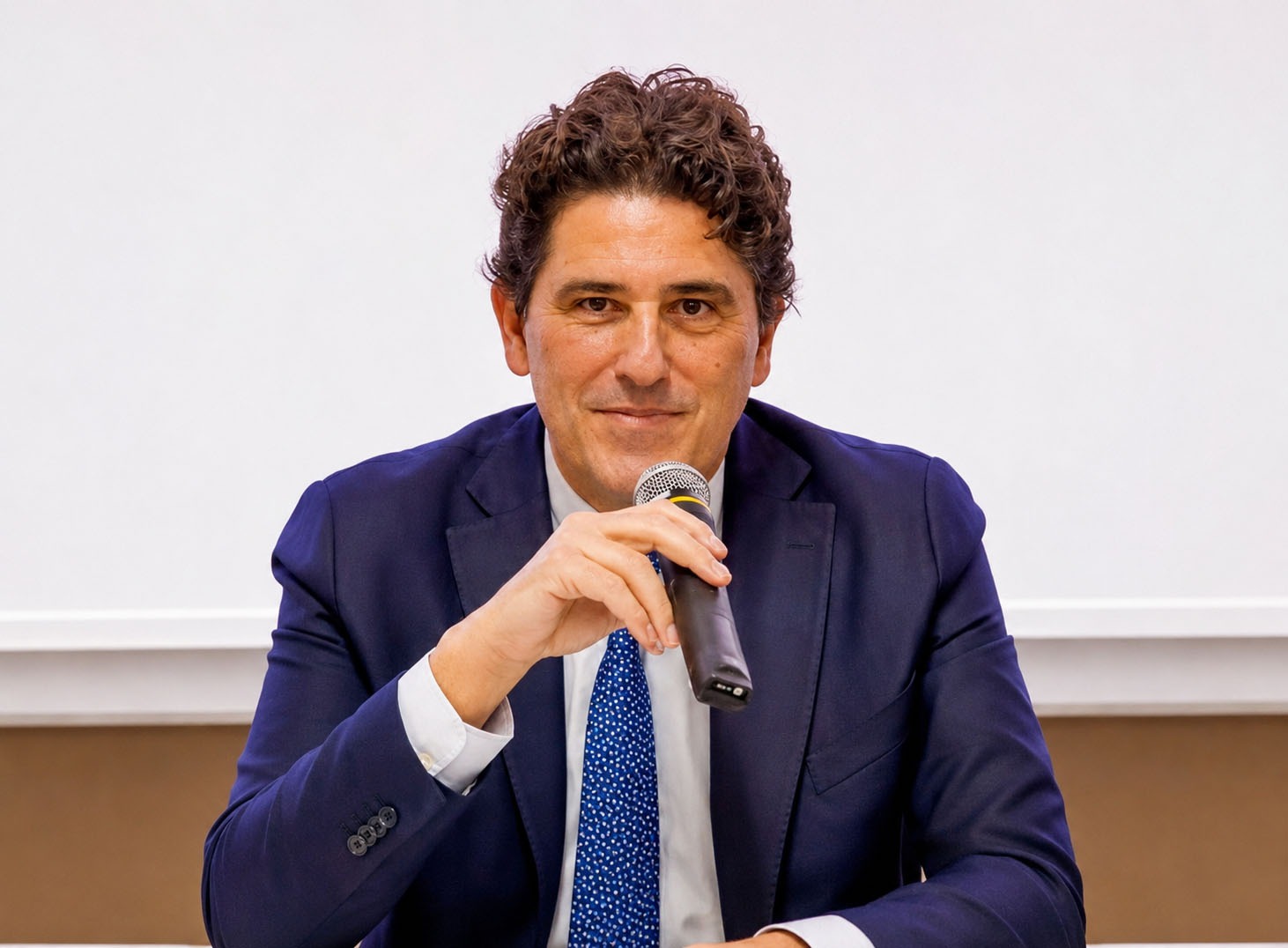
– photo press office Order Medici Palermo –
(ITALPRESS).