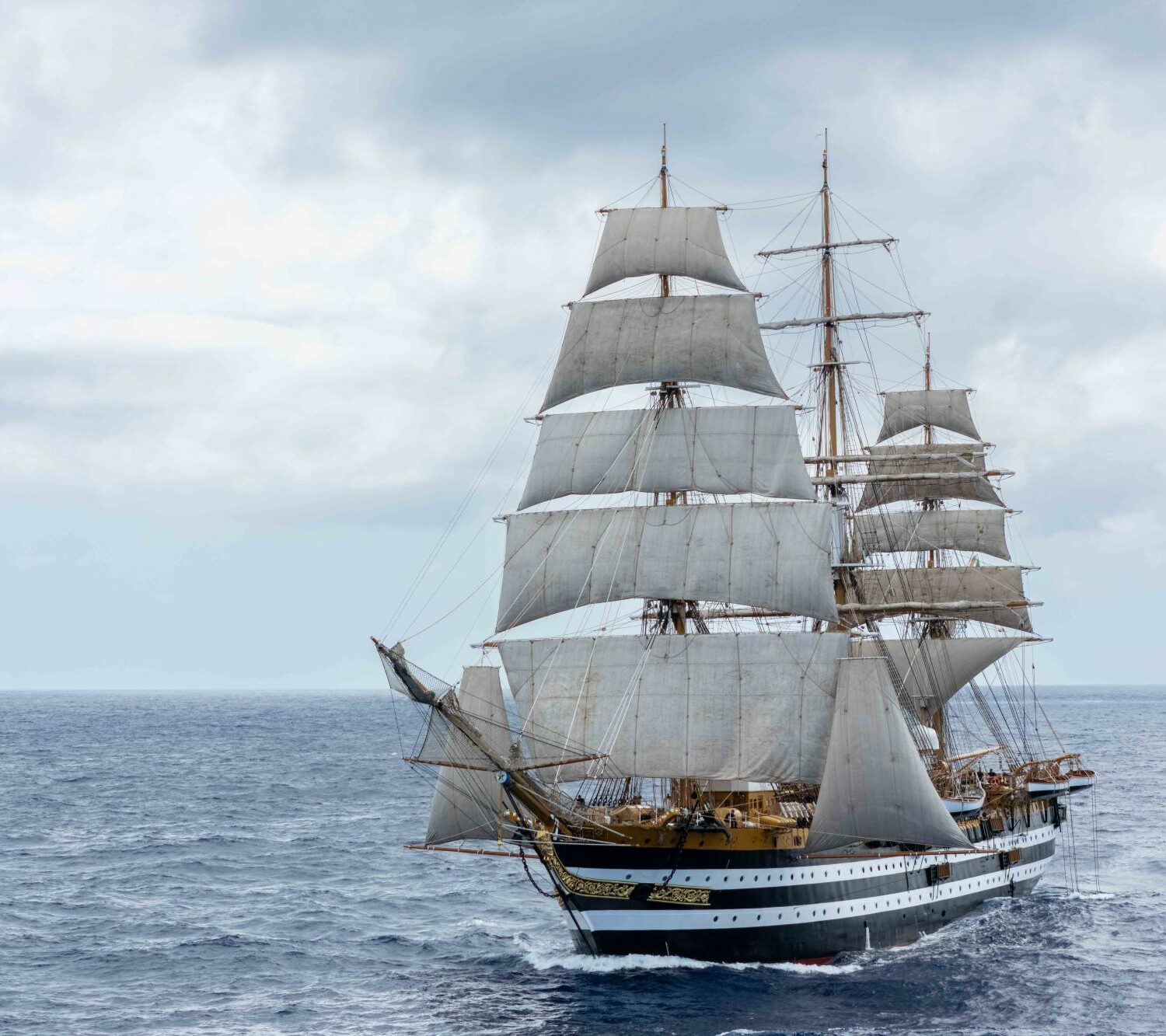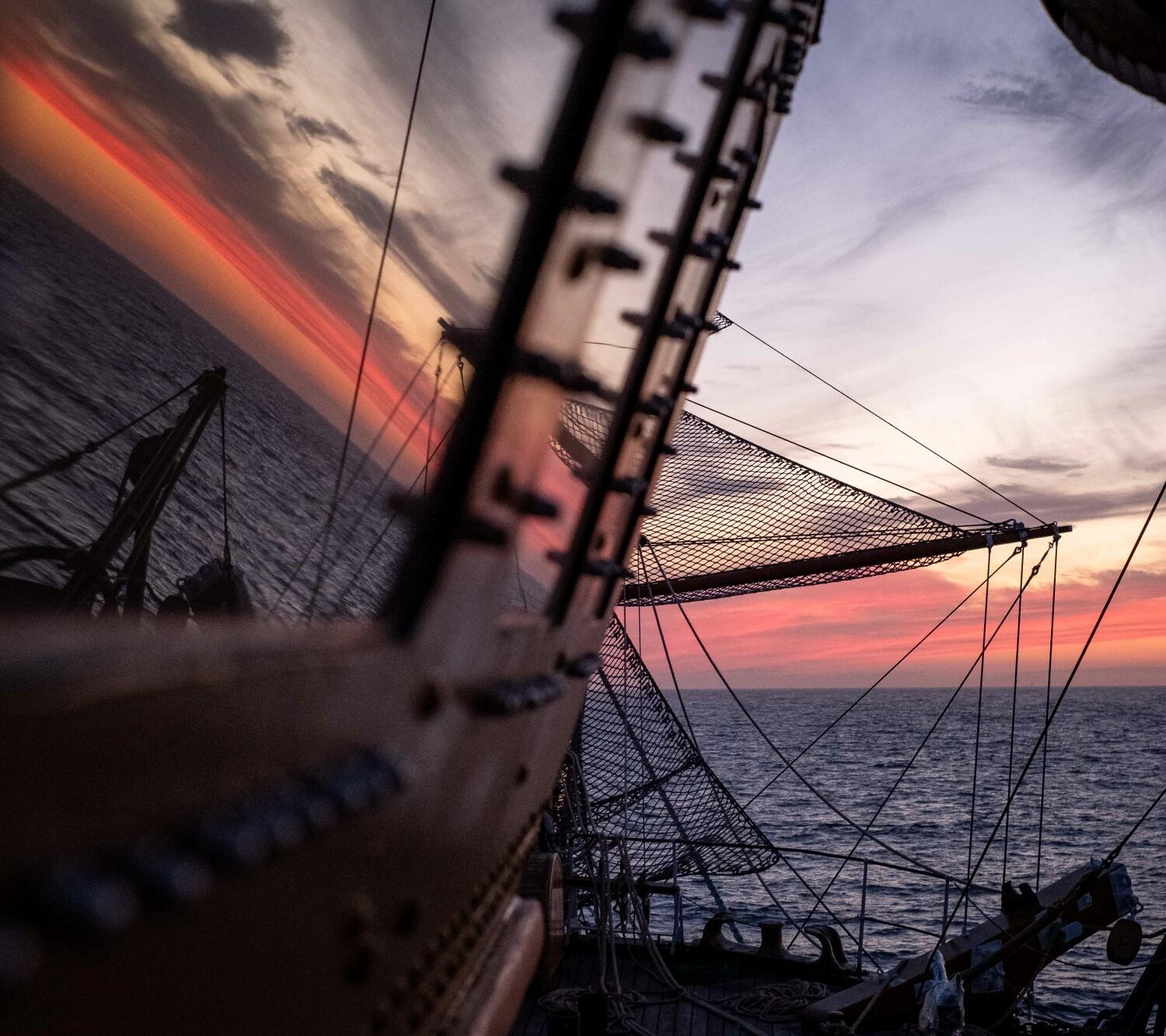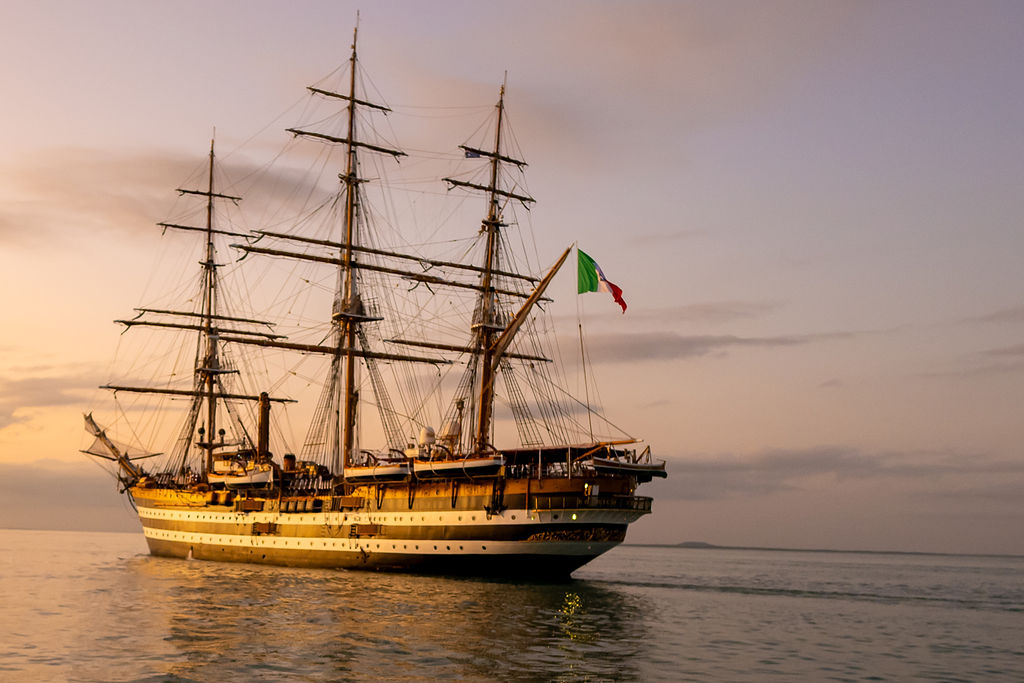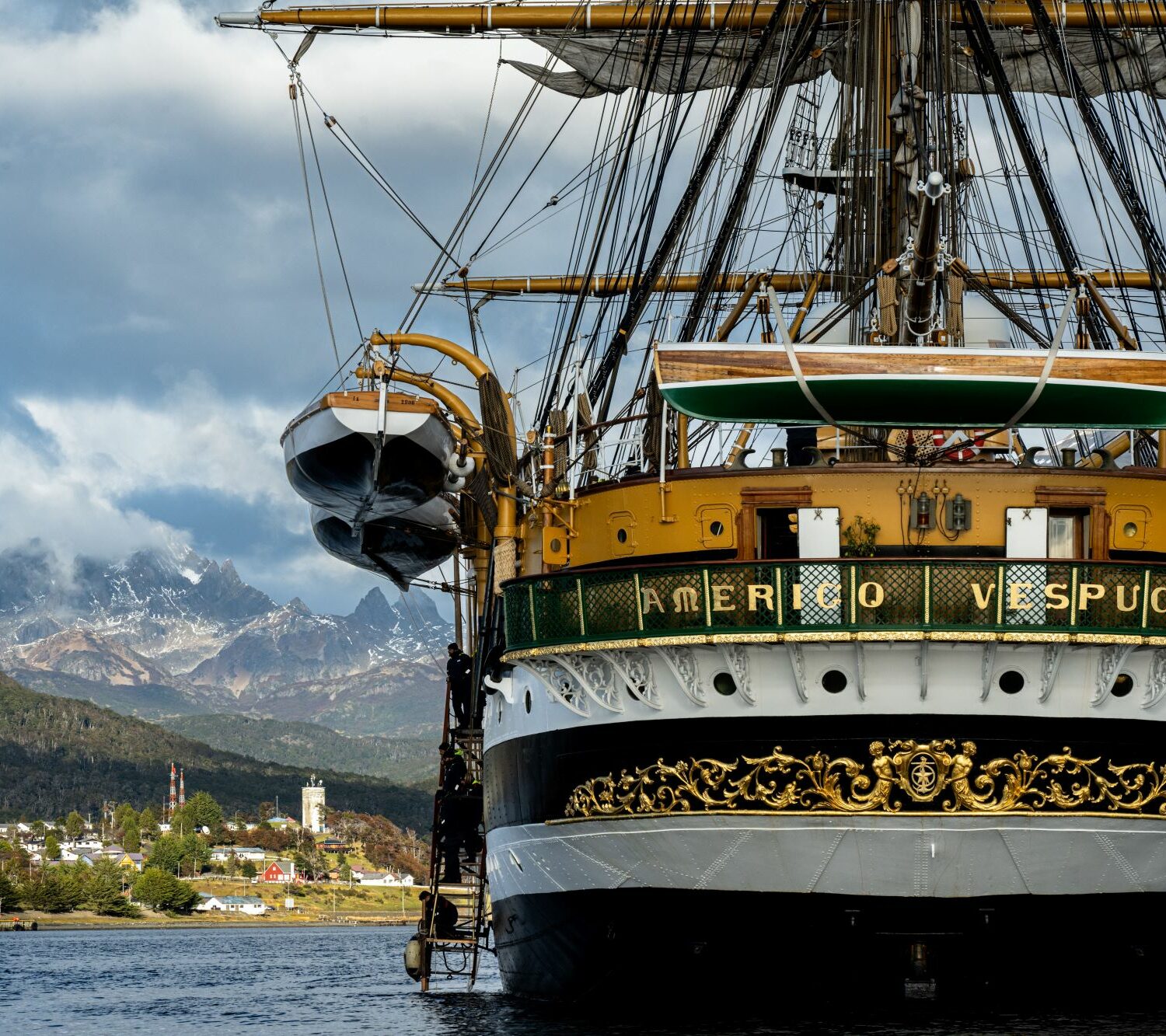
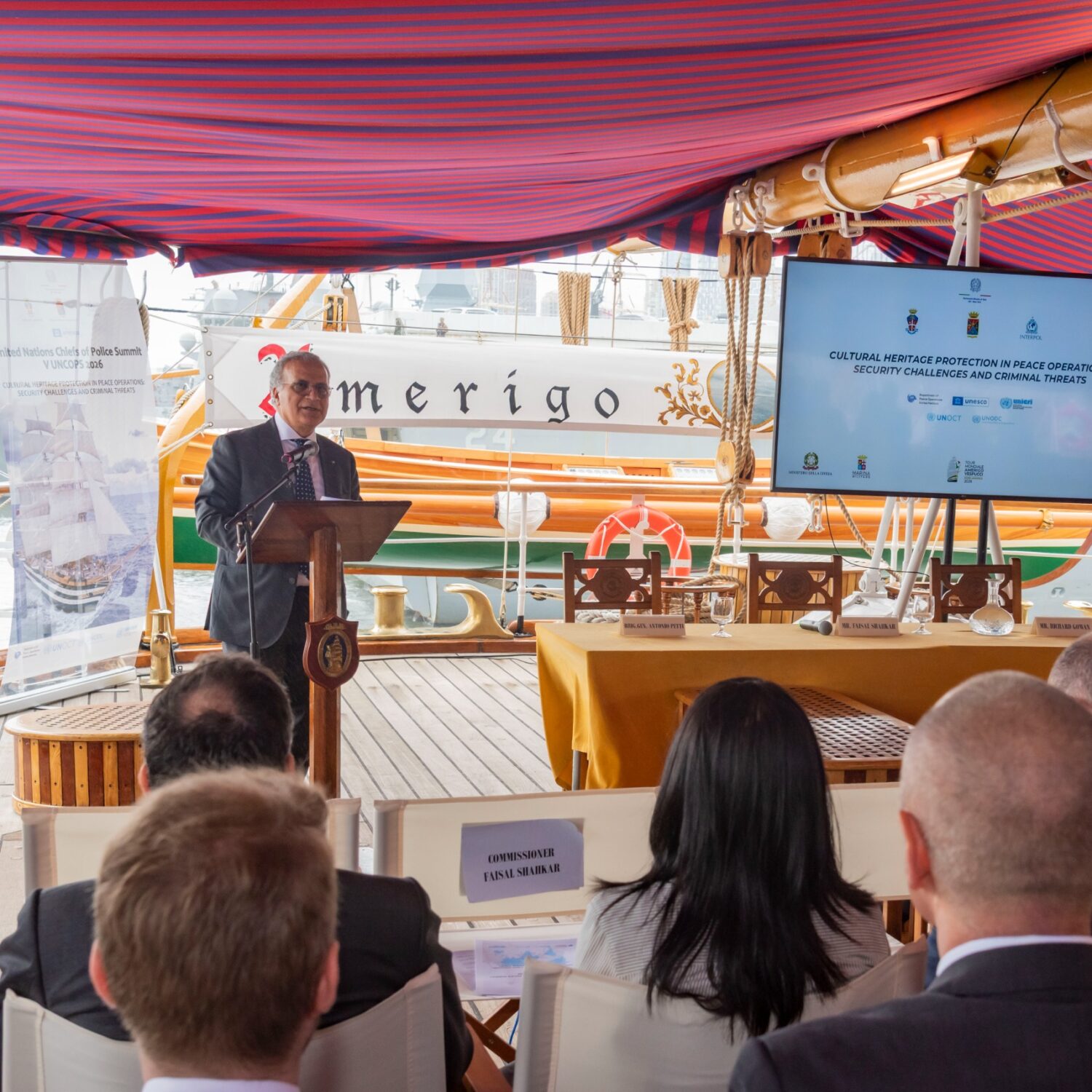
When one wants to erase a people, the first thing that is striking is its culture. It is from this awareness that the event hosted on 7 July on board Nave Amerigo Vespucci, moored at Pier 86, within the fifth UN Police Heads Summit, V UNCOPS 2026. A meeting dedicated to a theme that, in recent years, has emerged from the boundaries of culture to enter those of security, the protection of cultural heritage in peace operations, within the Amerigo Vespucci World Tour 2026.
To tell the meaning of the day was Ambassador Giorgio Marrapodi, Permanent Representative of Italy to the United Nations, who explained how the ship was chosen not by chance. “We are on board the Vespucci for a very special event today, because we are on an Italian naval order that, however, we use as a tool of soft power, a tool of cultural diplomacy,” he said. The ship, in other words, becomes the right place to understand how much it is going to protect cultural heritage. “It is necessary to make it clear that the protection of cultural goods, the prohibition of illegal excavations, the fight against the smuggling of archaeological goods, one of the plagues of international conflicts, is something we must fight”.
Marrapodi recalled the result achieved by the United Nations in this field, with a Security Council resolution becoming a milestone, 2347 of 2017, the first to recognize that the protection of cultural heritage is part of the maintenance of international peace and security. A commitment to which Italy participates with one of its bodies of excellence. “Italy participates in this effort with one of its bodies of excellence, the Command for the protection of the cultural heritage of the Carabinieri, present today together with the general commander of the Arma”, he said. “We want to make available all the expertise of our country in this area”.
To collect the witness was the General Commander of the Carabinieri, General Salvatore Luongo, who explained the value of the meeting between the two Italian excellences. “Today is a very important event because we have two Italian excellences. Vespucci is not only a symbol and a national identity, but also a message that we give to the new generations, the way traditions serve to convey positive messages,” he said. At the same time, he added, the event highlights the ability of Italy, and in particular the Carabinieri, in the protection of cultural and artistic heritage, in an area, that of the UN Police Heads Summit, in which the United Nations chose to make this issue one of their future activities.
For the Arma, Luongo explained, it is an important moment also because it allows to spread a model. “We re-present our nation here in New York, not only within the framework of cultural heritage, but also to spread the model of the Carabinieri, a police force with general competence with a military status, which is a peculiarity among all police forces,” he said, recalling as next to the protection of cultural heritage there is the other great specificity of the Arma, the defense of the environment and forests.
The heart of the message, resumed throughout the event, is that the destruction of cultural heritage is never a simple collateral damage. From ancient wars to the conflicts of our days, hitting monuments, places of worship, archives and works of art has often been a deliberate strategy, the one that has been called “ethnic-cultural cleaning”, with which we try to erase the identity, memory and dignity of entire peoples. This is why Resolution 2347, adopted by the UN Security Council on 24 March 2017, marked a historic step, recognizing for the first time that protecting cultural heritage is an essential contribution to international peace and security.
Italy, in this field, brings a unique experience. The Carabinieri Command for the Protection of Cultural Heritage, the first police department in the world specialized in this sector, was established in 1969 and today manages the largest database in the world dedicated to illicitly subtracted cultural assets. Next to it, the Blue Helmets of Culture task force, born in 2016 with UNESCO, intervenes in crisis areas to document, recover and protect the heritage at risk.
The role of UNESCO was at the heart of Eliot Minchenberg’s intervention, director of his office of liaison in New York, which cited the words with which the Constitution of the organization opens, according to which wars are born in the minds of men and that is where the defences of peace must be built. It is no coincidence, he observed, that those who fight so often target culture, from the rogues of Nazi books to the destruction of the mausoleums of Timbuctù, with the goal not to simply destroy monuments, but to erase identity and divide communities. Yet, he added, culture is also one of the first foundations on which peace can be rebuilt.
The cultural heritage, moreover, is much more than monuments, archaeological sites and works of art. It is the identity of a people, the memory of a civilization, a bridge that connects generations through time. And like the Vespucci, which brings with it the history and identity of Italy as it sails the oceans, defending culture, even when all around collapses, is a way to defend peace.
L’articolo Defend culture to defend peace, the message of Italy on board the Vespucci comes from IlNewyorkese.