
ROMA (ITALPRESS) – “An important law in order to give a second chance to drug addicts and alcoholics who have committed crimes, while not forgetting the safety of citizens”. The Community network, which brings together numerous therapeutic communities engaged for decades in the care, recovery and social reintegration of people with pathological dependencies – including the Community Pope John XXIII, San Patrignano and the Community Meeting – offers its contribution to the public debate on Law 5 August 2026, n. 140, which entered into force today 21 August in the matter of domicile detention of drug addicts and alcoholics.
“The experience gained in the application of alternative regimes to detention already foreseen by our order, first up to the limit of six years of penalty, with today’s reform at 8, has demonstrated how the inclusion in therapeutic programs seriously structured and realized at accredited structures can represent an effective tool not only in terms of the care, but also for the purpose of prevention of relapse and protection of collective security – emphasizes Comunitalia in a note – Law No 140/2026 introduces no form of automatic liberation for drug addicts or alcoholics. Access to the measure presupposes the presentation of a specific instance and requires careful assessment of the condition of dependence, as well as the correlation between that condition and the committed offence.”.
“The judicial authority can accept the request exclusively if it considers that the proposed therapeutic programme is concretely suitable for the recovery of the person and to reduce the risk of commissioning of additional offences. The new framework also provides for uniform application criteria throughout the national territory and enhances the involvement of professionals from both public services and accredited third-party bodies. It is not a question, therefore, of a path without verification or control – the note continues -. The structures called for to implement therapeutic programmes are required to document their progress and to report to the judicial authority any violations or behaviors incompatible with the planned path. The legislation also regulates the possibility of revoking the measure in cases of failure to comply with the requirements or violation of the conditions laid down. For more serious offences, included in Article 4-bis of the Penitentiary Ordinance, the limit of four years remains still. All this does not mean to ignore the possible criticalities that may emerge in the phase of application of the reform. On the contrary, precisely the relevance and delicacy of the new discipline make it necessary a careful and constant monitoring of its effects.”.
For Comunitalia “it will be essential to check over time the quality of diagnostic tests, the appropriateness and effective customization of therapeutic programs, the suitability of the structures called to carry out them, compliance with the requirements imposed by the judicial authority, the possible revocation of the measures, and the results of the paths in terms of reduction of relapse and effective social reintegration. Public safety and dependencies should not be considered as opposing objectives. Public security is certainly central and the risk that the condition of dependence can be used in an instrumental way to access alternative measures is an aspect that should not be underestimated – the note continues -. However, the response to this possible risk cannot result in the renunciation of treatment and recovery paths for people suffering from pathological dependence. Taking care of a person with a pathological dependence does not mean to cancel or mitigate responsibility for the crime committed. It means, rather, to intervene also on the causes that can feed criminal behavior and the risk of relapse, through a therapeutic path subjected to precise conditions, checks and responsibilities”.
For the Community network “the new legislation is therefore an opportunity that must be accompanied by rapid and correct implementation. It is necessary to prepare without delay the organizational instruments, resources and investments necessary to ensure that the provisions introduced can be translated into truly effective, controlled and qualified paths. Only through a rigorous application of the norm, an adequate system of controls and the involvement of public services and accredited realities with the necessary skills will be possible to effectively combine safety needs, individual responsibility, right to care and prevention of relapse”.
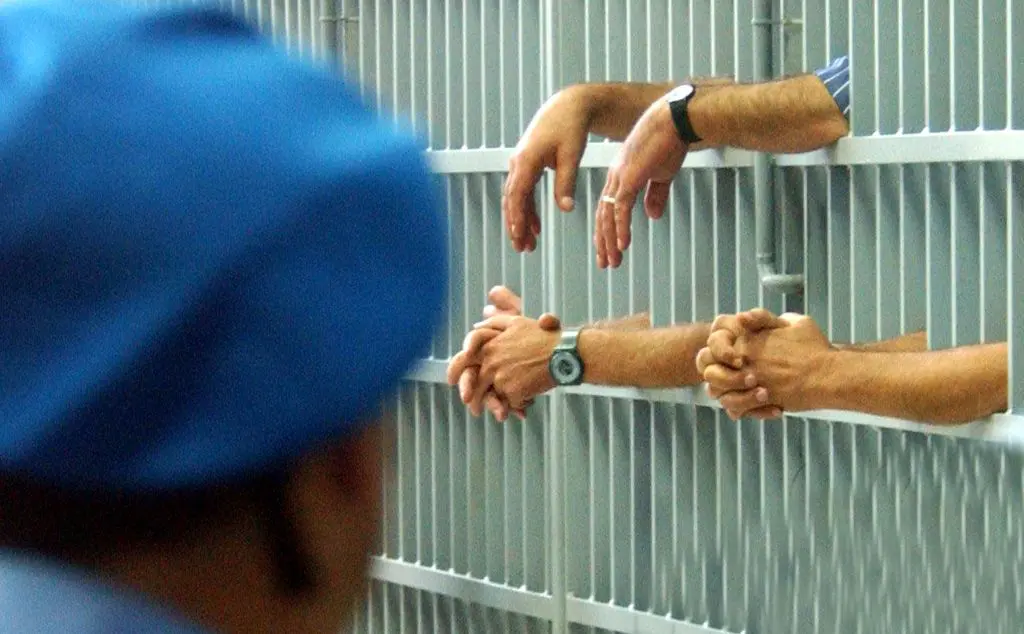
– Photo of repertoire Ipa Agency –
(ITALPRESS).