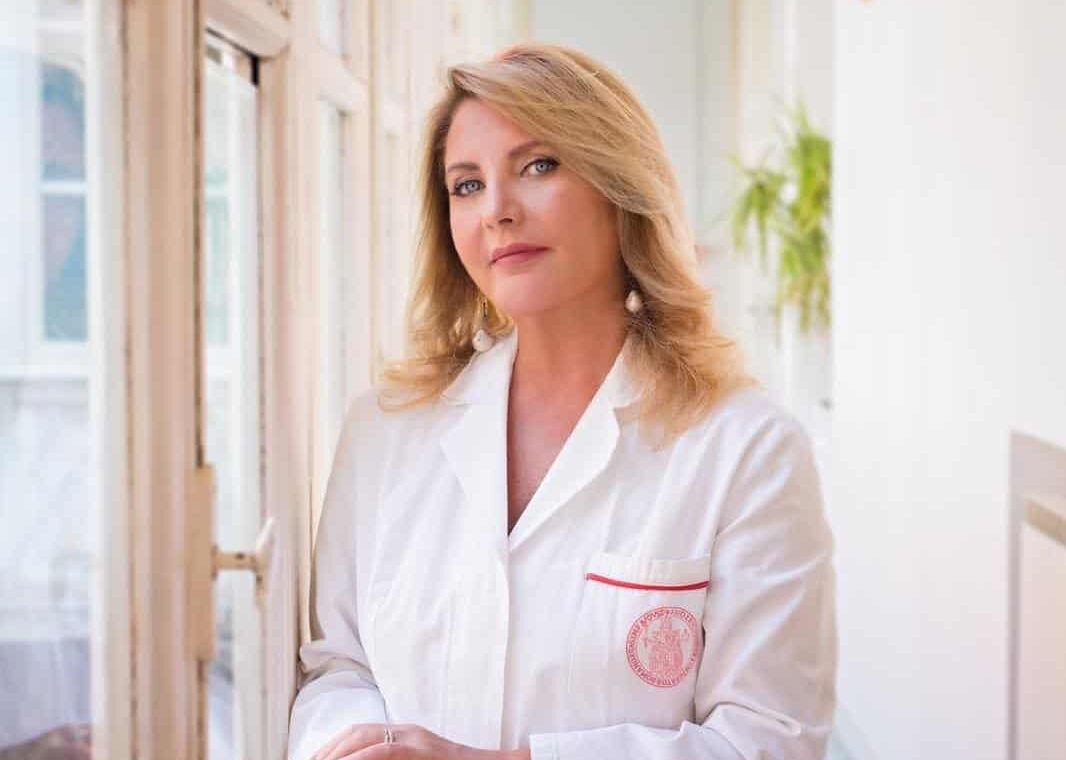
Prevention as a tool to live longer, but above all to live better. It is one of the themes at the center of the intervention of Dr. Annamaria Colao, ordinary professor of Endocrinology at the University of Naples Federico II and founder of Campus Salute, at the microphones of the New York City in the podcast Portraits. Professor Colao has told the work carried out in recent years to spread a culture of health that does not begin from the care of a disease, but much earlier: from daily habits: “Prevention is a bit of the medicine’s queue, and it’s a shame, because it’s actually the one that will allow us to spend much less on care, to stay much better and to live longer. In the end it is the dream of all: to live long without pathologies”.
This setting is at the base of Campus Salute, the project that returns to New York for the third year and that in the United States will put together, as always, education, medical visits and screening. “We left two years ago and had a great success, also because health in the United States is very different from the Italian one. There, without a good insurance, there may be greater difficulties in access to care”.
The starting point, however, is not only to offer a free visit: «Our format starts first of all from a principle: explain what it means to take care of human health. Health grows at the table, walking, being in good company, sleeping the right number of hours, staying awake during the day instead of sleeping day and staying awake at night».
At the School of Italy in New York the project will involve children and parents through lessons, meetings and clinical activities: “There are visits, ultrasounds, nutritional counseling and consultations where students can ask questions. And I must say that young people always ask very appropriate questions, they are interested and ask very precise things”.
In the years the Campus has grown in the USA thanks to the collaboration with New York, becoming for Dr. Annamaria Colao an opportunity to observe what happens to the habits of Italians when moving abroad: “It is interesting to see how our habits change when we move to other parts of the world. They are habits that have found their synthesis in the Mediterranean diet. To compare them with those of other countries makes these exchanges particularly useful”.
Campus Salute was born in 2009 almost by chance, when Professor Colao was proposed to participate in an event dedicated to breast cancer prevention. The idea was to immediately widen the field: «Dissis: if we have to go to the square to prevent only one disease, then we try to do something more. We certainly do breast cancer prevention for women, but we also add the prevention of obesity, diabetes and other frequent diseases in the female population”. Then the next step came: «I thought: these women will probably also be accompanied by men, so why not also offer a cardiological visit? If we are already in the square, let’s take advantage of it”.
From here the idea of the curtains turned into an outpatient. «I called my colleagues and asked them: “Would you go down to the square with me to visit for a couple of days in the Plebiscito Square?” When I told my director, he said, “Are you crazy? No one has ever done it.” And I said to him, “No one has ever done it. Let’s try”. In the first two days about 500 visits were made, a number that then seemed enormous: “Today, in the same arc of time, we come to make even 3,000”. The project then moved to several Italian regions and also to the outskirts: “An important part of our idea is to go where there is greater need to bring free visits”.
Behind Campus Health there is also a necessarily partial response to the difficulties of access to health: “The population suffers the difficulties of access to hospitals and reservations, and waiting lists are often long. We arrive and try to give some relief”. Dr. Colao does not attribute to the initiative the ability to solve structural problems, but claims the value of what it can do concretely. “Certainly it is a drop in the ocean, but, as Mother Teresa of Calcutta said, if that drop was not there, the ocean would still miss a drop. We try to bring our where we can get there. Then maybe someone else will add and the drops will become two».
Prevention is also necessarily due to the rediscovery of the Mediterranean diet, but in a much wider sense of nutrition. «The Mediterranean diet is not only nutrition: it is a lifestyle». At its base there is first of all the relationship with the earth and with the environment: “Recognizes the earth as our main source of nourishment. That land must therefore be protected and cultivated well. We cannot fill it with pollutants and chemicals. There is a direct relationship between the protection of nutrition and the protection of the environment”. It is the principle that today is brought back to One Health, namely the close relationship between human, animal and environmental health.
The problem, according to the endocrinologa, is that the way of eating has gradually moved away from that scheme: “We consume products modified by industry, in which preservatives, additives and sweeteners are necessarily included. The industry must make sure that food is extremely pleasant for us, to the point we want to eat it again”. The result is also a change in the very perception of flavors. For this reason Annamaria Colao invites us to recover “the idea that nutrition needs solid principles: the original, fresh food, to prepare and change in the house”.
The comparison with the United States has made this transformation even more evident: “One of the things I have observed in the United States, especially in the big cities, is that many houses have very small kitchenettes and huge bathrooms. You cook less and less.” However, change is not only about what you eat: “When someone is hungry, he orders takeaway food, if he brings it home and maybe each family member eats in his own room. It is less even the table as a place to be together and share the meal”. And it is sociality, according to Professor Colao, one of the most neglected elements when it comes to health: «The dialogue between people turns on and off signals, switches that have an effect on our health. When we talk to a person to whom we love, for example, our level of stress decreases and this has consequences also on the immune system”.
Eating well, therefore, is not enough if the rest of the lifestyle proceeds in the opposite direction: «Living alone, closing in a room with a smartphone and listening to or constantly looking something isolated can help us to feel bad, even if in the meantime we are trying to eat properly». The original meaning of the word diet helps to understand this approach: «The word diet comes from the Greek “diaita” and indicates what we do every day. We eat every day, we have to move every day, we must wake up possible soon and go to sleep by turning off, at a certain hour, all those signs that continue to keep us active. And we must be with others.” A set of behaviors that, he explained, can significantly reduce the weight of non-transmissible chronic diseases, from cardiovascular and oncological diseases to neurodegenerative and autoimmune diseases.
The luminaire also focused on the differences between Italy and the United States in the world of research: “The United States has been and continues to be a state-of-the-art country in my field, that of scientific research, also because they have always had a great ability to invest on people and talents coming from abroad.” Italy, on the contrary, manages to form competitive researchers but struggles to restrain them and attract them from other countries: “The Italian formation, and in particular the academic one, is very strong. But we are weak in the ability to attract brains from abroad and we are weak even in bringing our researchers back after an experience outside Italy”.
In this regard, Dr. Colao also recalled the proposals received personally by the United States when she was a young researcher. To strike it was above all the ability of American universities to consider the work of a scientist in a total life project: “When in the United States they offer a job to a researcher, they are not offering only a salary. They also offer the house, the solutions for the family, the services for the spouse, the gym and try to understand what else can be needed». It is one of the aspects from which Italy could and should learn: “We should put together the many things that we also possess and which could have a great appeal for a foreigner who wants to come to our country and bring here his own formation, his own experience and his own brain”.
The thread that binds his clinical work, disclosure and Campus Salute is, however, above all, an availability to accept initially unforeseen projects: “I think every day: who would have said I would go to New York? Who would have imagined that we would organise this initiative? ». Even the writing of books came almost by chance, after Eliana Liotta’s proposal. “One thing has pulled another one. Other books have arrived and there will still be so many to write”. The next will be dedicated to nutrition and its role in cancer prevention and treatment accompaniment.
For Annamaria Colao, however, the projects make sense especially if they become a collective work: “For me dreams are this: every day there is a good thing we can do. And above all there is something that comes naturally to me, that is never to think only of myself, but to look at everything I have around: my team and my collaborators”. A team that over the years has also followed seemingly more difficult ideas: «When I propose: “We go in the middle of a road,” they don’t answer me. They tell me: “All right, you want to go? We’re following you. Let’s go see where we end.”.
Among the most recent projects there is a research on the food of the future, which also involved chef Alain Ducasse. Once again the starting point is the recovery of something that, according to Dr. Colao, is losing: the taste. “One of the great problems of the modern population is to have lost the sense of taste. We are no longer able to really feel the flavors and, in order to obtain satisfaction, we end up eating food ever more wrong”. The objective is to work on simple and little calorie preparations that return centrality to the original ingredients: “The great chefs can help us in this: they can take the original food and present it in a way that can enhance its taste. The idea is to get to very simple preparations that, with few calories, are however able to give a great satisfaction. This, in my opinion, may be an important part of the food of the future.”.
Article Annamaria Colao: «Prevention allows us to live longer without pathologies» comes from IlNewyorkese.