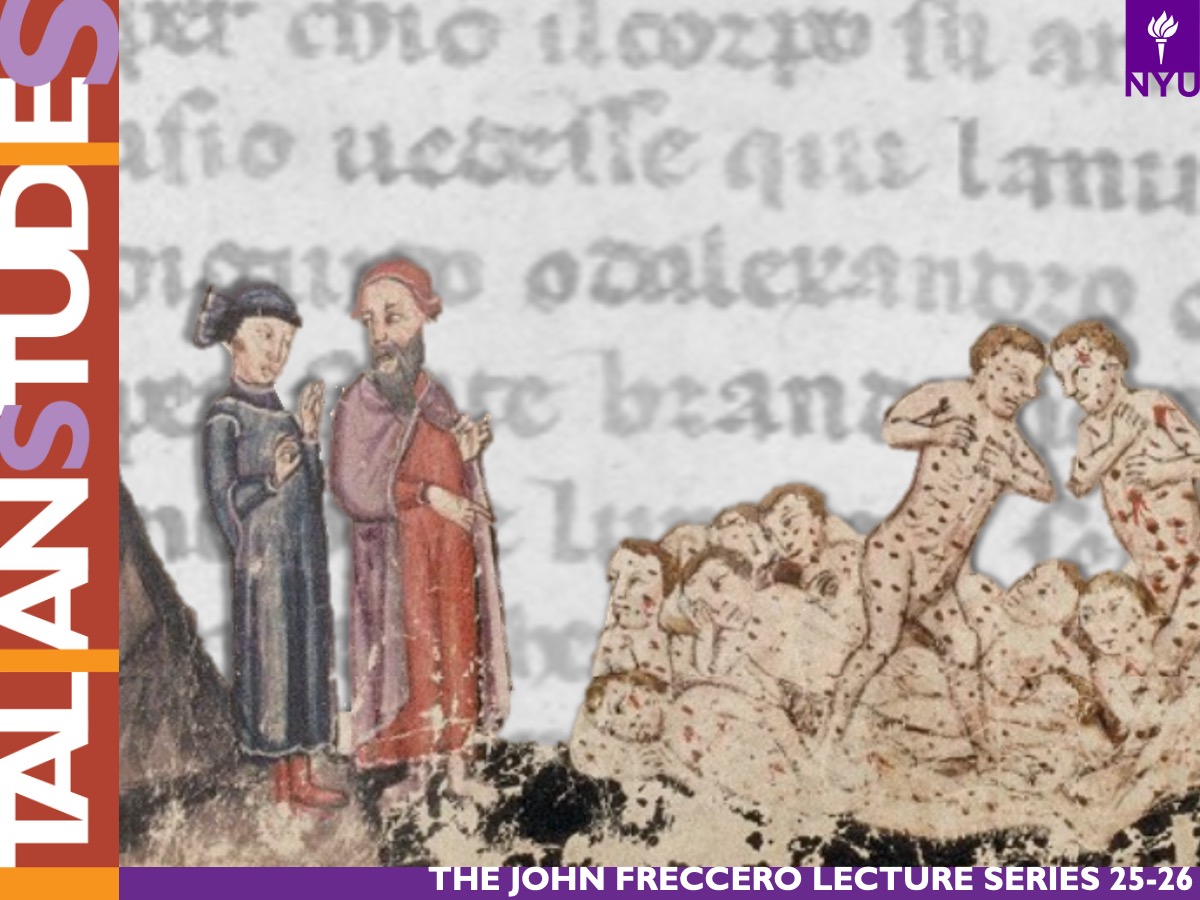
Dante, we know, continues to be the subject of study even at a distance of all these centuries. This is confirmed by the new appointment in the spaces of New York University, on April 7, 2026, where at the Casa Italiana Zerilli-Marimò will hold a new meeting of the John Freccero Lecture Series, part of a cycle dedicated to Italian studies that over the years has consolidated its role as a reference point for the academic community and for the public interested in the Italian literary culture in the United States. The initiative is promoted together with the Department of Italian Studies of the same university.
The lesson, entitled “Deforming Deceit. Contagion, Animality, and Metamorphosis in Inferno XXIX-XXX”, is held by Eleonora Stoppino, professor at the University of Illinois Urbana-Champaign. The focus is on the XXIX and XXX songs of Dante Alighieri’s Hell, in which the falsiers are punished through deforming diseases that alter the body. The analysis proposed starts precisely from the physical deformation inflicted, which is not only a symbolic punishment but becomes a manifestation of moral falsification. In these songs, those who manipulated substances, identity or nature undergo a transformation that makes the violation of natural order visible.
Stoppino’s contribution is based on an analysis of Dante’s language, reconstructing the interweaving of disease and contagion within the two songs. It is a lexicon related to classical tradition, especially with Ovid, very present in medieval culture. In this reading, contagion becomes a way to describe a transformation. The disease pushes the bodies towards an animal condition, blowing the border between human and nonhuman. According to Stoppino, this is how Dante shows what it means to falsify: to compromise the very nature of the human being.
L’articolo A lesson at NYU on Dante’s Hell proviene da IlNewyorkese.