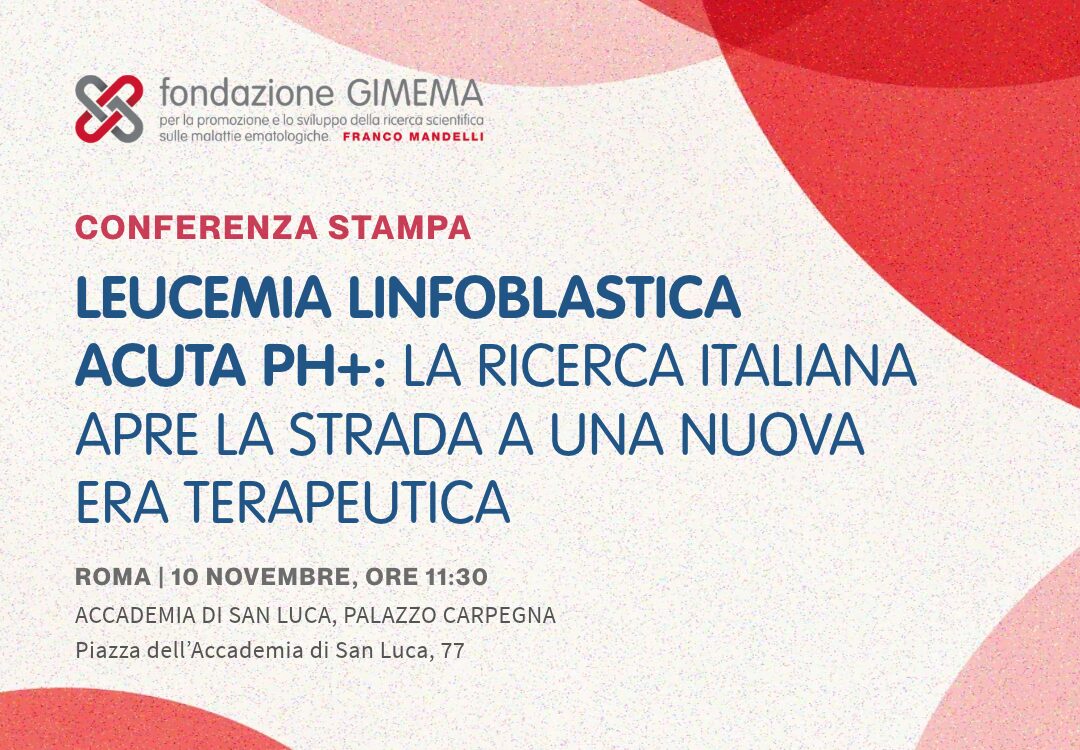
ROMA (ITALPRESS) – This is the last stage of an Italian history, which began at the beginning of the new millennium (2000) with the GIMEMA LAL0201 study, which radically changed the treatment of the first line of adult patients with acute Philadelphia positive lymphoblastic leukemia (LAL Ph+).
Coordinated by Sabina Chiaretti, professor of Ethology at Sapienza University of Rome, Robin Foà, professor emeritus of Ethology at Sapienza University of Rome, and promoted by Fondazione GIMEMA – Franco Mandelli ETS, the GIMEMA ALL2820 study confirms as a therapeutic strategy of induction and consolidation – without the use of chemotherapy (throw of transplantation) – that combines a The results were published on October 15 in the prestigious New England Journal of Medicine scientific journal.
From September 2021 to January 2025, 236 adult patients were involved in testing, aged 24 to 82, with new diagnosis LAL Ph+: 158 received the new experimental therapy and 78 that standard. Experimental therapy included the use of TKI ponatinib, followed by two to five blinatumomab cycles intravenously; standard therapy provided TKI imatinib with chemotherapy. The main objective of the study was to demonstrate that the combination of TKI and immunotherapy was more effective than standard treatment in keeping the disease under control over time. To assess it, researchers considered as the main indicator the free survival of events (Event-Free Survival, EFS), a measure that takes into account not only the survival of patients, but also the response to treatment (hematological response), the possible persistence of the disease at a molecular level (molecular response) and the occurrence of adverse events such as relapse.
Particular attention has been paid to the molecular response, which also allows to detect extremely small amounts of residual disease, not identifiable with traditional examinations, and which represents an important indicator of the depth of the therapeutic response. The results showed the superiority of the new therapeutic strategy without chemotherapy.
Two years after the start of treatment, 86% of patients treated with ponatinib and blinatumomab had not manifested any of the possible adverse events considered in the study, compared to 67% of patients treated with standard therapy. A significant difference, which represents the main result of experimentation. At the end of the first phase of treatment (induction), 94% of the patients of the experimental group had reached a complete hematological remission, compared to 79% of the standard group. The new combination also allowed deeper responses to therapy after the subsequent consolidation phase with blinatumomab.
In fact, the molecular response was reached by 71% of patients treated without chemotherapy, compared to 49% of those subjected to traditional treatment. This means that, in a significantly greater percentage of patients, the disease had become undetectable or present only in minimal traces through highly sensitive molecular examinations. The results were also favourable for other clinical indicators.
At two years, overall survival was 90% in the experimental group compared to 85% in the standard group, while the cumulative probability of relapse was 5% and 13% respectively. LAL Ph+ is characterized by genetic alteration due to chromosomal translocation, i.e. an exchange of genetic material between two chromosomes.
This phenomenon determines the fusion of BCR and ABL1 genes, giving rise to the BCR fusion gene::ABL1, which produces an abnormal protein whose activity promotes uncontrolled cell proliferation and contributes to the development of the disease.
For a long time, chemotherapy and allogenic transplantation of hematopoietic stem cells have represented the treatment pillars for this blood tumor. Since the early 2000s, the introduction of TKI has marked a decisive turning point, significantly improving therapeutic results and opening the way to increasingly targeted and less intensive treatment strategies.
In this course, the GIMEMA group played a pioneering role, starting in 2000 one of the first protocols based on the use of imatinib without chemotherapy in the induction phase. Since then, the subsequent GIMEMA studies have progressively explored the use of TKI first, second and third generation, contributing to the development of therapeutic approaches capable of reducing the use of conventional chemotherapy.
Today, the association between targeted therapy and immunotherapy represents a further and important step forward. This strategy is profoundly transforming the clinical management and treatment prospects of Ph+ ALL, a form of leukemia once associated with a particularly unfavorable prognosis.
“The value of the GIMEMA ALL2820 study is not only in demonstrating that the combination of targeted therapy and immunotherapy is superior to standard treatment, but in providing solid evidence to support a possible paradigm shift in the care of LAL Ph+ of adult – says Robin Foà, professor emeritus of Ematology at Sapienza University of Rome -. To renounce conventional chemotherapy, without compromising the effectiveness of care and on the contrary improving its outcomes, is a result of great importance. And it is also the demonstration of the value of independent clinical research, capable of testing new therapeutic strategies and translating scientific progress into concrete benefits for patients.”.
-Photos press office
(ITALPRESS).