ROMA (ITALPRESS) – Rehabilitative need is 44.9% of the population in Italy. Almost an Italian on two. But passing a disease or being discharged from the hospital does not necessarily mean returning to live independently, working or participating in social life. It is on this distance between healing and daily life that the National Commission of Occupational Therapists of the Fno Tsrm and Pstrp draws attention.
The message is at the heart of the World Day of Employment Therapy, which is celebrated as every year on October 27, with the slogan Participation matters, promoted by the WFOT, the world organization of Occupational Therapists. Participation is important, participation is health and means being able to choose, act and contribute to the life of the community.
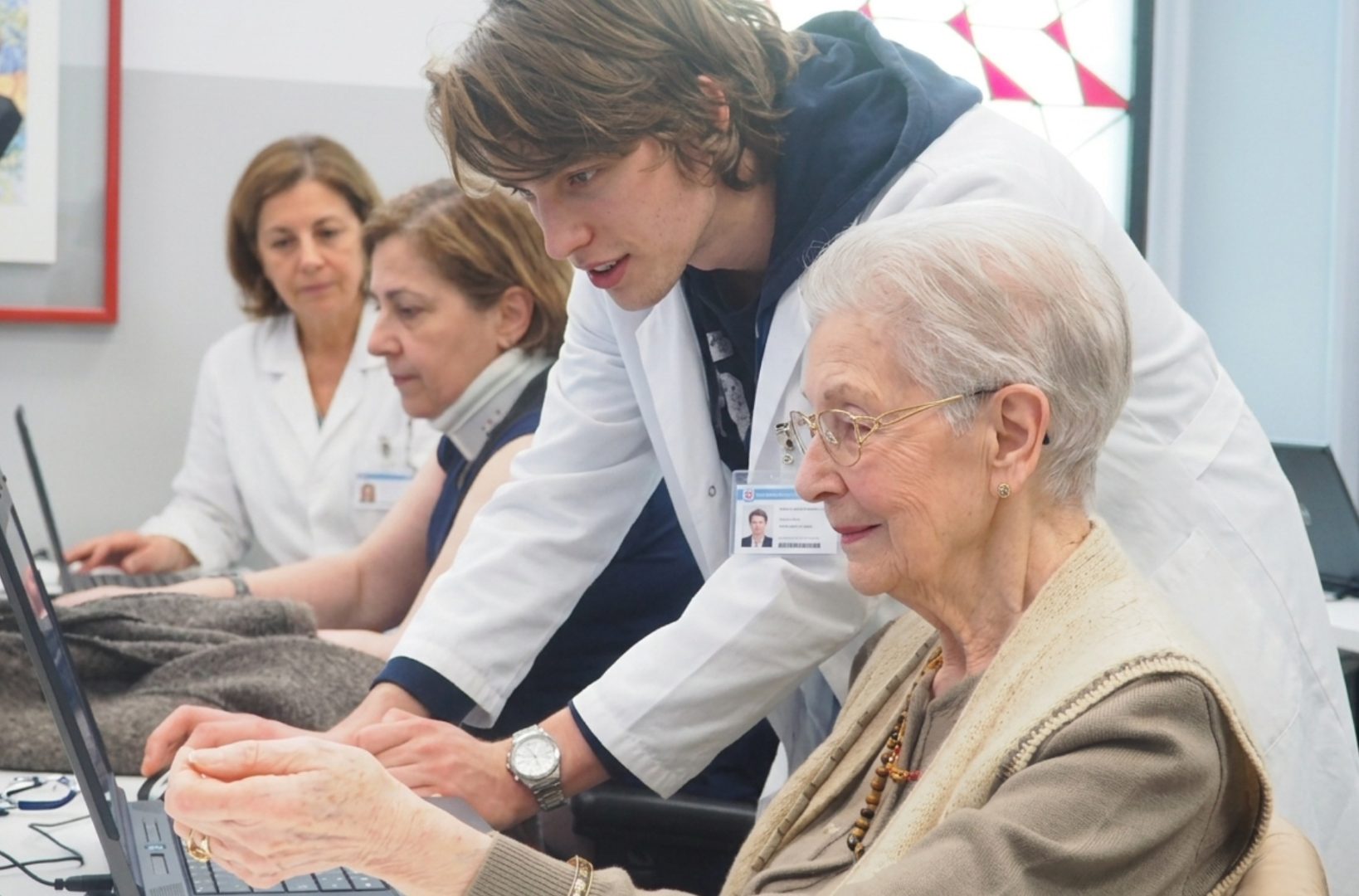
Occupational therapy helps translating rehabilitation goals into concrete gestures and activities to maintain their habits with dementia, return to work after a stroke, preserve their autonomy at home or build a new everyday life after a midwife injury. The occupational therapist considers the physical, cognitive and emotional capacities of the person and his living environment.
“The value of our profession is precisely in promoting the protagonism of each person, so that it is not simple recipient of interventions, but active subject, capable of making choices, orienting their daily lives and fully contributing to the life of the community,” says Michela Bentivegna, president of the National Albo Commission of Occupational Therapists.
The Commission also calls on health to be looked at through what people are able to do. Alongside mortality and morbidity, she proposes to consider autonomy in everyday activities and social participation: not only how much you live or what diseases you have, but how you can live.
In scientific literature this dimension is called operation. As early as 2017, researchers Gerold Stucki and Jerome Bickenbach had proposed their use as a further health indicator, in relation to the life context of people.
A position recalled in July 2026 by the World Health Organization (WHO), in the document “Rehabilitation and Functioning in the 2030 Agenda”. In which it is reported that what is not measured is likely to remain excluded from investment priorities and health policy programming. Research also highlights the contribution of occupational therapy. A 2026 multicentric study (Codd et al., 2026) reports that nearly 80% of people initially out of work returned to work after a specific occupational therapy intervention.
Other research documents benefits in the daily activities of older people (Saito et al., 2025) and in the participation of people with early cognitive decline (Ward et al., 2025). According to the magazine The Lancet (2020), in the world, a person in three needs a total rehabilitation need. In Europe, the percentage rises to 42%, while in Italy it reaches 44.9%.
In the face of this need, the development of territorial assistance and the Houses of the community requires services capable of affecting the real life of citizens. However, there remains a critical point: the lack of availability of Occupational Therapists.
“Despite the fact that the Regions have reported a significant need for occupational therapists for their respective territories – says President Bentivegna – there remains a marked discrepancy between the needs detected and the available training capacity. Ensuring an adequate number of Occupational Therapists is indispensable for each citizen to access appropriate rehabilitation paths, in a fair way, throughout the national territory”.
Living longer is a goal and being able to live fully is the real challenge. “Making autonomy and participation in the centre means evaluating health for its impact on people’s lives. This is where occupational therapy contributes to transform recovery into concrete possibilities of choice and participation,” Bentivegna concludes.
-Photo FNO TSRM print office and PSTRP-
(ITALPRESS).