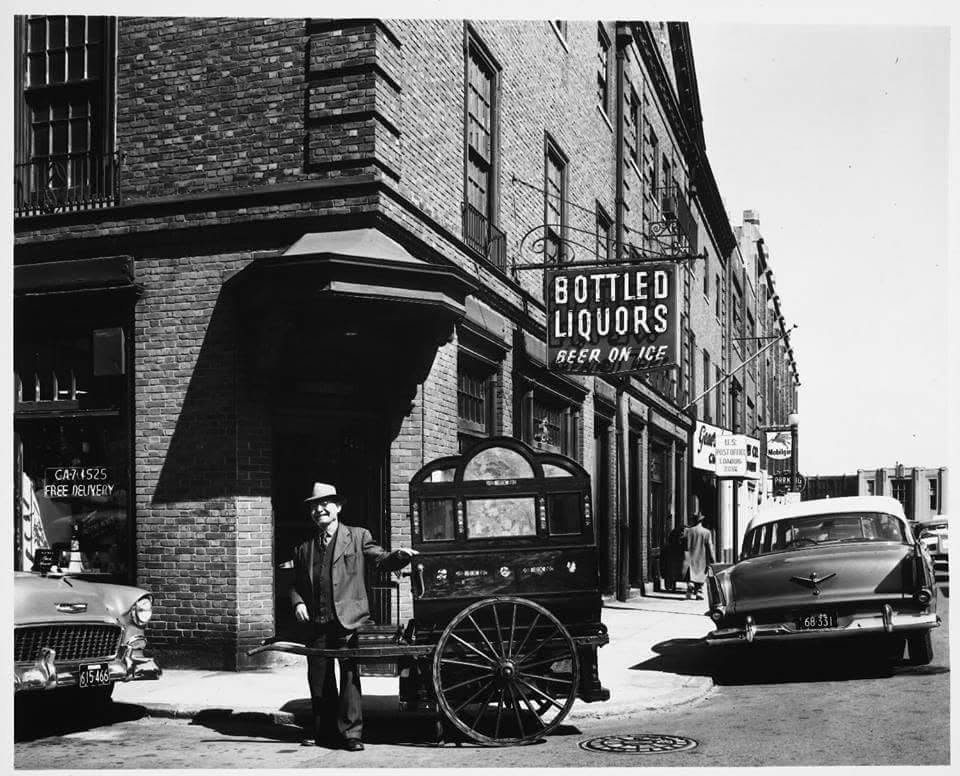
In 1974 Marino Persechini retired and sold the piano he had worked with for almost all his life. He was 94 years old and since 1900 he played in the streets of Boston, turning a crank that put the notes on motion. The instrument was built and purchased in New York in 1899: Friday, October 23 will return to the city for a presentation at the Italian American Museum in Little Italy. In the meantime, in New York, Persechini’s trade had first become a prohibited activity and then a memory.
To ban it was a mayor of Italian origin, Fiorello La Guardia. Hand crank instruments were particularly associated with Italian immigrants, who played them to collect the offers of passersby. For the administration they were instead a hindrance to traffic, a source of noise and a form of attack. When the ban came into force in January 1936, Persechini still had almost forty years of work in the streets of another city.
His was a barrel piano, a mechanical piano, built by Caesar Maserati. Turning the crank starts a cylinder on which the sequence of notes is prepared: who uses it puts in motion a music already “written” in the mechanism. The instrument of Persechini has a repertoire of ten songs and also includes two drums, a plate and seven bells. It is often called an organ, but it is a piano: confusion also depends on the fact that in English the players of the different hand crank instruments were generically referred as organ grinders.
For immigrants living in that job, there were manufacturers, renters and roads where they could get the tools. In Lower Manhattan you could rent in Baxter Street or buy in nearby Chatham Square. Some musicians were accompanied by trained monkeys, who attracted passers-by and ended up becoming part of the stereotypical representation of the Italian player.
Street music had opponents before La Guardia. In the 19th century, in New York as in London, the protests against the organists mixed insufficiency for noise and hostility towards those who played them. In 1935, La Guardia stopped renewing the licenses to outpatient musicians: the measure also affected other players, as well as those of the organists.
The decision met resistance. The chronicles of the time report petitions, calls for singers and radio broadcasts to support musicians. The contrast concerned first of all the nature of that trade: for the mayor it was authorized accattonaggio, for those exercising it was the job to pay their own expenses.
In Boston Persechini continued to do so until 1974. Then he sold out the piano to Frank O’Boy, an antique dealer of Brookline, who invited customers to the store to listen to him. Anthony and Suzanne Gangi bought it on October 22, 2024, as they tell on the page dedicated to the recovery of the instrument, and they restored the mechanisms. Anthony also deals with hand crank music, with performances and meetings on the history of these instruments.
On 23 October the piano will be operated outside the Italian American Museum, at 151 Mulberry Street, between 12 and 15. At 6 pm the museum will follow, for which a ticket is provided. Visitors can also turn the crank: the same ten songs Persechini worked in the streets of Boston will play back in the city where he bought the piano.
L’articolo The return to New York of the hand cranked piano by Marino Persechini proviene da IlNewyorkese.