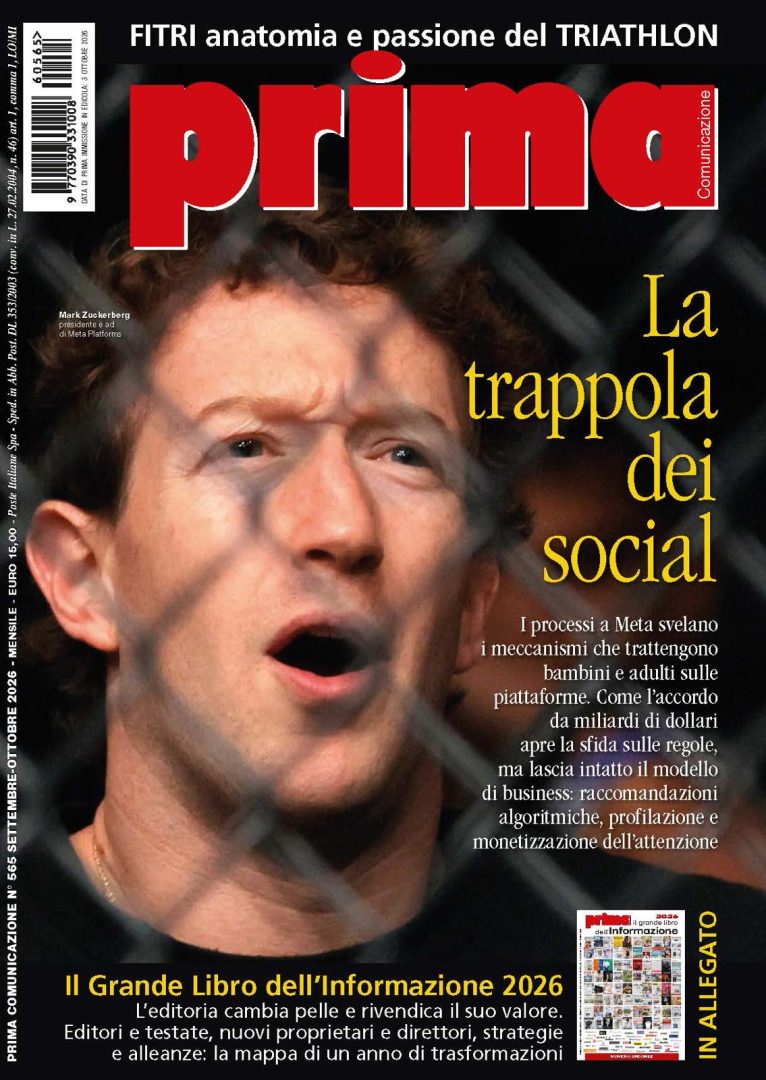
ROMA (ITALPRESS) – Properties that change, new directors, digital strategies, heads looking for different publics and markets. The 2026 is redesigning the geography of the Italian media and Prima Comunicazione adds new dowels to a constantly moving picture, also deepened in The Great Book of Information 2026, annexed to the number.
From the appointment of Giuseppe De Bellis to the direction of the Sun 24 Hours to Alessandro Barbano to lead the Nem newspapers; from the new initiatives of the Sae Group, including the La Stampa Usa project and the new Sae Salute, to Mario Sechi to the direction of the Dire Agency, which focuses on artificial intelligence without sacrificing the deontological rules and the strategic role of the agencies. And again, the digital development plan of GEDI for Repubblica and the growth of Il Tempo di Daniele Capezzone, supported by the digital site and the construction of a community. The cover with Mark Zuckerberg introduces one of the most delicate themes of the issue: how much does the new generations cost a social media model built to capture and retain attention?
In the United States hundreds of cases brought Meta before the magistrates of tens of states and to sign billionaire agreements on the protection of the younger ones. The business model based on profiling and recommendation algorithms does not change, while the problem of child safety becomes global. And that of adults. Among regulatory interventions, judicial proceedings and news reports, the issue now concerns not only platforms and families, but the future of digital society.
How do you measure an audience that continually switches from television to smartphone, from platforms to streaming? Under the push of Agcom and the new governance led by President Marco Travaglia and CEO Alberto Dal Sasso, Audicom opens to OTTs such as Netflix, YouTube and Amazon. The game, technical but decisive for the whole advertising market, is played on the integration between SDK detections and server-to-server data.
The algorithm can sell. But can you build communities? The analysis of CERTA led by Massimo Scaglioni focuses on one of the paradoxes of digital advertising: the extraordinary ability to profile and reach the individual is not equivalent to the ability to create a shared context. And in the great collective deadlines, starting from the electoral ones, television returns to show its strength as a place of common information, returning value also to the editorial context and to the trust of brands. Does AI run, but governance, rules and societies manage to keep up? From the mountains of Dario Amodei, founder of Anthropic, on the risks related to the development of technology to the issue of transparency of systems, Prima follows a debate that now comes out of technological laboratories to invest economy, work and culture. Fly Me to the Moon, the Mundys podcast led by Riccardo Luna, and conceived with Alessandro Benetton, starts here: how to rule algorithms, avoiding innovation to produce new economic and cultural inequalities.
He is one of the best known Italian business lawyers. But Roberto Cappelli’s passion since he was a boy is rock. Collector with over 10 thousand records, two nights a week changes life and becomes voice of Radio K33 with Rock Evergreen. Meanwhile, he builds a real encyclopedia of strictly rock music online, open to fans but also to those who want to start discovering it. A great event is no longer just a show: it can tell a brand, a city and even a country. Carlo Noseda, managing director of Balich Wonder Studio, tells Prima the growth of live entertainment as a major international communication platform. And the success of the Milan Cortina 2026 ceremonies shows how show, creativity and production can turn into a formidable instrument of reputation and attraction for the Italian system.
“Once it was said that the sport needed to remove the boys from the street. Today our task is to bring them back, making them move in the open air.” It is the image chosen by Riccardo Giubilei, president of the Italian Triathlon Federation, to explain the growth of a sport that puts together swimming, bicycle and racing. First he tells the triathlon through the numbers of a movement in strong development, the spread among young people, the great international appointments and an aspect that goes far beyond the competition: the economic, tourist and image impact that races and events can produce on the territories that host them.
-Photos First Communication
(ITALPRESS).