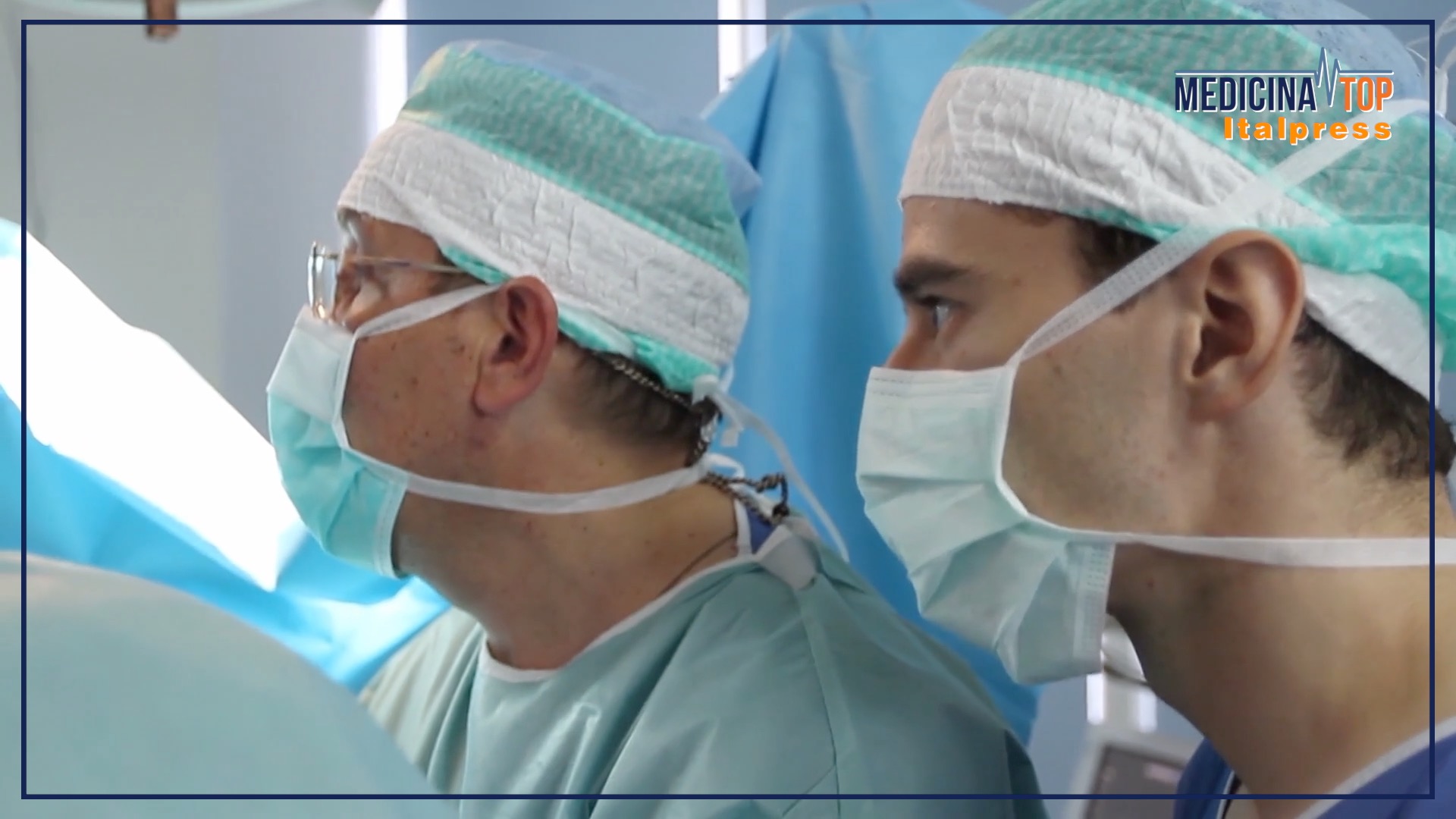
ROMA (ITALPRESS) – Heart surgery is a profound transformation, driven first of all by the great development of mininvasive and robotic techniques: the robot enhances human senses, from the ability to view the precision of movement, and is therefore an unparalleled ally in the success of delicate interventions such as those carrying out on the heart. Valve interventions, once associated with traditional open heart surgery, are often faced with mini-nvasive and robotic techniques; for the patient the advantage is a minor surgical trauma and a faster recovery.
“The mitral valve is a two-door door between the atrium and the left ventricle, i.e. the two sinister chambers of the heart: the atrium collects the arterial blood of our lungs and, through this valve, the oxygenated blood enters into the left ventricle; this then contradicts, opens the aortic valve and closes the mitral. Basically, our heart is a motor that works with pistons that work alternately and not parallel: one opens and one closes, so the mitral prevents the blood from turning towards our lungs.” Alfonso Agnino, head of the Cardiosurgery department of the Humanitas Gavazzeni hospital in Bergamo, interviewed for Top Medicine, TV format of the Italpress press agency.
The two main problems of the mitral, he explains, are insufficiency and stenosis: in the case of the first “mitral valve is incontinent: when the ventricle is contracted the two doors do not fit perfectly and the blood returns towards the atrium, then towards the lungs. In stenosis is the opposite, there is a closure: the two doors are blocked and the oxygenated blood struggles to enter the ventricular chamber. When a patient complains of a strange affanno appeared recently, such as when he makes the ladders or speeds up the step, of palpitations that he did not feel before or of a sense of fatigue especially under effort, this makes me think that there could be a vavulopathy, that is a mitral valve disorder. On these, more than a prevention, there is the possibility to identify those patients who may encounter a mitralic valve problem, not so much in the stenosis that today fortunately no longer exists as in the insufficiency: the prolapsed patients of the mitral valve are about 2-3% of the white population, so we talk about about 200 million people in the world; 3-5% of these can go to a severe mitralic valve failure.”.
As for the robot, it is defined as “a cybernetic ally, a fundamental point of surgery: in the case of the mitral valve the traditional intervention, that is, sternotomy, is always better avoid it for the patient. There has been an evolution in terms of mini-invasiveness, first with a right mini-toracotomic approach and then evolve, in selected cases and especially in high volume centers of mini-invasive surgery, towards robotic surgery: through small holes of 8 mm and a side engraving of 1.5-2 mm you can reach the mitral valve and give rise to repair or replacement. Substantially the surgeon moves away from the operating table, moves on a console and through joysticks transmits the information to an artificial intelligence that in turn transmits them to the robot and improves from a technical point of view the surgical gesture: it is like entering inside the heart and completely move the arm as you want”.
Even when the surgical gesture is made through the robot, Agnino emphasizes, “in the end we are always driving it: the robot allows to improve the performance of the surgeon, but if the surgical gesture is wrong the robot is not able to correct it, indeed it amplifies the error. With regard to the purely surgical aspect, the robot is definitely an ally: I do not think it will completely replace the surgeon, because if there should be a problem there will always be need of the surgeon to manage the complication; the processes of empathy and sympathy that the surgeon is able to establish with the patient, I do not know how much the robot is able to make them.”.
The final reflection of the cardio surgeon is dedicated to new technologies: “Personally I’ve been able to experiment with both Smart Glasses and Robotics in being able to take place at a distance: this type of operations will improve us from a technical point of view and give rise to processes of democratization of distance care. Covid has opened the possibility to make these connections like those of today, it has become almost a routine: if we are able to go beyond the algorithm, we are also able to give rise to processes of democratization of care”.
– Photos from Top Medicine –
(ITALPRESS).