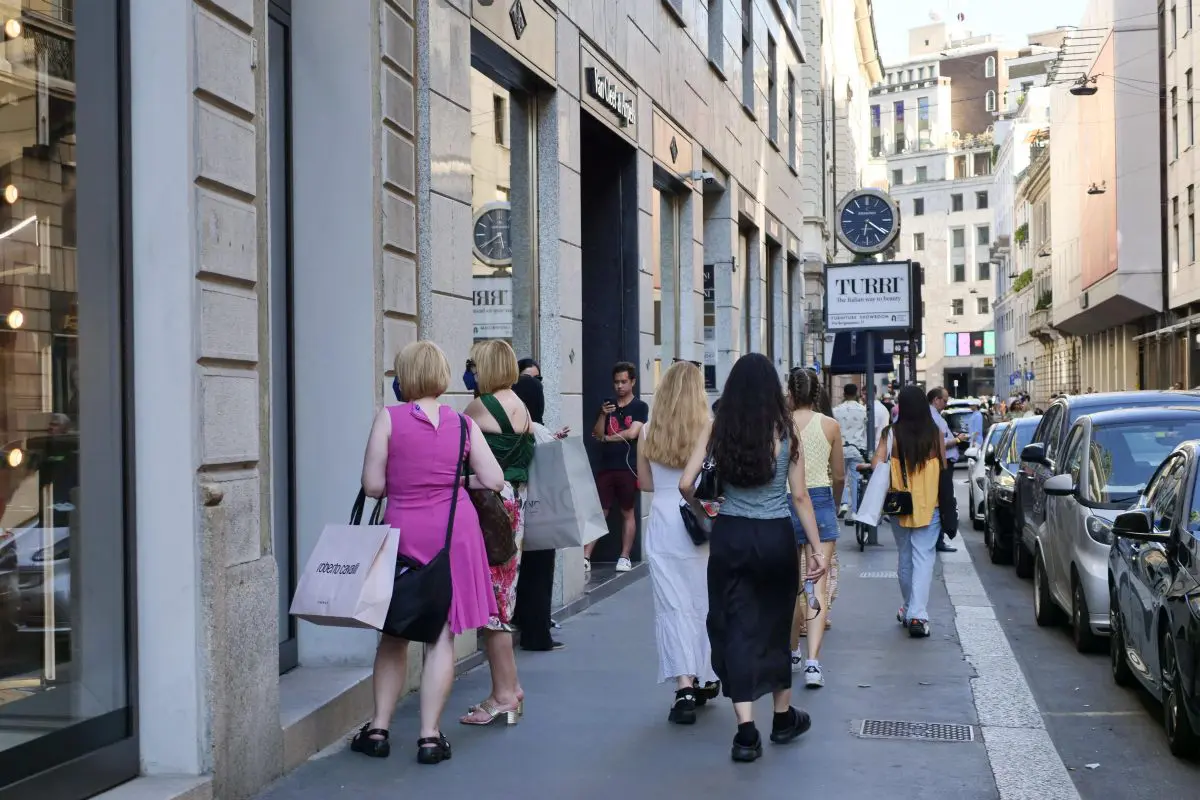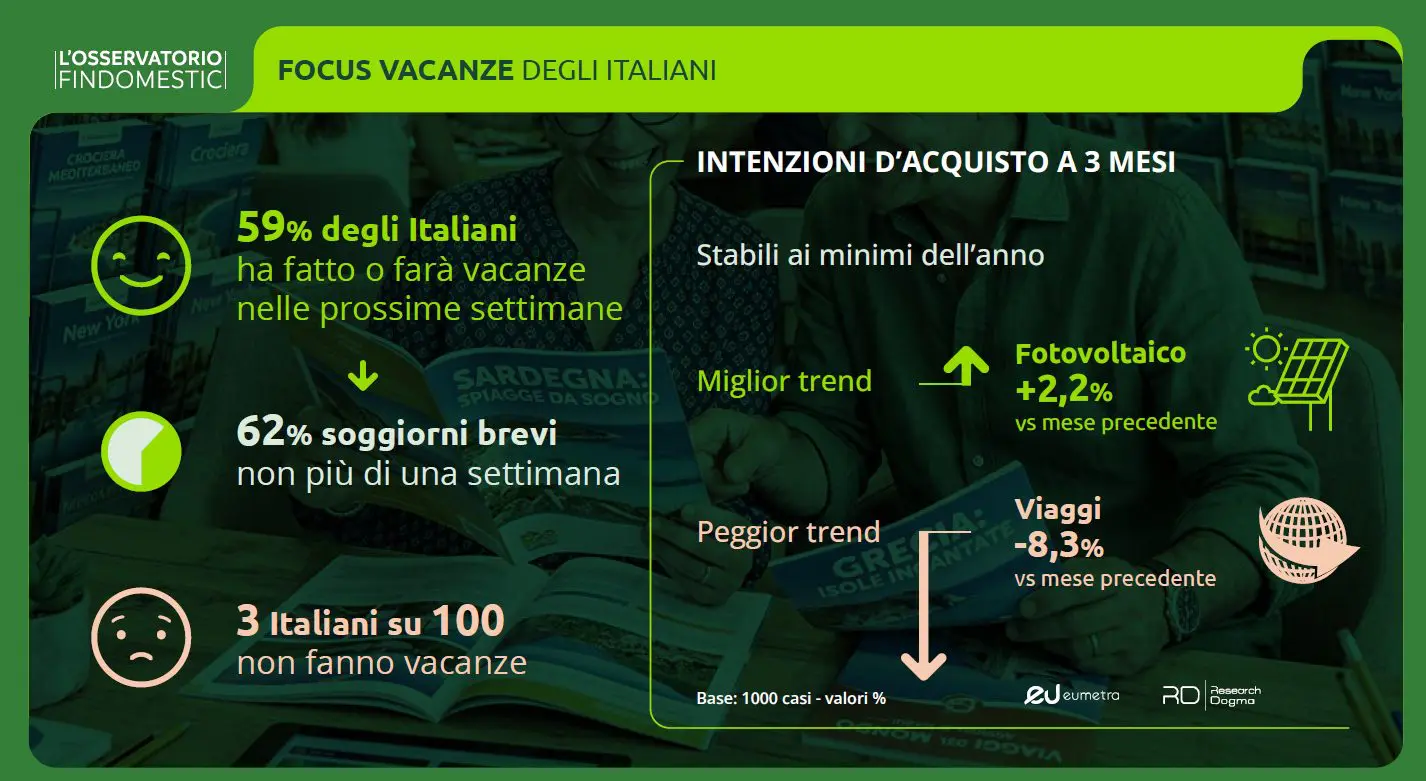
ROMA (ITALPRESS) – The holidays of the Italians are more expensive and they are shortened. The monthly Findomestic Observatory in September notes that average household spending for the summer of 2026 has reached 2,130 euros, more than 15% more than the 1.847 euros of 2025. 59% of Italians have done or are completing the holidays, a little better than last year (55%) but worse than 2024 (63%). For 62% of those who left, however, the stay lasted only a few weekends or, at most, a week.
The increase in costs has been largely foreseen: 68% of holidaymakers claim to have spent in line with what was anticipated, while 21% exceeded the budget. 63% declares that holiday costs have increased more than other prices. Among the rinks the fuel is the voice clearly most felt by 80% of the sample, follow restaurants and bars (65%), hotels and beaches (49%).
For families of 4 people the increase in average spending compared to last year was 11%: from 2007 euro of 2025 to 2233 this year.
“In September the share of Italians who consider favorable the moment to make important purchases dates from 21% to 25%, but the three-month propensity remains on contained levels – comments Alex Papi, economist at Findomestic -. The holidays have absorbed more resources to the families and, not by chance, 34% of the respondents expect to have to give up in the remaining months of the year. The optimistic share is 37%, but it increases from 41% to 45% those who judge problematic the economic situation of their family and drops from 61% to 55% the percentage of those who managed to save something in recent months”.
Claudio Bardazzi, head of the Findomestic Observatory, adds that “precaution remains high: inflation is still the main concern for six Italians out of ten, while hot waves bring climate change to 47%, the highest level ever. Calo of purchasing power, international conflicts and economic situation of the country remain feared by an Italian out of three”.
Overall, the three-month purchase intention index remains substantially stable in September (+0.5%). The most obvious decline in travel is 46% (-8.3 percentage points): the summer peak is closed, the design of families moves towards more affordable and daily purchases. Small appliances rise to 38% (+2), sports equipment to 28% (+2.2) and DIY equipment to 31% (+0.3).
The technology shows a widespread hold: telephony to 28% (+0.6), TV to 23% (+1.4), PC to 23% (+0.5), tablet to 17% (+1) and cameras to 12% (+0.9). The budget for a smartphone, amounting to about 554 euros, confirms the attention to the price. Also the house recovers land, especially for more selective interventions: furniture to 24% (+1.2), renovations to 14% (+0.7) and large appliances to 23% (+0.8).
In the automotive the interest for the new car is weakened, to 13% (-1.3), while the one for the used, to 12% (+0.7), and for the motor vehicles, to 7% (+0.4); among the electrified motors increases in particular the interest for the used. Alternative mobility proceeds at two speeds: e-bikes rise to 10% (+1), while electric or similar scooters fall to 4% (-0.7), in a context of new costs and rules. Finally, domestic energy efficiency remains volatile: photovoltaic and solar thermal rise to 10% (+2.2), condensation or biomass boilers to 8% (+1.1) and insulation to 9% (+0.4), while they return heat pumps to 10% (-1.1) and set to 11% (-0.7).
– SEC Newgate press office photos –
(ITALPRESS).