ROMA (ITALPRESS) – “We have lived the most intense investment season in Italy in recent years: in 2018 public investments were 2.1% of GDP, in 2023 we were up to 3.2%, also thanks to the Pnrr. It would be a shame if this momentum was exhausted.” In an interview with Corriere della Sera, Pietro Salini, Ceo di Webuild, draws a budget of the Pnrr and proposes a strong alliance between government and industry, together with an adequate planning of investments in infrastructure, so that the thrust of the National Resumption and Resilience Plan becomes structural. Webuild’s AD starts from Operation Trevi to explain the reasons: “Ours is an industrial proposal consistent with the path followed here, aggregating Italian skills to build an international champion. In the great works the size counts, but even more count the skills, which are rare”. Asked about the risk that dimensional growth for acquisitions can create an excessive concentration in the hands of Webuild, Salini is net: “Webuild works all over the world: we have over 58 billion order portfolio and more than 65% of revenues comes from abroad. In Italy we represent only 2% of the construction market, the Italian orders today are 37% of our turnover and come from competitions open to Italian and foreign operators. This international scale and the ability to compete represent a strategic platform for the whole Italian chain: today with us work in the world 17,500 enterprises. In only 2025 we hired about 15,000 people, invested in innovation in factories in South Italy.”
Returning to the Pnrr, he says: “We must transform the momentum brought by the Pnrr into the new normality. It is necessary to create a permanent alliance between government, client, enterprises and banks, to plan together on a multiannual horizon, providing contracts that can adapt when changing the conditions of project and market and quick tools to resolve technical disputes. It is the condition that companies continue to hire, train people, invest in the supply chain, and why the country continues to build what it needs.” Regarding the theme of the adjustments that Webuild put in the spotlight, after the request to the State to recognize the greatest costs of the works in progress, Salini explains: “We have highlighted the need for the application of existing contractual rules and are continuing to dialogue with RFI. It is a piece of the same speech. The short-term cash requirements, amounting to approximately 2.1 billion, are linked to the continuation of shipyards running on behalf of the public commission and is not linked to the group’s autonomous cash needs, which confirms the guidelines for 2026. If the works were not allocated and made available, they could not continue. Among unpaid payments and advances we are supporting a supply chain made by thousands of small and medium-sized enterprises. It is necessary to develop the ability to act within a country system in terms of competitiveness. And manage the variable time to approve and start projects.”
Finally, it points to the road to support the infrastructural momentum initiated by the Pnrr: “The infrastructure gap continues to weigh on growth, as stated in the speech on the State of the Union of Ursula von der Leyen. This is the right time for an even closer strategic alliance between state and business so that the fragility of Europe and Italy becomes the spring for courageous choices that look to the future. A country that does not invest on its infrastructure cuts competitiveness and welfare. In practice it cuts the future of its children,” he concludes.
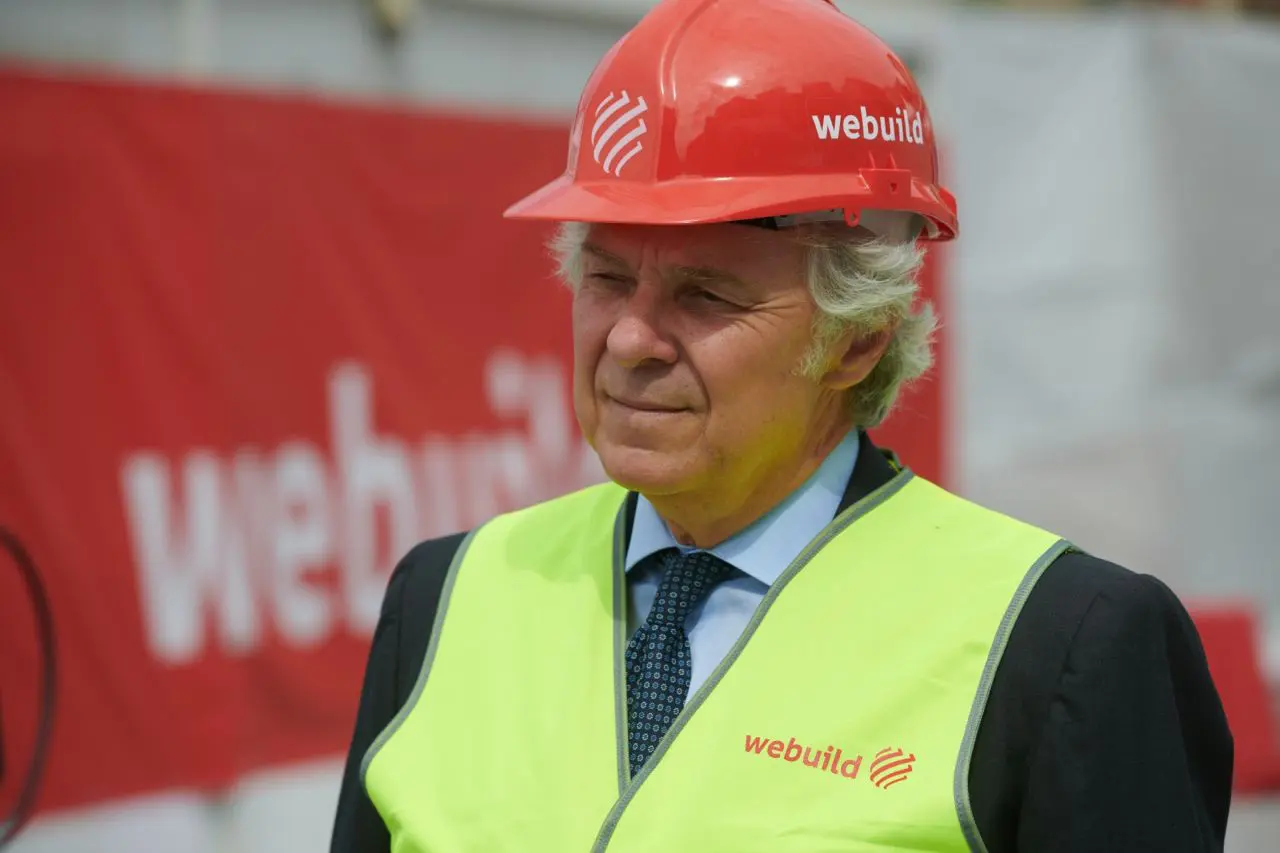
– Photo press office Webuild –
(ITALPRESS).