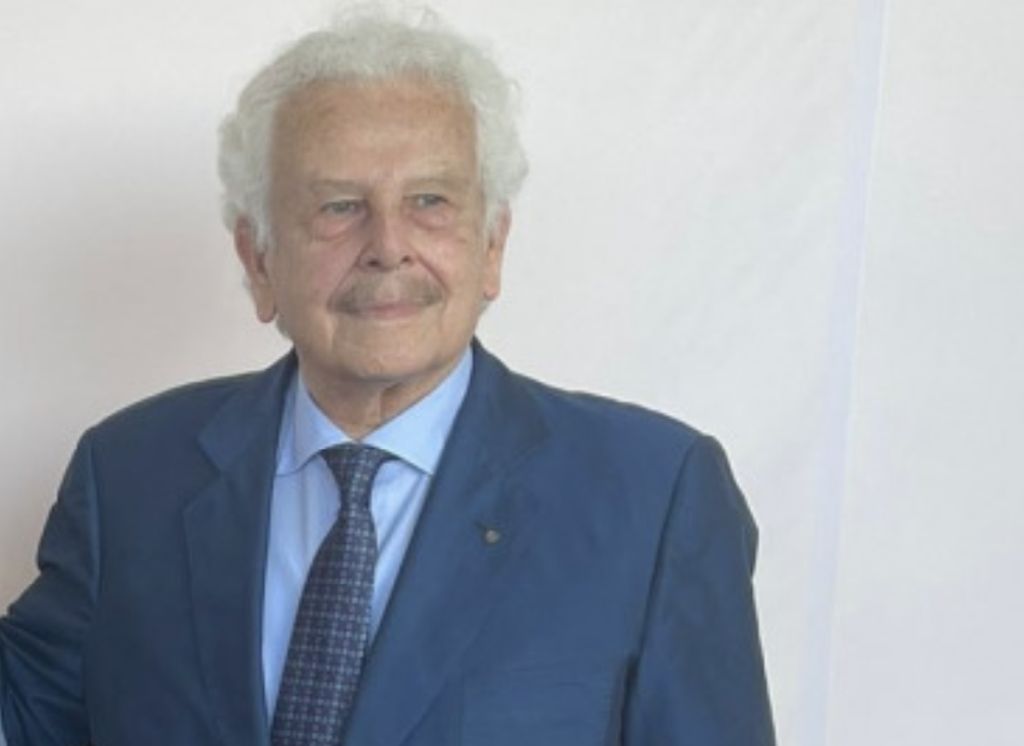
PALERMO (ITALPRESS) – There is a fundamental principle that should guide every choice on the future of home care in Sicily: the sick person comes first of all. It is from this premise that starts the reflection of Luigi Zancla, president of SAMO ETS, a reality committed for over 25 years in the care and care of home palliatives. The focus is on the future of home services and the risk that a model based mainly on economic competition can end up putting the only real goal in the background: the quality of care. “We do not defend a single association and do not want to protect organizations as such. Our duty is to defend our patients,” explains Zancla. According to SAMO, “if the institutions choose competitive tools to entrust the services, it will be indispensable to introduce objective, verifiable and transparent criteria, capable of evaluating not only the cost, but above all the specific experience, the qualification of the operators, the continuity of the welfare, the organization, the ability to answer, the integration with the health system and the quality of the services actually offered. Because in home care the price cannot and must not be the only measure of value. The theme takes even greater weight in palliative care, where care is addressed to people suffering from serious diseases, often in an advanced stage, and to families who face moments of extreme fragility.” “When it is no longer possible to heal a disease, it is always possible to cure pain, relieve suffering and accompany the patient and his family,” Zancla explains. In these cases, we read in the note of the association, “the care is not reduced to a mere health performance. It means presence, continuity, competence and listening skills. It means building a multidisciplinary team of doctors, nurses, psychologists, physiotherapists, social workers and social workers around the sick. The house thus becomes an integral part of the therapeutic path: the place where the person keeps his affections, his habits and, above all, his dignity”. For this reason, “it is a concern for the eventual entry into the field of subjects without a proven specific experience in home care”. The risk, warns Zancla, “is that an exclusively economic logic determines a compression of the costs and the work of the operators, with inevitable relapses on the quality of the assistance and the entire balance of the health system. Not a corporate battle, but for citizens. SAMO’s message aims to avoid any misunderstanding: it is not about defending a category position. The Third Sector does not ask for privileges, but it claims that the system is built by focusing on the general interest. Any person called to guarantee assistance must demonstrate concretely to possess skills, experience, qualified personnel and adequate organizational capacity.” The Code of the Third Sector has identified in co-programming and co-projecting the ideal tools of collaboration between public entities and organizations that pursue general purpose of interest. But beyond the chosen administrative instrument, the key principle must remain unchanged: a bureaucratic procedure cannot become more important than the person. If the future of home care will pass through competitive procedures, “the request is to establish clear and rigorous parameters. Not only does it matter how much a service costs, but who gives it, with what experience, with which professionals, with what continuity and with what guarantees for the patient – you still read -. The quality must be verified, the guaranteed continuity and the demonstrated professionalism.” “Who takes on a fragile person – adds Zancla – assumes ethical responsibility that cannot bereduced to a simple business relationship. A sick person is not a customer and suffering is not a market”. The challenge for Sicily, therefore, is not simply to choose the economically most convenient subject, but to build the safest, competent and qualified system for those who need assistance. The collaboration between public health, ASPs, hospitals, general medical doctors, and the Third Sector “is fundamental to structure a network capable of assisting the patient at home and, when clinically appropriate, reduce improper recourse to first aid and hospital departments. The domicile cannot be considered only an organizational solution or a way to contain expenditure: it must be a choice of care”. “Whatever will be the model identified by the Sicilian Region – the president of SAMO concludes – there must be an invariable limit: the sick person cannot become the object of speculation or business. In palliative care, the value of a system is not measured in balance sheets, numbers or procedures. It is measured in the ability to be there when a person is more fragile. With competence, with continuity, with humanity. And without ever giving a price to dignity.”.
– photo press SAMO ETS –(ITALPRESS).