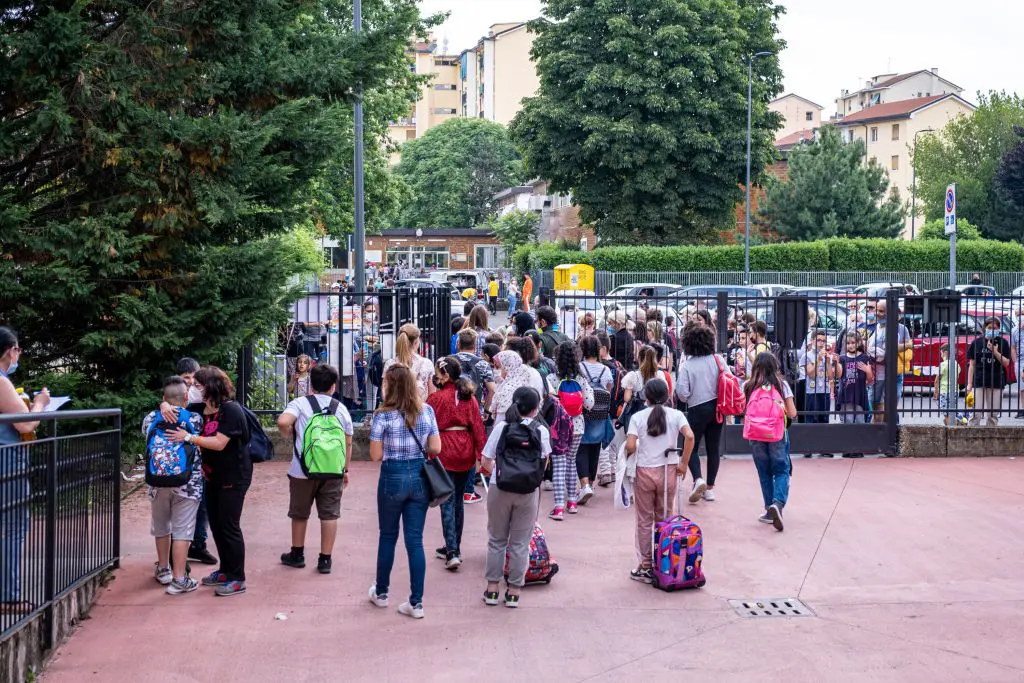
ROMA (ITALPRESS) – From Monday will play the first bell in Bolzano and then, to follow in other regions of Italy: you go back to school and you can get back to school blues, the melancholy return that can turn into some cases in anxiety. According to Chiara Cattaneo, the National Center for Disease Prevention and the Promotion of Health and Vittorio Palermo, the Department of Cardiovascular Diseases, Endocrine-Metabolic and Aging Iss is a phase of adaptation that you can overcome with some targeted strategies. 2
In the younger children it can manifest with the difficulty to separate from the reference figures, while as you move on are the school performances to generate greater concern. To arrive at the adolescent and pre-adolexic phase in which relationships with peers assume a central value and fear of exclusion from the social group to generate stress. Particular attention deserves according to Iss experts the moments of school transition, in which the redefinition of groups and friendships can generate uncertainty even in students normally well adapted.
Reentry anxiety can occur through repetitive thoughts and concerns about teachers, school performance, friendships or organization of everyday activities. Some children constantly ask for reassurance, others show irritability, increased emotional sensitivity or difficulty concentrating. Physical symptoms are not even infrequent. Bellyache, nausea, headache, tiredness, sleep disorders or appetite reduction are common ways through which psychological discomfort can express itself. In other cases, avoidance of school activities, reluctance to leave the house or resistance to face perceived situations as difficult.
To reduce school-related concerns, it is useful to gradually restore school rhythms in the days before the beginning of the lessons. Anticipating the time of the alarm and sleep, resume normal morning routines and limit the use of screens in the evening hours helps children and boys feel more prepared and less stressed. Prepare the school material together can facilitate an adaptation to return to class. Appropriate sleep and nutrition are key factors for emotional well-being.
It is important to make sure your children make breakfast, follow regular meals and have the opportunity to make snacks during the day. Children and boys well rested and following proper nutrition are generally less vulnerable to stress, irritability and difficulty of concentration. Many children live returning to school with fears and uncertainties.
Parents can help them by listening to their concerns without minimizing them, accepting and validating the emotions they express. More than offering immediate reassurances, it is important to make the child feel understood and, when necessary, help him reflect on possible strategies to deal with difficulties.
To promote the serenity of children it is useful to avoid questions that can be perceived as pressure or expectations. Better to use open and neutral questions on the school day, showing interest without transmitting personal concerns. A calm and confident attitude contributes to strengthening the sense of safety of children and boys. Visiting the school before the beginning of the lessons can help reduce uncertainty and increase the sense of familiarity.
Travelling through the routes, getting to know the environments and orienting in the school spaces allows children and adolescents to face the first day with greater tranquility, especially in the passages towards a new school. To avoid overload and stress, it is useful to guide children in the balanced management of school and extracurricular activities. Recommend new commitments until they have adapted to school rhythms and teach the value of balance can prevent feelings of overwhelming and fatigue.
If difficulties of adaptation or progressive rejection of school persist, it is important to pay attention to these behaviors. Parents can play a fundamental role by monitoring the emotional well-being of their children, maintaining an open dialogue and collaborating with the school to identify early difficulties and foster a serene school inclusion. Simple strategies such as slow breathing, problem solving, task planning and sharing concerns with reference adults or trusted companions can facilitate adaptation. It is also useful to maintain realistic expectations, remembering that the first days of school represent a period of settlement for all and that you do not need to immediately face every challenge in a perfect way. The school is one of the most important contexts for promoting psychological well-being. Reception, predictability and attention to relationships can make a significant difference.
Clear Routine, gradual activity in the first few weeks, attention to new insertions, contrast to bullying and enhancement of the sense of belonging constitute protective factors widely recognized by literature. A positive school climate, characterized by supportive relationships between teachers and students, promotes not only emotional well-being but also learning processes. Also for twins the return to school can be accompanied by intense emotions, worries and need reassurance. Emanuela Medda, head of the National Gemini Registry of the Center for Behavioral Science and Mental Health of Iss. Numerous studies in different countries have shown that, in many respects – from behavior to the development of psychological characteristics – twins do not differ substantially from other children.
In the days preceding the beginning of the lessons it is therefore normal that a child may feel more anxious than usual and seek comfort in the parents or in his twin brother. The presence of the twin can represent a source of security, but it does not mean that the two children necessarily live the return in the same way. It is important, in fact, to recognize the individual needs of each twin.
One can face change with enthusiasm, while the other can show greater concern, difficulty resuming daily rhythms or symptoms such as headaches, bellyache and sadness. For parents, simultaneously managing the reactions of two children of the same age can be challenging. The risk is to compare their behaviors or expect them to face the return in the same way. On the contrary, it is useful to leave the space for each child to express their emotions, without comparison and without attributing to the link between twins a greater predisposition to anxiety.
Even when they share many experiences, in fact, the twins remain two distinct individuals, with different times, sensitivity and ways to deal with changes. “Evidence – concludes Chiara Cattaneo – suggests that school discomfort cannot be considered exclusively an educational or health issue. It is a multidimensional phenomenon that involves relational, psychological, social and educational aspects. The promotion of school well-being requires a stable collaboration between school, families and local services. In this perspective, the whole-school approach considers well-being a shared responsibility for the entire school community. A key role is played by the development of psychosocial skills (life skills), such as emotional self-regulation, empathy and problem-solving, which foster student adaptation and well-being. These interventions are more effective when they are permanently integrated into school activities, involving teachers, students and families in a shared culture oriented to health and well-being.”.
-Photo IPA Agency-
(ITALPRESS).