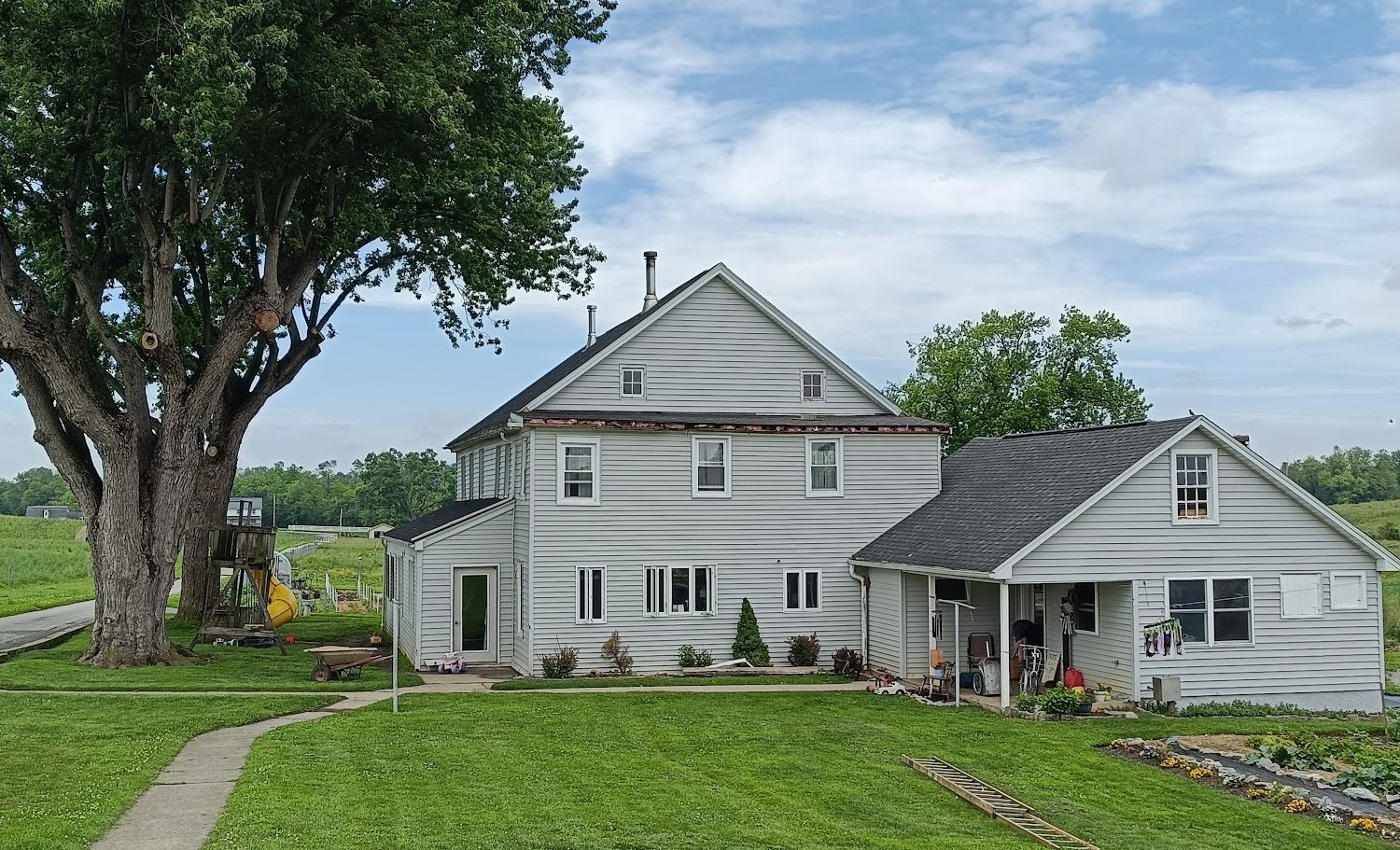
When the profile of the Filadelfia skyscrapers fades in the rear-view mirror and the asphalt of Route 30 begins to line exterminate expanses of hand-drawn fields, the impression is that the car clock is turning backwards. It is not an optical illusion, but a geographical and mental boundary. Welcome to the County of Lancaster, the deep heart of rural America where for over three centuries the most radical experiment of community resistance to modernity has been carried out: the village of Amish.
Seeing a traditional carriage in dark wood – the famous buggy – driven by a horse placidly trottare on the edge of a state road, while a few meters rub the colossi to eighteen wheels of American freight transport, provokes a geometric thrill. In this fertile strip of land at an hour and a half from the cradle of the Declaration of Independence, modernity was not integrated; it was deliberately, foolishly rejected.
To understand the presence of Amish in Pennsylvania, we must map their history, a journey that has its roots in the 17th century Europe. The Amish were born in Switzerland in 1693 by a split within the Anabaptists movement, led by Bishop Jakob Ammann (hence the name Amish). Persecuted on the Old Continent for their refusal to take oath to the state and to break the weapons, they found refuge in the eighteenth century thanks to the reception of William Penn, founder of Pennsylvania, who offered them land and religious freedom.
Contrary to what the cynicism of our times can make us think, the Amish are not an endangered tourist attraction. Today, in the United States, the Amish population exceeds 370.000 units, distributed in more than 30 states, and the Lancaster community alone has more than 40,000.
The real surprise is the growth rates: it is one of the fastest population population in the world, with an average of 6-7 children per family and, above all, with a rate of loyalty of young people who suffer 85%. I note that, after the Rumspringa period – the adolescent parentheses in which they are allowed to leave the community to experience the outside world – the vast majority freely choose to return home, preferring the tradition to the vertigo of the West.
What irreparably separates Amish from contemporary Western man is the concept of Ordnung, the unwritten law of the community that regulates every aspect of daily life on the basis of two evangelical pillars: humility (Demut) and the refusal of pride (Hochmut).
The Amish do not use the electricity of the public network to prevent the outside world and its messages polluting the house; they dress specular clothes, free of buttons (considered a vain vezzo) or zippers, preferring hooks; the married men shave (historically associated with European militarism) but allow the unspoilt beard to grow. They do not have cars, do not use television and, above all, refuse the smartphone and internet connection. Technology is allowed only if strictly necessary to work in the fields or in the historic carpentry of excellence, and only if it does not compromise the unity of the family.
Walking among their emporia, where you can breathe the scent of solid wood, freshly baked bread and homemade cakes, the homo sapiens educated to occintale culture is forced to undress any ethnocentric prejudice to formulate a deep and almost urticant reflection. Let us look at our hyper-connected western metropolises, multitasking and celebrated as the apex of progress. What do we find? Millions of individuals slaves of money, trapped in frenetic life rhythms, overwhelmed by levels of chronic stress and forced to “live” within alienating works, often subpaid, to fuel a sterile consumption that does not generate any happiness.
Who knows, maybe our biology wanted more for us. A field to cultivate, the happiness of living with the essentials in the family, animals as allies for survival and a dark, blue, infinite and without airplanes above our souls.
L’articolo Lancaster’s suspended time where Amish resistance challenges silicon slavery proviene da IlNewyorkese.