In Highland Falls, a small town in the Hudson Valley about 90 kilometers north of New York, the July flood of 2023 continues to weigh on the public budget. The village borrowed $6 million to repair roads, bridges, reservoirs and containment walls. Today it spends about half a million dollars a year only for interests.
On July 9, three years ago, Orange County fell about 20 centimetres of rain in a few hours. Highland Falls is built on the side of a hill and most of the water went down to the center before being absorbed by the ground or collected by drainage systems. Main Street turned into a stream, some stretches of road were dragged away and many supporting walls, built a century ago, collapsed. In nearby Fort Montgomery died Pamela Nugent, a 43-year-old woman turned from the water while trying to leave the house with her family. Governor Kathy Hochul declared the state of emergency during the storm.
Highland Falls dopo l’alluvione del 2023
Three years after several works have yet to be completed. In 2024 the village budget increased by more than 7 percent and local taxes by more than 5 percent. Mayor James DiSalvo described the system used to anticipate the work as a sort of unreserved game: the municipality financed an intervention, waited for the refund and used the money in the next yard. The refunds, however, did not cover all expenses and arrived more slowly than the invoices.
The case of Highland Falls helps to understand the figure contained in a new relationship of Rebuild by Design, the organization born after Hurricane Sandy to deal with climate adaptation. According to the report, the state of New York will have to invest at least $519 billion by 2050 to build, update or protect its infrastructure from the effects of climate change. It’s about $26,000 per resident.
The estimate comes from more than 700 projects and public documents collected along with the New York State Adaptation Practitioners Network. It includes coastal defenses, substitution of bridges and drainage channels, adaptation of sewage networks, rainwater management, electricity protection, reduction of urban heat and recovery of wetlands. The inventory includes completed works, open yards, funded projects and proposals that currently exist only on paper.
The 519 billion, therefore, do not correspond to a new request for financing and not even a forecast of the damage caused by the next disasters. The report summed up nature costs and was very different, using the highest value when documents presented a fork. He considered above all operations following Hurricane Sandy, with the exception of a 2008 wastewater assessment.
The figure is probably incomplete. It does not include expenses incurred directly by households, farms and farms, or future maintenance, inflation or damage to the next floods and storms. Many small municipalities have no personal or money to study their own risks and design the necessary interventions. Data are less expensive because part of their needs has not yet been quantified.
Un tunnel di New York allagato dopo il passaggio dell’uragano Sandy
This partly explains the difference with New York City, to which 387 of the total 519 billion are attributed. In the city the estimated expenditure comes to approximately 50 thousand dollars per inhabitant. Protecting a coastal metropolis requires works on metros, tunnels, sewerages, power plants and neighborhoods built almost at sea level, often in spaces where it is difficult to widen a channel or create a new drainage area. New York also has more technical and more detailed plans than small centres: its costs are visible also because they have been studied better.
Climate data explains why these works are considered necessary. According to the New York State Climate Impacts Assessment, intense rainfall has become more frequent since the Fifties and events classified in the past as rains “from once every hundred years” have occurred almost twice as often as expected. By the end of the century, annual rainfall could increase between 6 and 17 percent, with particularly significant increases in New York City, Catskills and the lower Hudson valley.
Climate change does not automatically attribute a single flood to global warming. However, a warmer atmosphere can contain more water vapor, increasing the amount of rain discharged during the most intense events. The elevation of the sea also makes the tides more serious and more difficult the flow of water along the coast. In New York the sea level has already climbed almost thirty centimeters in the last century and could increase by another thirty-sixth centimeters within half of this.
The effects have also been visible in recent weeks. Two different series of thunderstorms flooded roads and highways in the metropolitan area, including SoHo and the Bronx, while in Connecticut and New Jersey cars were submerged and thousands of electricity-free utilities. On July 21, a part of the Bronx River Parkway was swallowed by water.
The problem still unresolved concerns those who will pay the interventions. In 2022, state voters approved an Environmental Bond Act of $4.2 billion, of which over 2.2 billion have already been allocated. In March, the Hochul administration made 100 million more available for hydrographic basins, floodplains and green infrastructure. They are important sums for individual projects, but very far from the scale described by the new inventory.
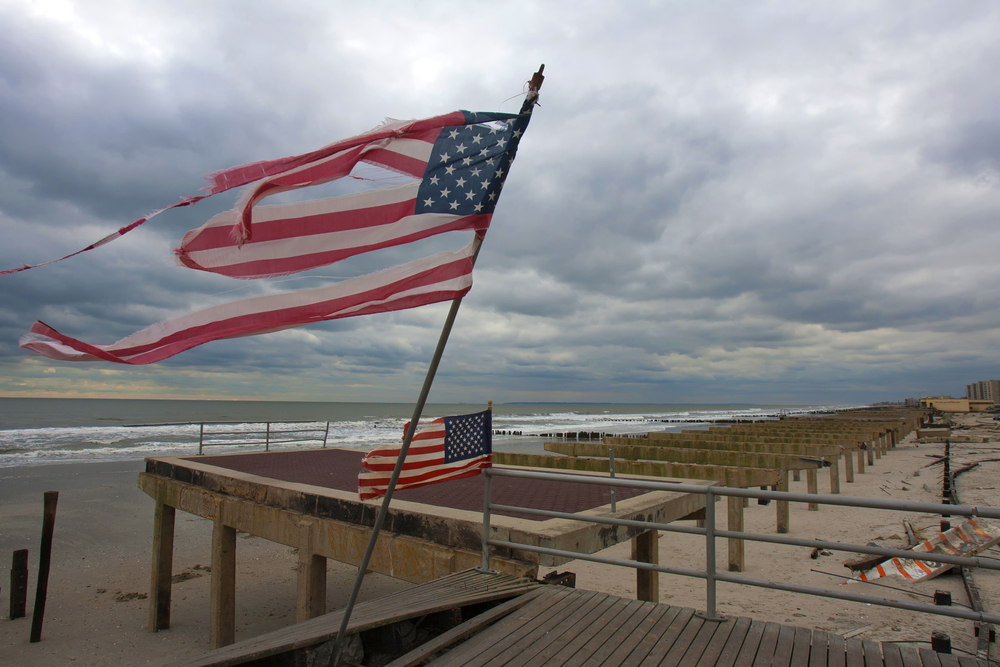
Dopo il passaggio di Sandy, tra i vari interventi, c’è stata anche la costruzione di argini di sabbia lungo Long Beach, a Long Island: anche questo ha un costo
When federal and state funding is not enough, municipalities must postpone the work or indebted. At that point, the cost then falls on residents through taxes, fees, insurance premiums and private repairs. The EMA aid comes only after certain damage thresholds have been exceeded and a presidential declaration. Also the compliance with technical requirements does not guarantee federal intervention: on 2 July President Donald Trump rejected Hochul’s request for the expenses caused by the great snowfall of February in New York City, Long Island and Hudson Valley. The Governor has announced an appeal.
Another possible source of money is the Climate Change Superfund Act, signed by Hochul in December 2024. The law provides that large fossil fuel producers and extractors pay a total of $75 billion in twenty-five years, in proportion to emissions associated with their activities between 2000 and 2018. Resources should finance coastal protection, drainage systems, interventions against heat and reconstruction after extreme events. Even if they were collected in full, those 75 billion would amount to about 14 percent of the costs incurred by Rebuild by Design.
The law was contested by twenty-two states led by West Virginia, the associations of the energy industry and, by a separate procedure, by the Trump administration. The appellants argue that New York is trying to regulate emissions produced even outside its borders and impose retroactively a responsibility on companies. The State responds that the law serves to share expenses that would otherwise be borne by taxpayers. The causes are still pending.
New York started its Adaptation and Resilience Plan in 2025, involving more state agencies and local administrations. General principles, working groups and consultation procedures have now been defined. There is still a complete plan that orders interventions, establish priorities and indicate sufficient revenue to finance them.
In Highland Falls this gap is particularly visible: there are tanks still to be repaired, private walls difficult to include in public refunds and a contract debt to reopen roads that the municipality could not leave closed. In many cases the affected homes were outside the areas indicated by official maps as at high risk, and the owners had no specific insurance cover. The next storm could reach other neighborhoods and other municipalities that today, in the plans of the state, seem to cost little only because no one has yet made the accounts.
L’articolo How much will it cost in New York to prepare for climate change proviene da IlNewyorkese.