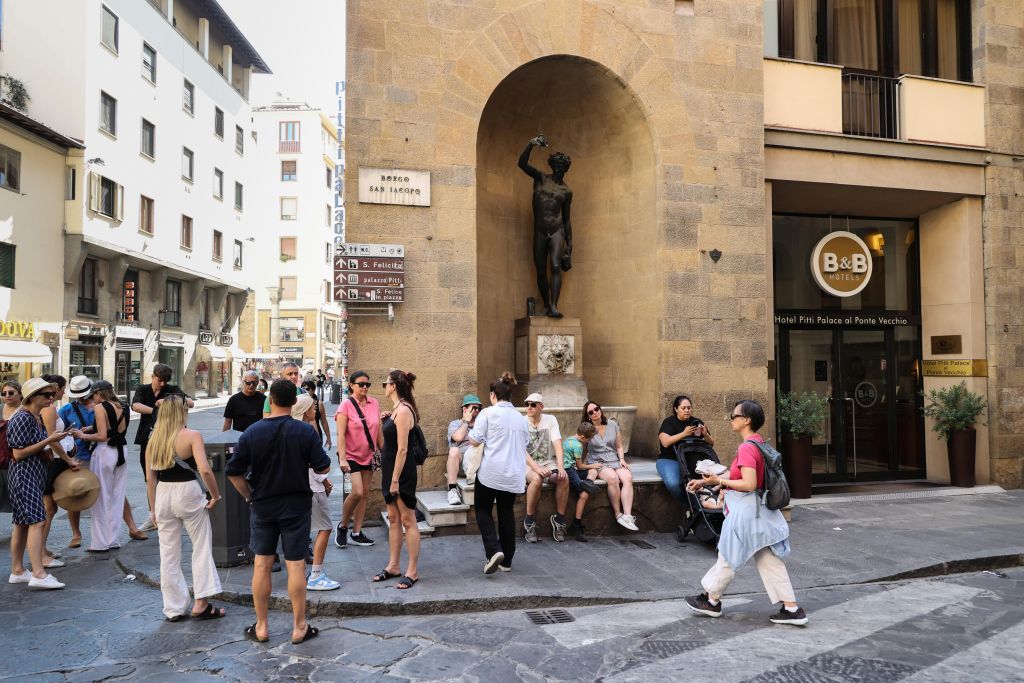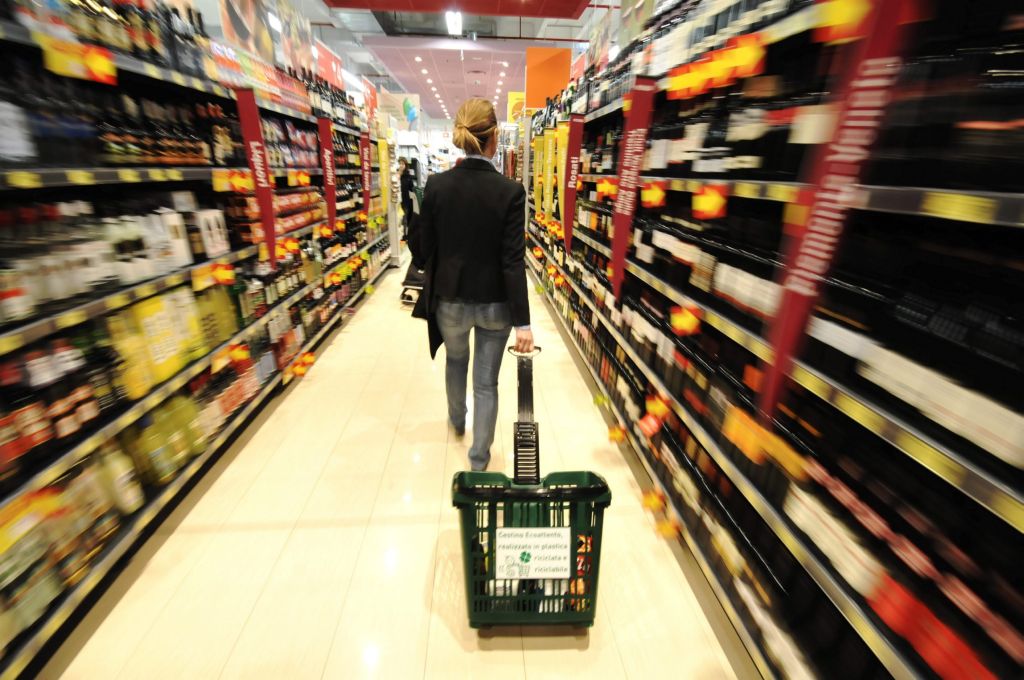
ROMA (ITALPRESS) – Italian trade changes, strengthens on the economic level, increases efficiency and productivity, but loses physical presence on the territory. Between 2018 and 2025, in fact, the total number of local units of retail trade has passed from 666,479 to 570,313, with a reduction of 14.4%. The decline mainly concerns ambulances (-27.3%) and small grocery stores (-17.9%). This is what emerges from the first Confcommercio Report on Trade in Italy. At the same time, however, employees decrease with much less intensity, from 1,905 million to 1,871 million (-1.8%) and substantially increases (from 12.2% to 17,4%) the share of capital companies in retail trade.
BOOM FATTURATO PER DISCOUNT (+101,1%) ED E-COMMERCE (+41,9%)
A more rarefied network of retail exercises but averagely more structured with a significant data on economic performance: the total turnover of retail trade rises from 326.8 to 410.7 billion euros (+25.7%) and the turnover per employee passes from 172 thousand to 220 thousand euros (+27.9%), a result that confirms the ability of the sector to recover efficiency, even in a phase marked by, transformation of consumption and increasing integration between the physical channels.
The analysis of distribution formulas highlights strong differences with food discount rates that record the most marked numerical growth (+7.4%) and a more than doubled turnover (+101.1%), confirming the search for convenience by families. The number of activities related to e-commerce aggregates, door to door and vending machines (+13.6%), with an increase in turnover of 41.9%, while, always in terms of turnover, hypermarkets (-8.4%) and outpatients (-14.9%).
MENO NEGOZI MA CRESCONO GLI ADDETTI, +8,3 SUPERMERCATI
The decline in local units does not necessarily result in a contraction of overall employment; on the contrary, in different sectors, there is a growth of employees despite the decline in sales points. For example, in the case of supermarkets and large sales areas of technological articles, which between 2018 and 2025 accounts for an increase of 8.3%. Similarly, even in the specialized exercise segment, clothing stores, footwear, jewellery and other related categories show a positive employment dynamic (+3.4%), although there is a reduction in the total number of points of sale. This confirms that the rationalization of the distribution network does not necessarily imply a loss of employment capacity, but rather a relocation to more structured operators. The joint observation of the changes in local units and employees thus allows more effectively to grasp the structural changes in place in the distribution system. In particular, there is a widespread tendency to increase the average size of the points of sale, as evidenced by the growth of the average number of employees per local unit.
The data shows that the increase in the ratio is particularly pronounced in the sectors that have recorded the most significant contractions of the number of local units. Among the specialized exercises, small food shops have grown in the last seven years of local units of 13.3%, while the shops of cultural and recreational articles reach an increase of 21.4%. A particularly significant increase is also observed in the clothing, footwear and jewellery sector, where the indicator grows by 22.4%.
SUD MANTIENE UNA MAGGIORE CAPILLARITÀ COMMERCIALE
The Mezzogiorno maintains a greater commercial capacity than the rest of the country. An estate also linked to minor employee employment opportunities, which promote self-inpreneurship, the role of incentives and increased tourist flows. But this resilience can have a double reading: on the one hand it represents a social and economic wealth, on the other it could anticipate a future process of faster reduction of shops also in the South.
The South, in fact, seems to be still characterized by greater commercial capillarity (density for 1,000 inhabitants) than the rest of the country, by minor employment opportunities, which pushes or compels self-entrepreneurship, the operation of incentives (remain to the South and ZES), phenomena that contribute to a retail trade estate in the Mezzogiorno. This fact has a double interpretation: well resilience, but perhaps we are simply in the presence of a delay, the number of shops could soon descend faster than in the North only for a theme of convergence
More intriguing is the question if there are still profitable spaces in the South by the great distribution: in fact, in the period 2018-2023 the local units not only of supermarkets are much increased but, above all, of the great surfaces of products for technology; it is the index of a modernization not entirely accomplished. All this considered, the South has in recent years an improvement of efficiency/productivity of retail trade well superior, in dynamic terms, compared to the other macro-areas: trade also in this area recovers product for employee and per local unit, which shrubs it and makes it less fragile than adverse shocks, beginning with the fluctuations of consumer demand by families.
+4,2% FARMACIE, MENO EDICOLE E LIBRERIE
The decline in local units, which has been observed throughout the national territory for over a decade, affects most segments of the trade, with few exceptions, and emerges with particular evidence in the sector of specialized exercises, which records a contraction between 2018 and 2025 of 14.3%, and in street trade (-27.3%). It is a dynamic that mainly affects the activities of small size and strong territorial rooting, such as small grocery stores (-17.9%) and exercises dedicated to cultural and recreational consumption (-21.9%). Among the few exceptions are pharmacies (+4.2%), supported by the less elastic nature of demand and by the widening of the offer of products and services for health and care of the person.
The decrease in activities such as newsstands, bookcases, cartoleries, toy shops and musical articles, also penalized by the increasing digitization of cultural and recreational consumption, must cause concern as it causes an impoverishment of the urban fabric. In fact, these are exercises that, in addition to their economic function, play an important social and relational role, contributing to the vitality of the neighbourhoods.
SANGALLI “PLURALISMO DISTRIBUTIVO È CIFRA DISTINTIVA CONFCOM”
“Distributive pluralism is the distinguishing figure of our associative policy, which brings together the small, the media and the great distribution. Our companies interpret the widespread economy, innovation and responsibility, creating communities and quality work. And our ‘unioned’ being has always been expressed with the same national collective agreements.” The president of Confcommercio, Carlo Sangalli, said this on the occasion of the presentation of the first Report on Trade in Italy of Confcommercio. “Confcommercio’s contractual system affects about 5 million workers. These numbers say something very simple: when we talk about quality of work in the tertiary, we talk about millions of people with a consolidated and innovative welfare system. And precisely on the quality of the work – he explains – we have committed ourselves deeply against contractual dumping, along with the other really representative social partners. Contractual dumping reduces the quality of employment and consequently reduces growth.”.
“The theme of growth is decisive, precisely in the economic context that continues to present many factors of uncertainty. Geopolitical tensions, changes in international trade, the evolution of technologies and changes in consumer habits require enterprises to adapt more and more. Yet, in this context, Italian trade continues to demonstrate an extraordinary ability to transform and be competitive in terms of turnover and productivity.”.
“Business companies, between 2018 and 2025, reacted to changes and faced them with responsibility and entrepreneurial skills: invested, reorganized and innovative. Of course, in the same years, we lost almost one hundred thousand points of sale: it is the great problem of commercial desertification. And this is not just an economic, but important fact. It is an aspect that affects the quality of people’s lives. Because – as we have always argued – where there is market tertiary, there is widespread livability, security, social relations”.
– Photo Ipa Agency –
(ITALPRESS).