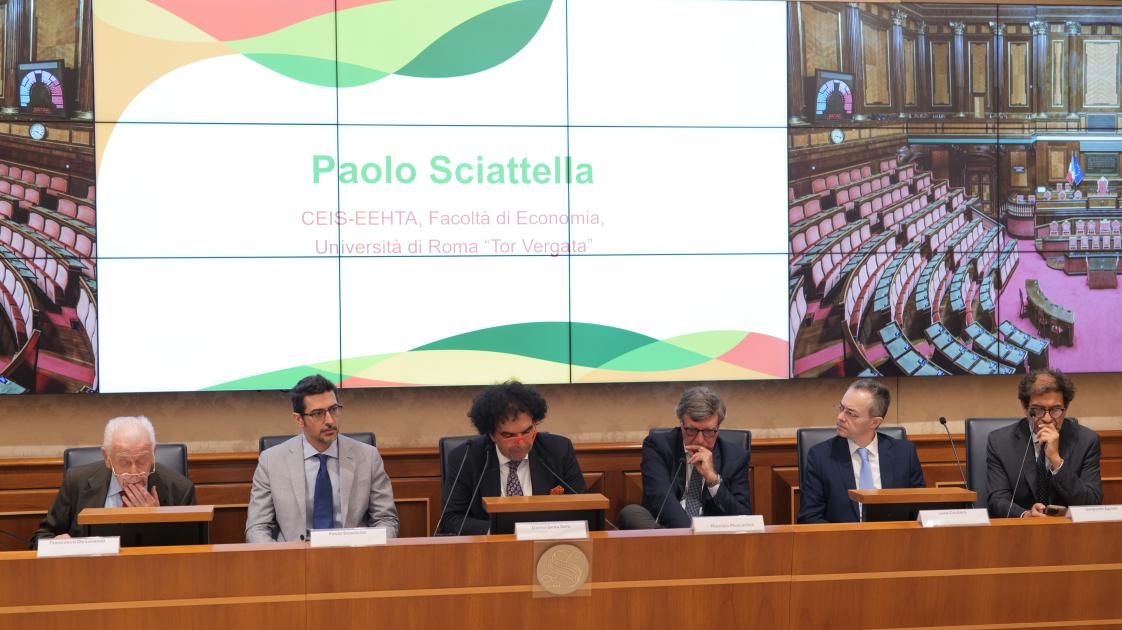
ROMA (ITALPRESS) – New scientific and economic evidence strengthens the role of clinical nutrition as an essential component of the oncological patient’s therapeutic path. According to the preliminary results of the study “Economic value of food for special medical purposes (AFMS) in the management of cancer patients in Italy”, next publication, the use of oral nutritional supplements in newly diagnosed cancer patients with malnutrition would require an estimated investment in approximately 50 million euros a year, facing costs avoided for about 95 million. Not an accessory support, therefore, but an integral part of the grip, able to affect tolerance to therapies, prevention of complications, quality of life and sustainability of the health system. This is the message that emerged in the press conference “ Clinical oncology: a high return investment. The economic value of the Foods in Fini Medici Speciali in the care of cancer patients in Italy”, promoted to the Sala Nassirya del Senato at the initiative of Senator Elena Murelli. Malnutrition is one of the most frequent and underrated conditions in the oncological patient. Over 50% of cancer patients have already altered the nutritional status at the time of their first oncological visit, even before the start of the therapies. It may already be present at diagnosis or development during the therapeutic path, due to disease, effects of treatments, difficulty in feeding, weight loss and muscle mass reduction. Patients with head-neck, esophagus, stomach, pancreas, liver and lung cancer are among those most exposed to nutritional risk. When not intercepted and treated promptly, malnutrition can compromise the response to therapies, increase toxicity, promote complications, prolong decency, increase the risk of hospital admissions and worsen the quality of life. Its impact also concerns the sustainability of the system: the economic cost of malnutrition from disease, of which cancer patients represent a significant share, is estimated between 2.5 and 10 billion euros per year for the SSN. “Scientific evidence indicates that involuntary weight loss, reduction of food and muscle mass loss are independent predictors of negative prognosis: reduce survival, increase the risk of toxicity of treatments, reospedalizations, the duration of hospitalizations and compromise the quality of life – says Maurizio Muscaritoli, President of the Italian Society of Clinical Nutrition and Metabolism Special Medical Finish Foods, and in particular oral nutritional supplements, are valid, safe and cost-effective tools: if used under medical control, within appropriate prescription and monitoring paths, they help patients to cover nutritional needs when diet alone is not enough.” The study presented in the Senate assessed the sustainability of the SSN for the use of oral nutritional supplements in newly diagnosed cancer patients with malnutrition. The analysis, conducted according to the perspective of the SSN with a one-year temporal horizon, considered patients with new diagnosis of tumors and alterations of the nutritional state at the first visit, with particular reference to head-neck tumors, stomach, esophagus, pancreas, lung and rectum colon. According to the results, the investment needed to ensure nutritional treatment with oral nutritional supplements in the population considered is estimated at about 50million euros a year. In the face of this investment, the reduction of health events such as re-expectations, access to the first aid and check visits would generate costs avoided for about 95 million euros, with a net economic benefit for the SSN equal to approximately 45 million euros a year. “Economic evaluations are a key tool to support health resource allocation decisions – explains Paolo Sciattella, CEIS-EEHTA, Faculty of Economics, University of Rome Tor Vergata – The results of the study indicate that malnutrition in newly diagnosed cancer patients is an important factor in increasing health resource consumption. The use of oral nutritional supplements in this population appears a clinically relevant and economically sustainable strategy, able to generate a return of investment already in the first year and to contribute to a more efficient allocation of the resources of the National Health Service”. Today, however, access to Foods at Fini Medici Speciali is not guaranteed evenly on the national territory. In the absence of full recognition in the Essential Levels of Assistance, the possibility of receiving these products free of charge depends on the decisions of the individual Regions and, in many cases, the organizational arrangements of the individual ASL. This results in a leopard stain situation: some patients are able to access the necessary nutritional supports, others are forced to support their own pocket costs, deal with complex bureaucratic iter or give up treatment. “The clinical nutrition in oncology is a concrete opportunity to improve the life of patients – said Luca Cordaro, President of the Medical Nutrition Table, Italian Food Union – Parimenti, malnutrition can compromise the results of therapies, reduce tolerance to treatments and aggravate the path of treatment. It is something that deeply affects the quality and life prospects of patients. It therefore becomes a priority to intervene early and appropriately to improve clinical outcomes, avoid complications and reduce the cost for the SSN, overcoming regional inequalities that still persist in access to Special Doctors Finishes. The Medical Nutrition Table of Unione Italiana Food has been working for years in this area, alongside institutions and scientific societies. In this path, companies through research and innovation develop and propose increasingly advanced nutritional solutions, capable of responding specifically to the needs of cancer patients. Recognising clinical nutrition as an integral part of therapy means giving more strength to care, more opportunities for patients and more sustainability to our healthcare system.” “The frequent condition of malnutrition in cancer patients is a serious problem both on the clinical level and on the socio-economic one, also because of the extension of hospitals and frequent new hospitals – explained Francesco De Lorenzo, Past President Federation of Voluntary Associations in Oncology (FAVO) – In this context, the Foods at Fine Specials are a fundamental therapy, often life saving, The research presented today opens up a new scenario, demonstrating that providing these nutritional supplements to new risky patients is not just an expense, but a sustainable investment. In practice, the cost of the supplements is largely offset by the cost savings of shelters and avoided complications. This will facilitate the task that FAVO intends to carry out, together with reference scientific societies, forthe inclusion of AFMS in LEA”. At the press conference at the Sala Nassirya del Senato, promoted at the initiative of Senator Elena Murelli, 10th Commission, Social Affairs, Health, Public and Private Work, Social Welfare, Umberto Agrimi, Director of Food Security, Nutrition and Veterinary Public Health Department, Higher Institute of Health; Emanuele Monti, President Commission Social Sustainability, home and family of the Lombardy Region; Antonello Aurigemma, President of the Regional Council of Lazio. To moderate Daniel Della Seta, scientific journalist. “The clinical nutrition is an essential element of the treatment of cancer patients and cannot be considered an accessory – said Murelli – The evidence presented today demonstrates that ensuring proper nutritional support means improving clinical outcomes, the quality of life of patients and, at the same time, contributing to the sustainability of the National Health Service. The data of the study clearly shows how to invest in Foods at Fini Medici Speciali produces concrete benefits both on the health and economic level. It is therefore necessary to continue the path initiated on the front of nutritional screening and to work for access to these nutritional therapies to be uniform throughout the national territory. There should be no difference between citizens based on the Region of residence: full recognition of Special Foods in LEA would be an important step forward in terms of equity, appropriateness of care and protection of patients more fragmented. “Food is a significant component of public health and, in oncologic patients, it assumes an even more delicate value because it fits into complex therapeutic paths – commented Ugo Della Marta, General Director of Health and Food Safety of the Ministry of Health – Special Medical Finish Foods must be used according to criteria of appropriateness, based on a prescription and clinical monitoring, so that they can really respond to the nutritional needs of patients. Comparison between institutions, clinics, patient associations and productive world is essential to identify organizational models capable of guaranteeing quality, safety and continuity of grip. For this reason, within the National Table on Nutritional Security (TANSIN), we are paying particular attention to the issue, looking at the goal of uniform arrogance throughout the national territory.”.
– Diessecom press office photos –
(ITALPRESS).