There is a point where the chronicle of the future crosses an ancient truth: no one can live well if it is left only too long. And when loneliness becomes stable, especially in old age, it stops being only an inner pain and turns into a social, health and even political question. This is why Japan’s choice to address the isolation of the elderly also through technology cannot be liquidated as a simple curiosity. On the other hand, it speaks of a theme that concerns all contemporary societies: ageing, fragility, the rarefaction of ties and the increasingly urgent task of not separating innovation from humanity.
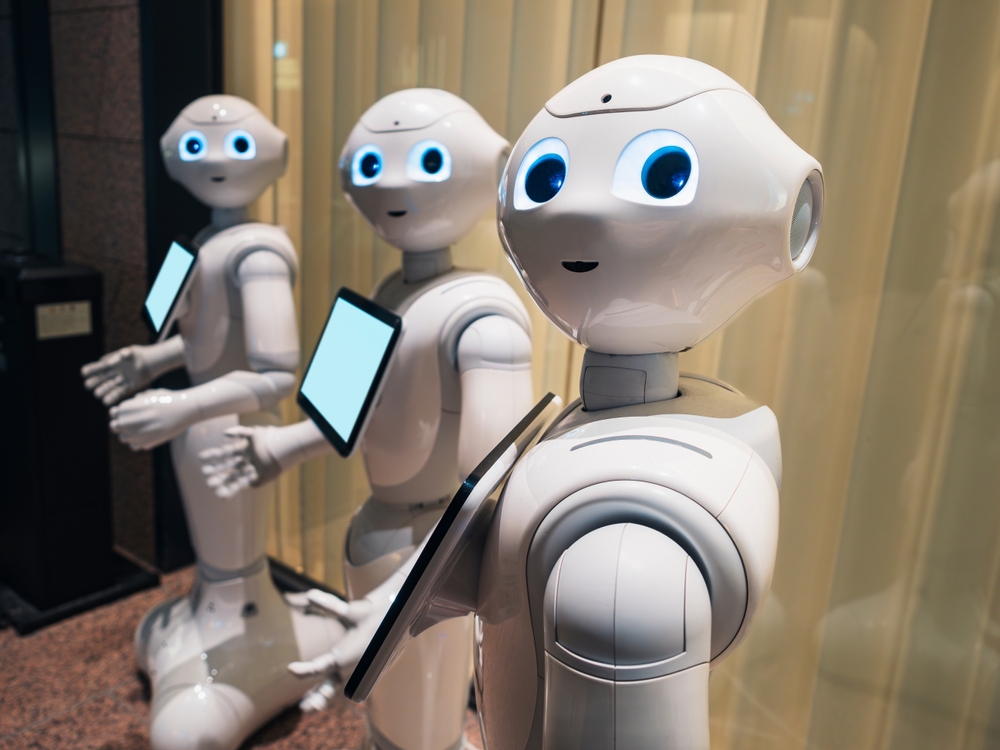
Is the article published on “The Health Republic”, written by Ivan Notarangelo, entitled “Towards the loneliness of the elderly, Japan uses a robot”, because it puts a decisive question at the centre: how far can technology help to cure loneliness without replacing the human relationship? The text tells a scene that strikes for its symbolic force: “there is an empty armchair next to the bed” and on that armchair “there is a small white robot with two big round eyes”, able to repeat “the words, silences and even the laughter of a person in flesh and bones” far away. It is not just a moving image: it is the representation of a world that tries to use the technique to fill a relational wound.
The article recalls that Japan was “the first country in the world” to establish in 2021 a ministry of solitude and isolation. It’s not a marginal detail. It means recognizing that isolation is not a private fact of which to be ashamed, but a collective problem of which the State must take charge. And science, moreover, confirms this approach. Notarangelo mentions an extensive review published on “Nature Human Behaviour”, according to which “both social isolation and solitude are associated with a significant increase in the risk of mortality”. We are therefore faced with an discomfort that touches the body, the mind, the heart of people and the hold of communities.
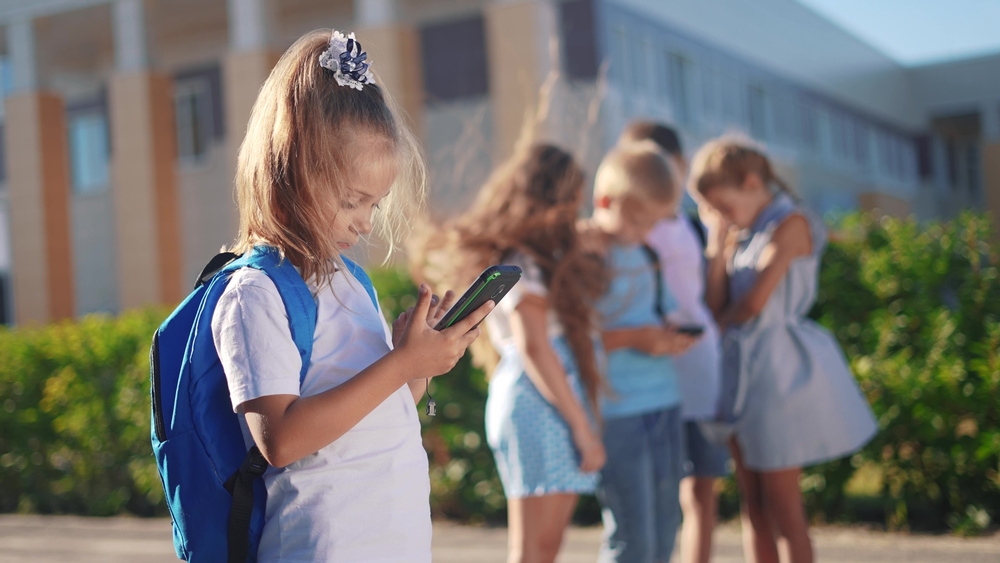
This phenomenon immediately recalls the reflections of Sherry Turkle, who for years has observed how technologies can multiply connections without guaranteeing authentic relationships. We can always be reachable and, at the same time, more alone. And if this applies to teenagers immersed in the screens, it is also true for the elderly, who risk being accompanied by devices but not really achieved by a full human presence. Digital loneliness does not arise from the lack of tools, but from the weakening of bonds. It is the paradox of our time: more networks, less proximity.
Sherry Turkle | (IMDb)
It is no coincidence that the article also contains the words of Paolo Dario, director of the Institute of BioRobotica of the Scuola Superiore Sant’Anna di Pisa, who invites us to distinguish between the technological suggestion and its concrete possibilities of help. “The robot that makes the faces and keeps company is obviously feasible,” he notes, but “the real challenge is the physical actions: raising a person from the bed, accompanying her in the bathroom, helping her in personal hygiene”.
And above all it emphasizes a delicate aspect: “I don’t think much about the need for an artificial company”, because the risk is that of “derives similar to those of the hikikomori”.
The reference is far from secondary. The phenomenon of hikikomori, born and observed initially in Japan, taught us that social retreat can become an extreme form of emotional survival in a perceived world as too demanding or too hostile. If technology, instead of opening up to the relationship, ends up replacing it, the danger is not modernity itself, but an uninhabited modernity. A robot can facilitate, support, lighten, even accompany. But it cannot replace the warmth of a hug, the density of a look, the beauty of a word called with true affection.
And here is the decisive point: technology is useful when it helps people, not when it takes the place of people. It can become a bridge, not the house. It can offer support, not the ultimate meaning of care. If used well, it can reduce fatigue, promote safety, lighten the toughest forms of isolation. But the human dimension remains irreplaceable compared to any device.
This is probably the most important message that comes from Japan: recognizing loneliness as a social disease and taking care of it is a gesture of civilization. But the deepest care cannot be entirely delegated to machines. The true answer remains in the ability of societies to rebuild ties, not to leave the elderly alone, to make dialogue innovation and tenderness. Because the future will be really human only if you can remember that no algorithm, however sophisticated, will ever replace the silent value of the presence.
L’articolo Care for Loneliness: Japan, robots and human challenge proviene da IlNewyorkese.