ROMA (ITALPRESS) – The Italian economy faces the deterioration of the international framework from a position of increased solidity of public accounts. This is noted by the Parliamentary Budget Office in the Report on Budget Policy 2026, presented today at the House. “The prudence that has characterized the budgetary policy of recent years has strengthened the ability of the country to absorb external shocks, improving the credit merit sovereign and containing the perception of risk on the markets”, but “the context is fragile because of the international geopolitical scenario, the public debt is still elevated and the margins remain modest to face external shocks and new priorities”. In the Italian economic system, Upb explains, “the many knots to be dissolved. It is necessary to address them to support the new and necessary growth levers.”.
The conflicts and other geopolitical tensions “represent the main risk factor for the macroeconomic scenario”. The new UPS simulations estimate that war in the Middle East, compared to the pre-war forecasts of last February, “composes a reduction in GDP growth of 0.3 percentage points in 2026 and 0.4 points in 2027 and an increase in inflation of 1.4 percentage points this year and 1.1 points next”.
“ Maintaining a credible path of public debt reduction is essential to prevent external shocks from transducing into a deterioration of financing conditions. The sustainability of the debt “represents a necessary condition to preserve market confidence, contain the cost of capital and strengthen financial stability”. Above all, in a scenario characterized by high uncertainty, the consolidation of public accounts “continues to represent the main prey against external shocks”, we read in the report.
In 2025 Italian GDP grew by 0.5 percent, less than the euro area average for the second consecutive year. Employment increased by 180.000 units and the unemployment rate fell to 6.1 percent, but “structural criticalities remain: the working age population has reduced by more than 70,000 people in the last year and the inactive remain more than 12 million, two thirds of which women.” In a context of rapid demographic aging, “the growth of the economy increasingly depends on the increase in labour participation and the valorisation of human capital”. The growth of 3.1 percent of contractual wages in 2025 “has favored a recovery of purchasing power but, in real terms, hourly wages in fact remain less than 8 percent compared to the average values of 2020”. The underlying notion “remains productivity: without its more significant increase it will be difficult to sustain in time income, competitiveness, welfare and public finance”.
The debt/GDP ratio increased to 137.1 percent in 2025 (+2.4 points compared to 2024) and should reach 138.6 percent in 2026, then gradually descend into 2027 and up to 136,3 percent in 2029. However, the reduction of 2027 remains linked to the achievement of the objectives connected with the disposal of public assets and the reduction of the liquid availability of the Treasury. “In an adverse scenario, characterized by higher energy prices and lower growth, debt could rise up to 140 percent of GDP in 2026.” In the medium term, UPB projections indicate that “the debt/GDP ratio would continue to shrink, but at a less marked pace than the Structural Budget Plan: after the peak of 2026, it would fall to 135,4 percent in 2031 and 123,8 percent in 2041, about 10 points above the Plan”.
The population of working age continues to decline and the costs of ageing – pensions, health and care – are destined to increase until reaching the peak around 2040. “Government of the demographic transition requires a broader participation in the labour market through policies that fully enhance the human capital available as well as adequate immigration management.” “In order to ensure the sustainability of expenditure and the adequacy of performance in the medium-long term, we must preserve the link between retirement age and life expectancy.” At the same time, “the transition to a sustainable energy model on the financial, strategic and environmental level is a priority for the country”. Italy “is still a high dependence on imported fossil sources and delays in electrification, while the high cost of energy continues to burden on the most vulnerable businesses and families.” Public action “is called to accompany the energy efficiency process, promoting investments and innovation and mitigating the effects of transition on the most vulnerable individuals.”.
The great transformations in place – from energy security to technological competitiveness, from defence to economic security – “require investments of dimensions that cannot be tackled effectively by individual states. Persecuting these objectives in a fragmented or reduced scale is likely to be very expensive and less effective.” “It is therefore essential to strengthen European coordination, finance common public assets, strengthen strategic infrastructure and mobilize public and private investments consistent with new priorities.”.
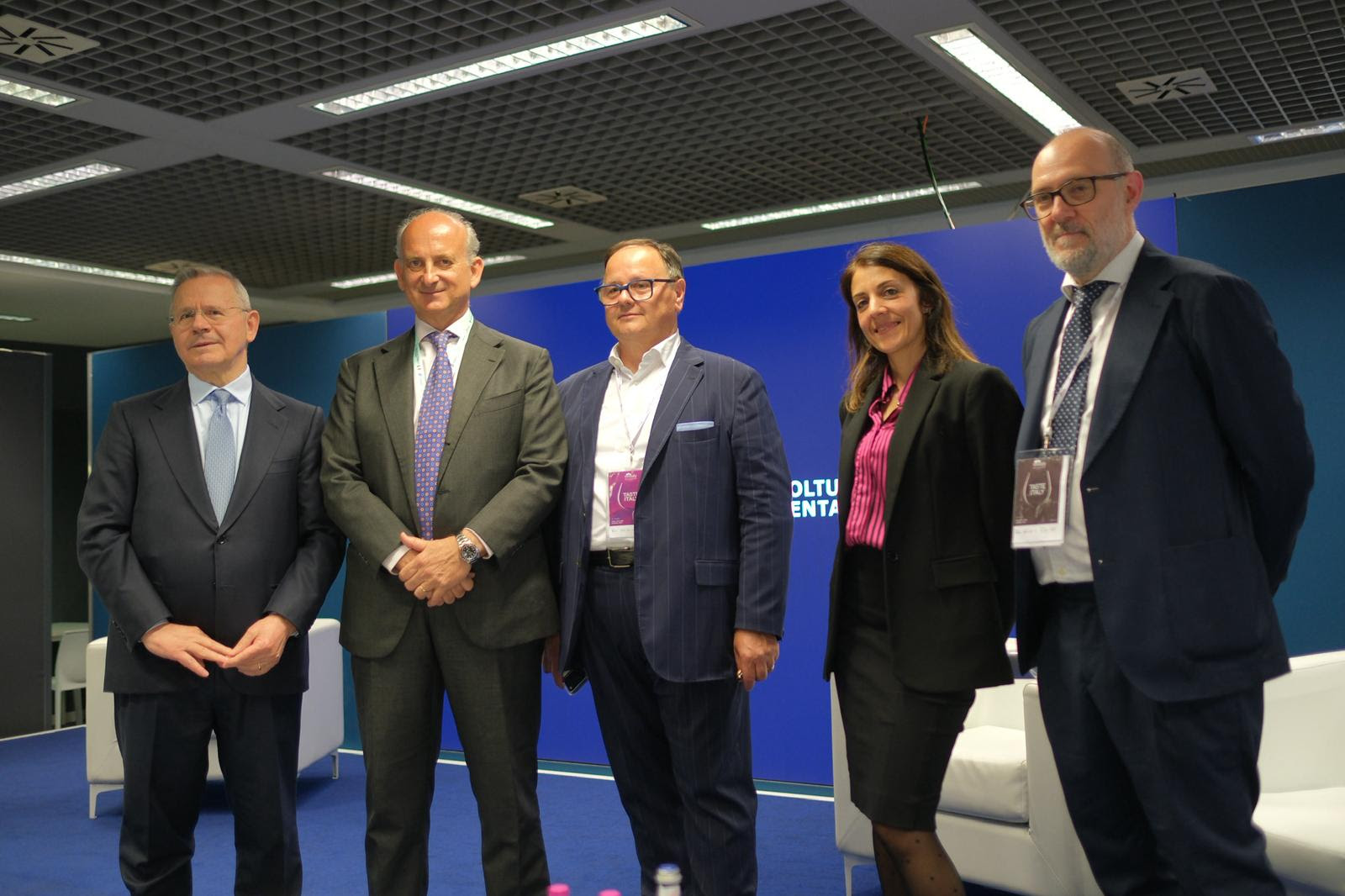
“It is essential to continue to ensure sustainable public finance that progressively reduces the weight of public and free debt, in perspective, the huge resources used in its service.” Thus the President of the Parliamentary Budget Office, Lilia Cavallari, presenting the Report on Budget Policy 2026 to the House. “Financial stability is an indispensable condition for growth; it is indissolubly linked to the trust that markets place in the sovereign issuer and its ability to honour commitments,” he explains. “To combine responsible management of public accounts with an action to unlock the potential of the country requires not easy choices: identify clear priorities, define critical areas of intervention and focus on them available resources.” For Cavallari, “this is the highest time in budget programming and this is the time to do so.”.
– photo IPA Agency –
(ITALPRESS).