The Academy of Motion Pictures and Sciences, the American professional organization that assigns Oscars for cinema, has compiled new rules for the Oscar 2027 edition. Among these, in addition to admitting multiple nominations of the same interpreter in a category in case he has acted in two or more films during the year and the possibility for countries to nominate more films for the race for the best international film – until this year only one candidacy was possible for Country – the organization also began to limit artificial intelligence and the possibility that it can meet the assignment of statuettes.
Artificial intelligence in the Oscars began to speak in 2023, when the theme was raised during the strikes of actors and screenwriters in Hollywood: among the demands was the introduction of a limit to the use of screenplays generated automatically and guarantees against the digital reproduction of the performances of actors without consent. In more human words: an actor can, today, be recreated artificially with AI without being physically present on the set, and this would make it easier to create scenes never really turned, rejuvenate or artificially age the protagonists of the films or use them in sequels or advertisements without recalling the actor in flesh and bone.
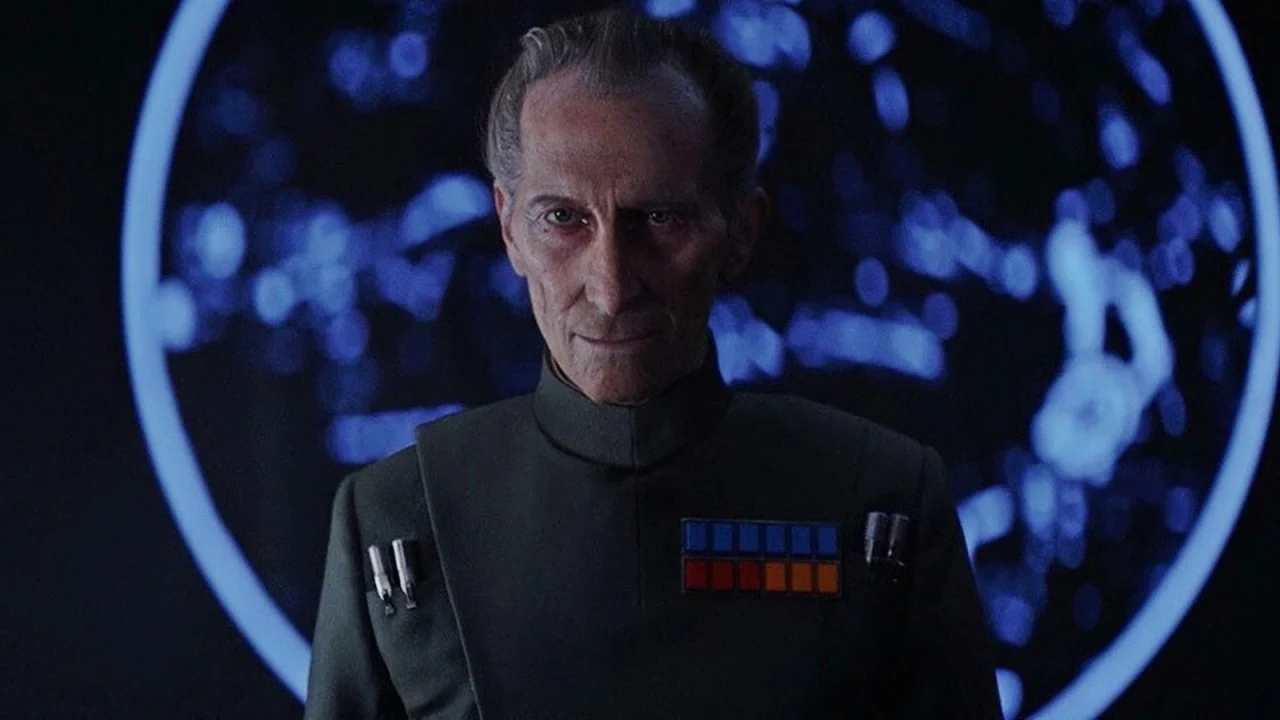
The risk, in short, was that the actor was paid only once while the studio would maintain its “digital clone”: now it serves explicit consent and every use must be paid and defined between the parties. If, in fact, before the right of image could work, today with AI some guarantees were less. Many studies had begun to include clauses that included full digital body scanning, use of “in perpetual” image or “in any future media” and one-off compensation. In particular, the case was raised following the digital recreation of actors Peter Cushing and Carrie Fisher for Star Wars franchises, both deceased back time and then digitally recreated for new performances, obviously without the respective consent.
In questo video, che riprende la scena iniziale di Rogue One: A Star Wars Story (2016) è possibile vedere la scena interpretata da Peter Cushing, completamente ricostruito dall’intelligenza artificiale: per quanto il risultato sia anche apprezzabile tecnicamente, lascia comunque aperte diverse questioni etiche, visto che l’attore stesso non ha mai potuto dare il consenso essendo deceduto nel 1994, ed in assenza di un accordo sono stati interpellati gli eredi
This clash between art and artificial intelligence, in any case, is not only about cinema, and also in other creative sectors are beginning to rediscuss limits and perimeters on the use of AI. In journalism, for example, several international publications have adopted guidelines on the use of AI for the production of content, limiting the complete automation of articles and imposing forms of human supervision: it is the case of the New York Times and the Guardian, two of the most important and authoritative newspapers in the world, which have explicit policies that distinguish between assisted use and autonomous generation, especially for reasons of reliability and editorial responsibility.
Also in the artistic field, the diffusion of Midjourney and DALL.E, the two most famous artificial intelligence tools to generate images and graphic works, have raised several perplexities on the patrity of the works, to the point that many contests and institutions have begun to request the declaration of the use of IA or to exclude entirely generated works, while others have chosen to include them creating dedicated categories. The point is the paternity: who can be considered author of an image produced from pre-existing text prompts and datasets?
Another very critical sector in relation to artificial intelligence is videoludic, but here the question is different from the other areas mentioned: the clash in fact is not internal between professionals and industry, or between institutions and organizations, but is consumed among companies that produce video games or support its technology and the public. The famous example is Fortnite, probably the most successful game ever, produced by Epic Games, which last year had to face extensive criticism for the use of some graphical assets generated by artificial intelligence. In particular, Epic Games was accused of having inserted into the playable maps – which include forests, industries and inhabited centers within which the players move – four posters hanging on the walls that seemed created with AI: it was enough to unleash the indignation of the user and force Epic Games to remove the incriminated content.
The case of Fortnite exploded on Reddit, where many users commented on the use of AI within these graphical assets: a poster depicting a Yeti counted nine toes, a typical error in the generation of images by artificial intelligence, and the criticisms were not so much directed on the role of AI, as well as the economic principle for which a billionaire company (Epic Games invoicing more than $6 billion).
Remaining in the videoludic field, several criticisms have rained on another company that in recent years has increased exponentially its role in artificial intelligence: Nvidia, which also produces graphics cards and technical support software for the video industry, has recently presented the fifth version of its DLSS (in short: a support software that allows better performance of video games even on more obsolete machines). In presenting the DLSS 5, Nvidia put a lot of emphasis on the fact that the program is no longer limited to improving image resolution, but it directly generates frames thanks to AI and, in some cases, most images are no longer rendered by GPU: according to some analysis, up to 87.5% of the frames can be generated by AI.
Part of the video-ludic community started talking about fake frames, i.e. images that were not really thought so by the original developers of the video game. To make an example for those who are not practical, it is as if looking at La Gioconda the technology increased its resolution, added details on the face and “improved” lights and colors: the picture would seem more vivid, modern, probably more “nice” for many, but those details never painted them Leonardo Da Vinci.
In short, the debate today is mainly focused on the role of AI in art: AI can definitely help us reduce the time of production of the works, help us where there are structural difficulties, but what happens when it ends up reinterpreting the work of the artists or, even, when it replaces them? In recent times a statement on the internet has become viral, often written in English: “I want AI to do laundry and dishes so I can devote myself to art and writing, not to do art and writing so that I can do laundry and dishes”. And that’s probably where we should start.
L’articolo Oscars, AI and many ethical issues in the art field proviene da IlNewyorkese.