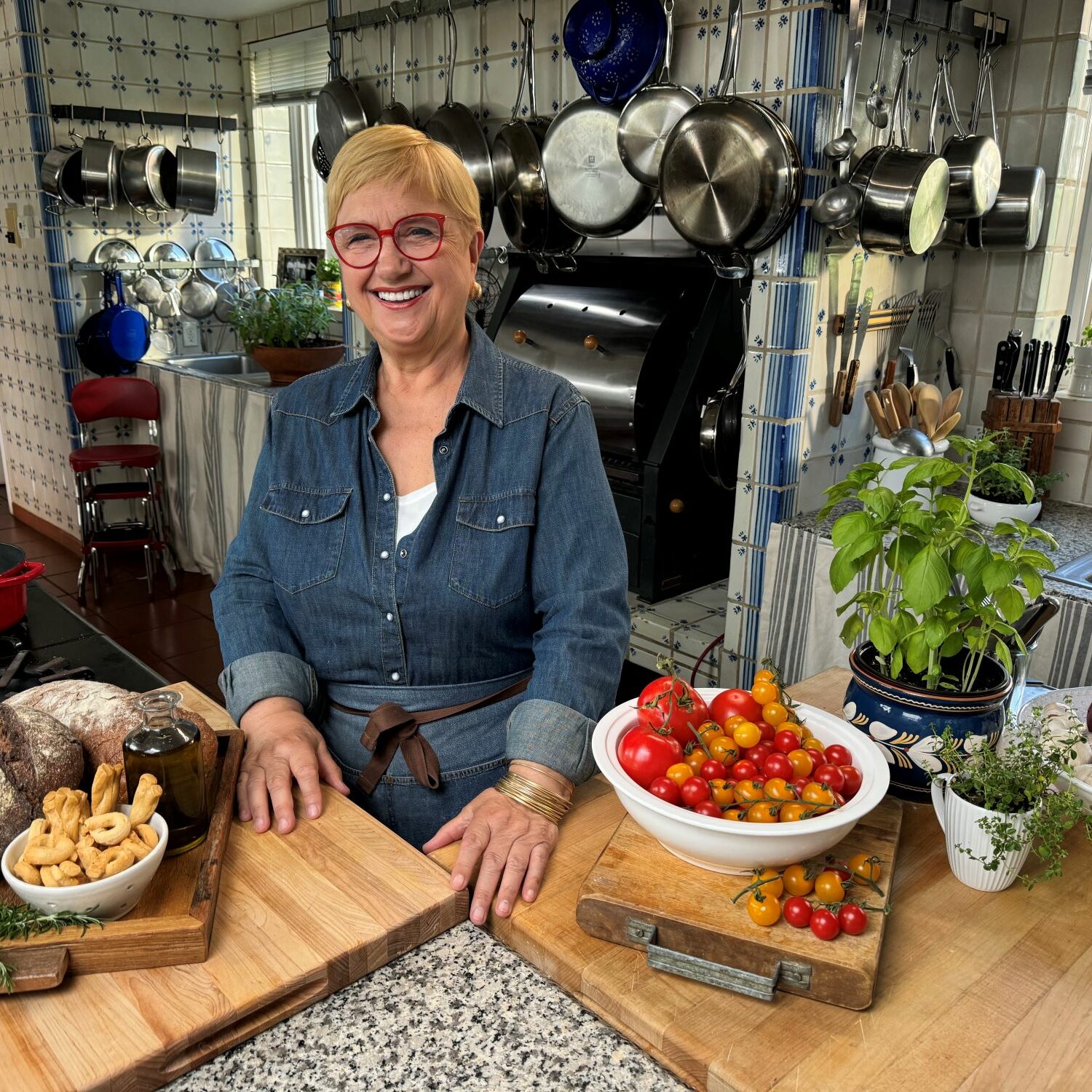
For Lidia Bastianich, cooking was never just a job. It has always been a language, able to tell a life made of migration, resilience, family and cultural identity. For almost thirty years he has entered the homes of millions of Americans through public television, bringing not only recipes, but memories, values and a deeply Italian way of understanding food.
With the recognition of Italian cuisine as an Immaterial World Heritage Site and the publication of The Art of Pasta, its 18th book, Lidia reflects on the evolution of Italian cuisine in America, on its path as a child to culinary icon and the lasting meaning of the American dream.
Italian cuisine has been recognized as a World Heritage Site by UNESCO. What does this recognition mean to you?
It is a recognition, and it is absolutely deserved. Italian cuisine is not only food, it is culture. It reflects history, geography, climate, family and a philosophy of life. Around the Italian table there are identity, memory and relationship. The Italian culinary culture has spread in the world flavors, ideas and values, and this recognition confirms its importance and depth.
Since she arrived in the United States, how did Italian cuisine evolve in America?
When we opened our first restaurant in 1971, Italian cuisine in America was very different. Many ingredients simply did not exist, and Italian cuisine was adapted to what immigrants could find. risotto, for example, was very difficult to do correctly because Arborio or Carnaroli rice was not available.
Over time, Americans started traveling more and become more curious. At the beginning of the 1980s the authentic Italian products arrived, and this made a great difference. You can’t really transfer a kitchen without its ingredients. Parmigiano Reggiano cannot be replaced, as well as the true balsamic vinegar.
Is it easier to cook authentic Italian outside Italy?
It is easier because the products are available, but the availability is not enough. It needs understanding. Italian cuisine is made of simplicity, technique and balance, not overloaded dishes of ingredients.
She opened her first restaurant in Queens with her husband before becoming a chef. How risky was that choice?
It was very risky. We started small, with a few tables, on the outskirts. Today opening a restaurant in New York requires millions and investors. At the time it was about passion, hard work and confidence in what we were doing.
Why then decided to focus on Italian regional cuisine?
Italy has twenty regions, and they are all very different. The climate and conformation of the territory shape food. I returned to Italy and studied region by region. I wanted to bring an authentic Italian regional cuisine to America.
How important was risotto with mushrooms in its professional path?
It was decisive. Julia Child and James Beard came to the restaurant and tasted risotto. Julia loved it so much that she returned a second time and asked me to teach her how to prepare it. We became friends and invited me to his TV show. That moment opened my TV doors. It was not planned: it happened naturally.
Let’s go back to his childhood. What was his relationship with food during his growth?
I grew up with my grandmother in the country. He cultivated the land, raised animals and cooked what he produced. We had a orchard, goats, rabbits, pigs. Nothing was wasted. I lived the whole food cycle: feeding animals, collecting, preserving, cooking. This experience has formed my respect for food and ingredients.
His family also lived in a refugee camp. How did that period mark you?
Food was limited and shared in a community way. Security was fragile. The family became everything. The table, even in those conditions, was a place of stability. That experience taught me gratitude and respect for food.
What do you remember your arrival in America?
The abundance. Supermarkets full of fruit, vegetables, desserts and food always available. Coming from scarcity, it was overwhelming, almost like entering the Garden of Eden. But from the emotional point of view, the food of my childhood remained profoundly significant.
Can we say that cooking has become a way to stay tied to her grandmother?
Absolutely. Cooking has kept me tied to its gestures and flavors. Even in America, preparing what she cooked made me feel rooted and safe.
If she had to choose a dish of her childhood that still represents her today, what would it be?
The dumplings. We prepared them every Sunday with different sauces: rabbit, chicken, butter and cheese, sage. The gnomes go through the history of my family, and I’m still preparing them with my children and my grandchildren.
The Art of Pasta is its 18th book. Why pasta?
Pasta is the foundation of Italian cuisine. Americans began to be afraid of carbohydrates, but pasta itself is not the problem. Pasta is a vehicle: it transports vegetables, legumes, protein. In Italy pasta is balanced, not excessive. I wanted people to understand the pasta to master it and enjoy it without fear.
Culinary culture evolves with lifestyle changes. Pasta has always evolved. It must continue to be a vehicle for vegetables, legumes and proteins. This is how it remains nutritionally balanced.
Italian cuisine in America has often been adapted. How important was education in your work?
Education was fundamental. I have always felt the responsibility to explain Italian cuisine honestly. The Americans trust me, and I wanted them to know what they were cooking and why. When you understand food, you’re not afraid of it anymore. You respect it and appreciate it. This has always been my goal, more than showing how much I can cook.
He often speaks of simplicity. Why is it so central in Italian cuisine?
Because simplicity allows ingredients to speak. Italian cuisine is made of technique and measure. You don’t need many ingredients if you really know them. When food becomes too complicated, it loses its soul. Simplicity is not poverty, it is knowledge.
Do you feel your role was a bridge between cultures?
Yes, absolutely. I brought my Italian culture with me, but I also wanted to thank America for the opportunity it gave me. My work has always been to unite the two things — Italian tradition and American openness — without losing authenticity.
Have you ever thought of returning to Italy?
We return regularly. We have a house and a cellar in Friuli. My daughter lives in Rome, my son in Milan. Italy is very present in our lives, but America is home.
He lived the American dream firsthand. Do you think it still exists today?
I think so, but the dream requires preparation and contribution. You can not only take it, you must also return. America still offers opportunities, especially in education and growth.
What is your recipe for life?
Family. Being together, sharing food. And to feed emotionally through art, music, travel, curiosity and encounter with others. Food unites people, but growth comes from sharing.
L’articolo Lidia Bastianich, the face of Italian cuisine in America proviene da IlNewyorkese.