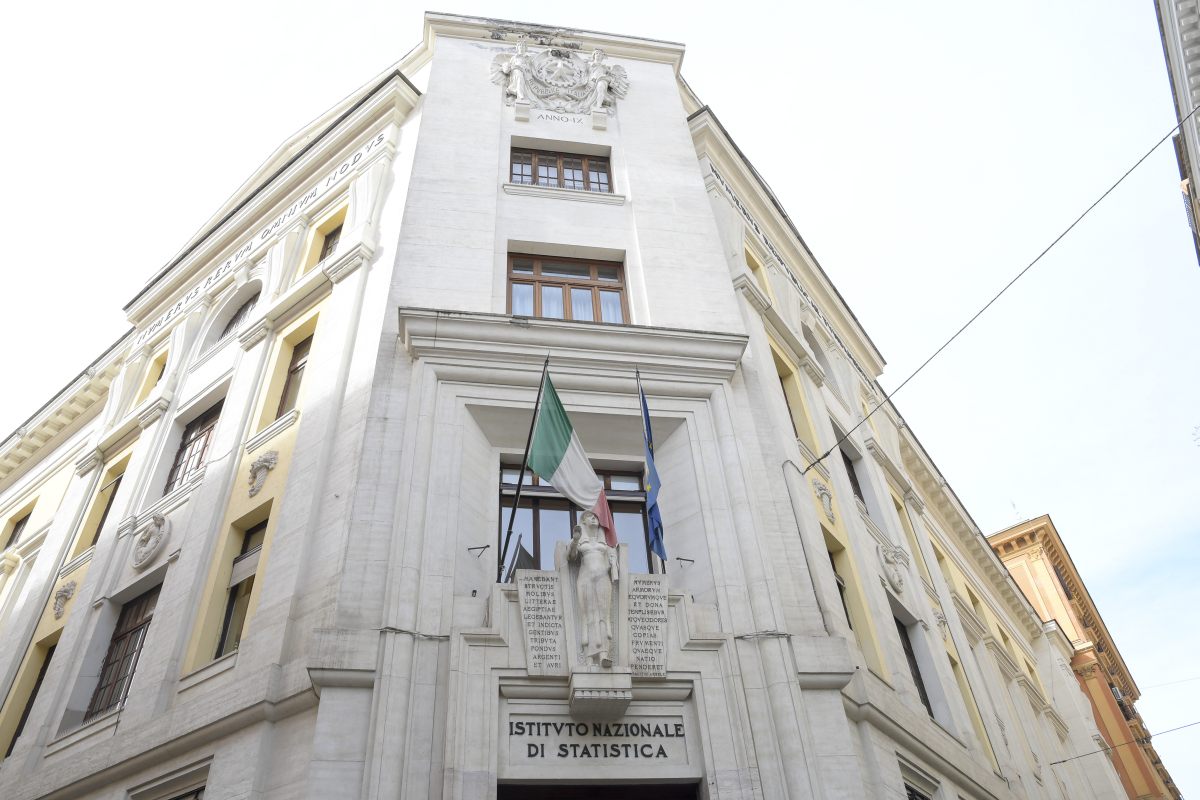
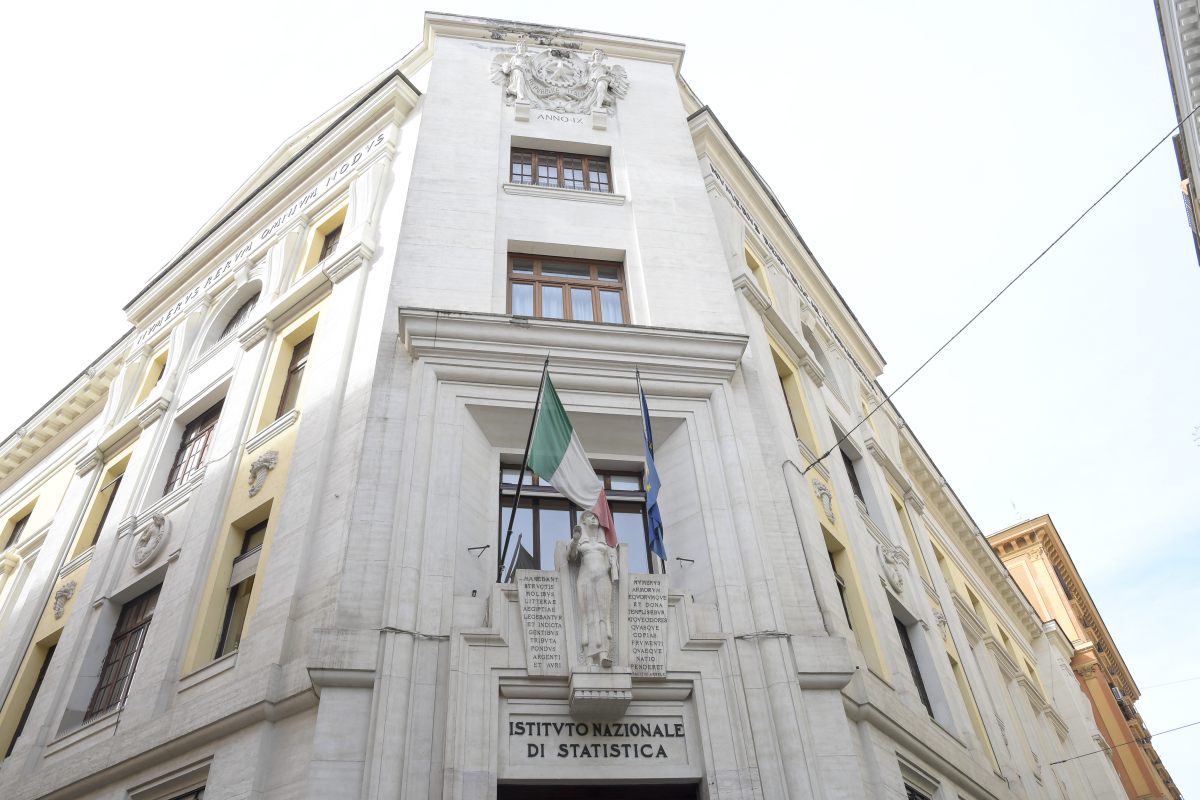
ROMA (ITALPRESS) – “Conjunctural information available for the first months of 2026, whose information framework is still being completed, seems to confirm a less positive dynamic for the Italian economy than in the last quarter.” This was said by Francesco Maria Chelli, President of Istat, during the hearing in the joint committees Budget of Chamber and Senate, on the examination of the Public Finance Document 2026. “In February, the seasonal index of industrial production recorded a modest increase compared to January, +0.1%, after the falls of the previous two months” added Chelli “in the average of the December-February quarter, however, there is a conjunctural bending of 0.4%; the slowdown affected the consumer goods and the intermediate ones, respectively -1.2% and -0.7%, while the sectors of energy and goods.
The president of Istat recalled that “in the same month, the seasonal index of production in buildings has recorded an increase on a conjunctural basis, +0.5%, after three consecutive months of decline; on the mobile trimester, the dynamic remains however negative, -1%. In January, “the turnover of the services has recorded a conjunctural growth of 0.9% in value and a decrease of 0.1% in volume”.
2026 – 2027 CON CRESCITA PIL A RIBASSO E INFLAZIONE SU
“The worsening of economic-financial perspectives as a result of the recent Middle East conflict demanded a revision of the basic scenario of the Dfp: the real growth of GDP is revised to the downturn of about a tenth in 2026 and two tenths in 2027, while the prospects for inflation are estimated to rise, expected to 2.9% in 2026 by 1.7% expected in October 2025. The worsening of the scenario determines a slight revision to the rise of the deficit/Pil ratio” added Chelli “the tendential trend, in fact places the deficit below 3% of GDP in 2026, 2.9%, when the dynamics of net expenditure would be in line with the planned path, +1.6%. The structural balance would be -3.1%, better than expected in the PSBMT (-3.3%).
Istat’s president explained that “for the following years, the trend is confirmed to the progressive decline of the deficit/Pil ratio to 2.8% in 2027, 2.5% in 2028, up to 2.1% in 2029. In structural terms the ratio would progressively fall from 3.1% in 2026, to 2.9% in 2027, 2.7% in 2028 and 2.4% in 2029”.
2026 SI È APERTO CON CONTRAZIONE SCAMBI COMMERCIALI
“In 2025 Italy’s trade exchange showed an unexpected resilience compared to the strong instability that characterized international markets during the year: exports of goods in value grew by 3.3% and imports by 3.2%, with a trade surplus of 50.7 billion. The 2026 opened with a contraction of trade: in the bimestre January-February the flows have in fact reduced in tendential terms, -2,2% the exports and -4,2% the imports – added Chelli -. For the exports of the manufacture, decreased by 2.2%, to the increase of the sales in the manufacturing sectors of the products in metal, +24.2% and of the pharmaceutical, +4.6%, the decrease of all other sectors, particularly marked in the case of the sales of products of the refinement, -29.1%, chemical, -6,7% and leather articles, -6,3%”
A FEBBRAIO CALO VOLUME VENDITE DETTAGLIO
“In the last quarter of 2025 the disposable income of consumer households has decreased by 0.4% compared to the previous three months; in the face of a change of 0.4% of the implied consumption deflater, the purchasing power has thus reduced by 0.8%. The reduction in the savings propensity of 0.8 points (to 7.8%) has however allowed an increase in consumption, increased by 0.5%. In February 2026, retail sales showed a change in value but negative in volume, -0.2%; in particular, sales of food, -0.4% in value and -0.5% in volume, with a slight increase in non-food, +0.2% in value, +0.1% in volume”.
With regard to the labour market, “the number of employees fell slightly in February, -0.1%, -29 thousand units, due to the decrease of men and classes between 25 and 49 years. Employment has decreased both between permanent and end-time employees while growing among self-employed.”.
– Photo IPA Agency –
(ITALPRESS).