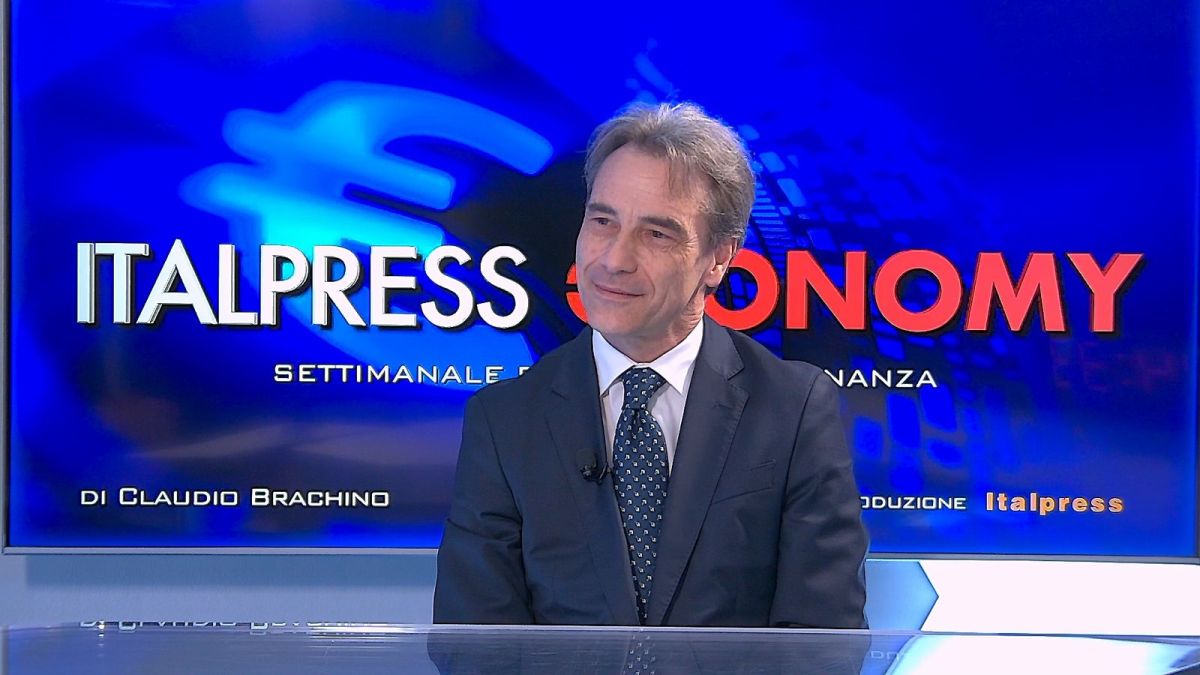
ROMA (ITALPRESS) – The Italian real estate market closes 2025 on a solid basis, but to face the real housing emergency of the country serves a long-term structural plan, not extemporaneous measures. It is the message that Fabrizio Segalerba, national president of the Italian Federation of Professional Real Estate Agents (Fiaip), launched during an interview with Claudio Brachino for the television magazine Italpress Economy.
“The 2025 was still a year of growth – explained Segalerba -. We close around 765 thousand transactions on the residential sector, with a growth even if contained compared to the previous year”. In the rise also the values, both in the trades and in the locations. The market remains mainly oriented to the purchase of the first home, but with an increasing segment of buyers pointing to the profitability of the real estate investment.
The first quarter of 2026 also showed signs of dynamism, but the president of Fiaip warned about the risks related to the international macroeconomic context. “About 47% of those who bought home in 2025 made use of a financing – he emphasized -. A possible growth of rates, in a phase of degeneration of the economic situation and of resumption of inflation, could reverberate above all on the range of buyers that depends on the granting of credit”.
Segalerba clears the field from what defines a recurring equivocal in the debate on the housing crisis: short leases. “They represent 2% of the market – it has specified -. There are between 500,000 and 600,000 properties destined for this segment: they cannot be considered the cause of the housing crisis in Italy”. A punitive action against those who rent in a short way, warns President Fiaip, is not enough to start the mid-long term rental market.
The true knot, according to Segalerba, is the lack of legal certainty. “At the moment I go to locate a property and the host does not pay the fee, I have no assurance of returning to possession of that accommodation. The time to free a property in case of bitiness ranges from 18 to 24 months, with situations that extend further. And on those unseen fees, the owner continues to pay taxes, in addition to IMU and maintenance costs.” A situation that pushes many owners to keep properties outside the traditional rental market.
To encourage the return of buildings on the medium-long term rental market, Segalerba indicates some concrete levers. First of all, the extension to all the Italian municipalities of the contract to canon agreed provided by law 431/98, today only applicable in urban centers with high density housing, which allows the dry coupon to 10% and a 25% reduction on the IMU. “These are important actions – he said –, and should be accompanied by a reduction of the IMU load for the owners who make their own property available.”
But alongside tax measures, President Fiaip strongly recalls the theme of public and social housing. “About 90,000 housing in public housing are not on the market because they must be renovated – he recalled -. If we consider that France has 4 and a half million housings of Public Residential Building in the face of the 900.000 of our country, something in the last 30 years has not worked”.
On the announcement of the President of the Council Giorgia Meloni concerning a House Plan for 100,000 accommodation at calming prices, Segalerba expresses cautious optimism: “We hope that there is a chance to land this plan. There is no need, because beyond the weakest band, today there is a middle band that needs access to the house but the costs are very important. If we consider that approximately 8% of Europeans bear a monthly cost of the house greater than 43% of their own redditor, well be such actions.”
For the president of Fiaip “the real estate sector needs a structural plan at least for the next 10 years, a bit on the basis of what had been, in the immediate post-war period, the plan Fanfani”.
On the European front, Segalerba expresses concern about the relapses of the Energy Efficiency Directive of buildings. “The great part of the Italian real estate has been built in the years of the economic boom, with constructive characteristics that are no longer adequate today – he observed -. Efficientizing that heritage has very important costs.” The risk, warns, is that those costs are scarce on the less expensive buyers: “In the outskirts of our big cities we sell accommodation to 70-80 thousand euros, where the buyer almost always resorts to financing. If we add a loan rata and the energy requalification obligation imposed by the European directive, we create really serious social problems. There must be very important attention on this.”.
– Photo Italpress –
(ITALPRESS).