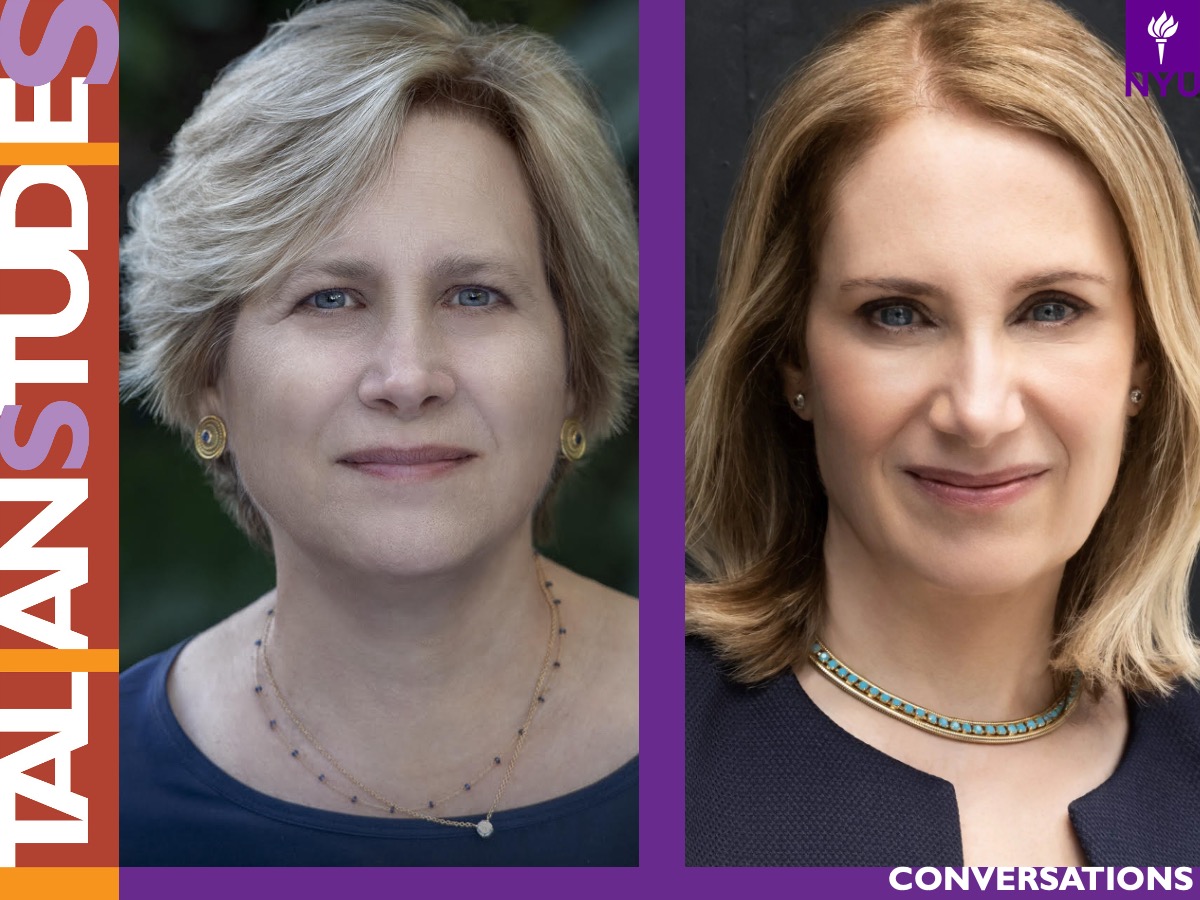
Studies on fascism do not only concern the reconstruction of a historical period closed and defined over the years, but also become an instrument for reading contemporary political phenomena, especially when categories and languages of the twentieth century return to public debate. The meeting of 9 April at the Italian House Zerilli-Marimò, entitled “Fascism, Then and Now: Continuities and Ruptures”, which proposes a comparison between the historical approach to fascism and the modern use that is termed, to divide what comes directly from the experience of fascist regimes and what, instead, belongs to different political contexts.
The protagonists are Marla Stone, professor and head of the history department at Western College, and Ruth Ben-Ghiat, professor at New York University. Stone has been working for decades of Italian fascism, political culture and relations between the State and cultural production in the European twentieth century; among his most mentioned works are The Patron State: Culture and Politics in Fascist Italy (1998) and The Fascist Revolution (2012), as well as collections such as Fascism in America (2022), which analyses the reception and declinations of the phenomenon in the United States. Ben-Ghiat, with his book Strongmen: Mussolini to the Present (2020), proposes a comparative reading of the authoritarian leaders of the twentieth century and contemporaries.
The meeting will focus mainly on continuity and breakage: on the one hand, therefore, the analysis of the characteristics that defined the historical fascist regimes – such as the control of propaganda, the direct relationship between leader and mass, the construction of the political enemy; on the other, the identification of what has changed in current contexts, where digital communication, globalization and new forms of populism profoundly alter the dynamics of consensus.
L’articolo Understanding fascism yesterday to interpret it today: a meeting at NYU comes from IlNewyorkese.