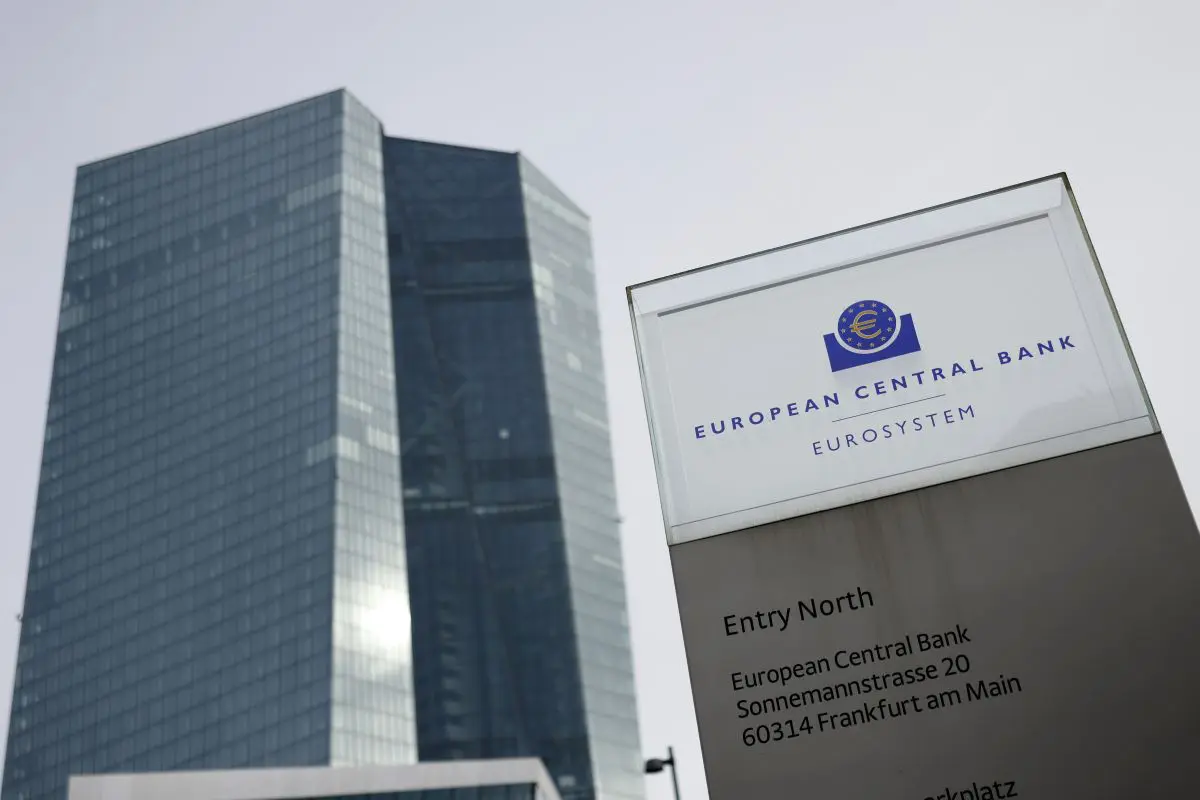
FRANCOFORTE (GERMANY) (ITALPRESS) – The Governing Council of the European Central Bank has decided to maintain unchanged the three reference interest rates. In detail, interest rates on deposits at the central bank, major refinancing operations and marginal refinancing operations will remain unchanged at 2%, 2.15% and 2.40% respectively.
The Board of Directors “is determined to ensure that inflation is based on our goal of 2% in the medium term. War in the Middle East has made the perspectives significantly more uncertain, generating risk to rise for inflation and risk to downward for economic growth – read in a note -. The conflict will have a significant impact on short-term inflation through the rise of energy goods. The medium-term implications will depend on the intensity and duration of the war as well as the way energy quotations will affect consumer prices and the economy. The Governing Council is in a favourable position to address this uncertainty. Inflation has been around the 2% target, longer-term inflation expectations are firmly anchored, and the economy has shown a good grip in the last quarters.”
“The information that the Governing Council will acquire in the coming period will enable the impact of the conflict on the prospects of inflation and the risks associated with them to be assessed. The Governing Council closely follows the situation and will appropriately define monetary policy thanks to its approach based on data – emphasizes the European Central Bank -. The new projections of ECB experts include, exceptionally, information available until 11 March, a delayed closing date than usual. In the basic scenario, overall inflation would average 2.6% in 2026, 2% in 2027 and 2.1% in 2028. Compared to December’s projections, inflation was revised upwards, especially for 2026, due to the increase in energy prices caused by the war in the Middle East. Inflation net of the energy and food component would mean 2,3% in 2026, 2.2% in 2027 and 2.1% in 2028. These values are also higher than the December projections, mainly due to the rise in energy goods that are transmitted to inflation net of energy and food. Our experts expect an average economic growth of 0.9% in 2026, 1.3% in 2027 and 1.4% in 2028, with a downward revision, in particular for 2026, resulting from the world-wide effects that war will produce on the commodity markets, real incomes and climate of trust.”
“At the same time, the low level of unemployment, the solidity of private sector budgets, public expenditure on defence and infrastructure should continue to support growth – says the ECB –. In addition, in line with the commitment envisaged by the Governing Council’s monetary policy strategy to integrate risks and uncertainties in decision-making, our experts have analyzed how war in the Middle East could affect growth and inflation, based on some alternative scenarios formulated for illustrative purposes. These scenarios will be published together with the projections of experts on the ECB’s website. According to scenario analysis, a prolonged interruption of oil and gas supplies would result in higher inflation and lower growth than the basic projection scenario. The implications for medium-term inflation depend decisively on the extent of indirect effects and the second impact of stronger and persistent energy shock. To define the appropriate monetary policy orientation, the Cthe directive will follow a data-driven approach where decisions are taken from time to time at each meeting. In particular, the decisions on interest rates will be based on its assessment of the prospects for inflation and associated risks, considered the new economic and financial data, as well as the dynamics of underlying inflation and the intensity of the transmission of monetary policy, without constraining itself to a particular path of rates.”.
– Photo IPA Agency –
(ITALPRESS).