ROMA (ITALPRESS) – New Year 2025/2026 confirms the consumption of Italian families. The average household spending rises at 127.2 euro per household, up by about 2 percent compared to 2024, continuing an uninterrupted growth started in 2022 after the stagnation phase linked to the pandemic.
The comparison with previous years shows a structural trend: between 2020 and 2021 the average expenditure stood around 100 euros, then climbed to 109 euros in 2022, 115 euros in 2023 and more than 124 euros in 2024, up to the current level. In five years, the overall increase is 28 per cent, with a dynamic that reflects the impact of inflation first and then the normalization of consumption on higher levels. This is what emerges from the photo of the consumption of New Year realized by the Centro Studi di Unimpresa, according to which, on the aggregate plan, applying the average expenditure to the most updated number of families resident in Italy (about 26.3 million), the total expenditure for the single New Year’s domestic noon exceeds 3.3 billion euros, growing approximately 2 percent on the previous year.
In comparison with the two-year 2020-2021, when the total value ranged between 2.6 and 2.7 billion, the increase exceeded 25 percent. The data confirms that, despite a climate of prudence in family budgets, the New Year remains a central event in the Italian shopping habits: less excessive, greater attention to consumer choices, but a total volume that continues to grow and generate a significant economic impact on domestic consumption. “The progression of consumption, continues from 2022 to today, indicates that the country has found a capacity for reaction and a propensity to more conscious and neat spending.
We are not facing a return to the excesses of the past, but to a normalization that reflects a climate of greater stability and confidence in the future. It is a heritage to preserve, because trust is the real engine of the real economy, especially for small and medium-sized enterprises. At the same time, this data should not lead to lowering the guard. In addition to a majority of families who manage to support the holidays, there remain pockets of poverty and social fragility that cannot be ignored. The average increase in consumption does not erase the difficulties of those who struggle to arrive at the end of the month, nor the inequalities that cross certain territories and social segments. For this reason, economic policy must continue to keep growth and social cohesion together: support income and work, strengthen purchasing power and accompany recovery with measures aimed at those who remain more exposed. Trust must be cultivated, but it must also be made inclusive, because only so can it become really lasting,” says the president of Unimpresa, Paolo Longobardi.
The photograph of the New Year’s consumption realized by the Centro Studi di Unimpresa returns, this year, an eloquent picture of the state of mind and the economic conditions of Italian families: widespread prudence, but also the holding of social rites and a progression of expenditure which, net of economic fluctuations, shows a well-established trajectory. The first data from which to start is the average expenditure per family, estimated at 127.2 euros for the New Year’s Eve dinner, calculated on the basis of the “classic” menu and the average size of the households.
This is an increase of around 2 percent compared to 2024, when average expenditure was around 124,7 euros. A low but significant increase, which indicates that the high acceleration of prices is attenuating, without however reverse the trend. But if you widen your gaze to the historical series, the figure of 2025 acquires a different weight. In 2020 and 2021, the years marked by pandemic, average household spending was around 100 euros, with minimal variations and consumption compressed by restrictions and uncertainty. It has been observed since 2022 that a real change of step is observed: the expense rises to approximately 109 euros, then grow further in 2023 (about 115 euros) and in 2024 (over 124 euros), up to reach the 127,2 euros. In five years the overall increase is almost 28 percent, and more than 16 percent compared to 2022, confirming a continuous progression, linked first to the inflating flame and then to the normalization of consumption on structurally higher levels.
This trend is observed even better, amplified, in the national aggregate data. Applying the average expenditure of 127.2 euros to the most updated number of families resident in Italy, amounting to approximately 26.3 million, the total expenditure for the single New Year’s home nod exceeds 3.3 billion euros. Here too the temporal comparison is educational: in 2024 the estimated total was just under 3.28 billion, while in 2023 it was around 3.0 billion. The increase over the last year is therefore in the order of 2 percent, consistent with the dynamics of average expenditure, but the comparison with the pre-2022 period shows a much more marked leap. Compared to 2020-2021, when the total national spending for New Year ranged between 2.6 and 2.7 billion euros, the increase today exceeded 25 percent. In other words, in a few years the New Year of Italian families has recovered and exceeded not only the pre-pandemia levels, but also those preceding the inflation shock, laying on a new step higher.
The joint reading of the two data – average and total national expenditure – suggests a clear conclusion: the New Year remains a “non-negotiable” appointment in family budgets. Families continue to rationalize, to choose more carefully what to put on the table and where to save, but the total value of the event is not questioned. Growth is slower today than the years of record inflation, but the trajectory started by 2022 is now structural: less excessive, more control, but an expense that, year after year, continues to rise and move billions of euros of domestic consumption.
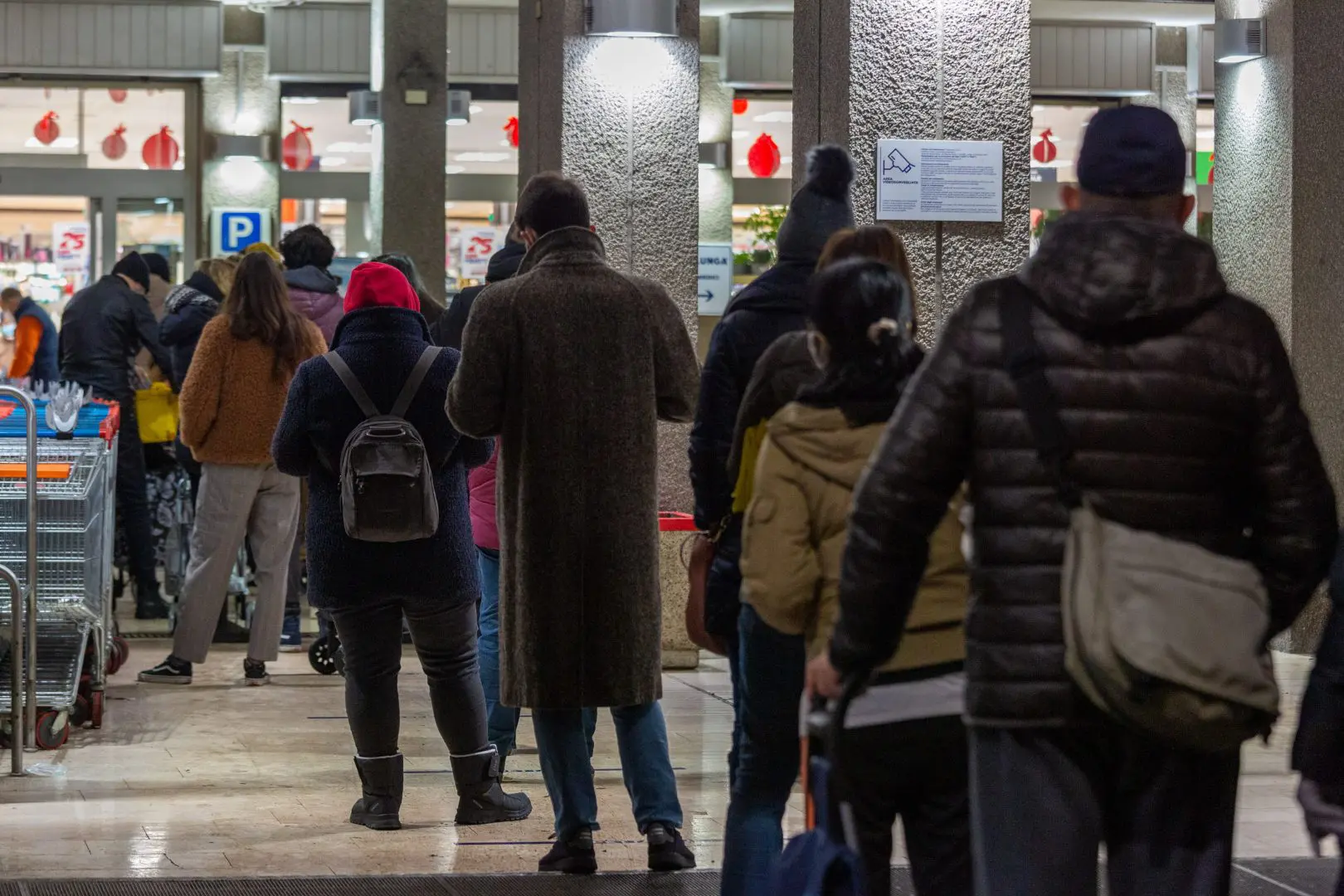
-Photo IPA Agency-
(ITALPRESS).