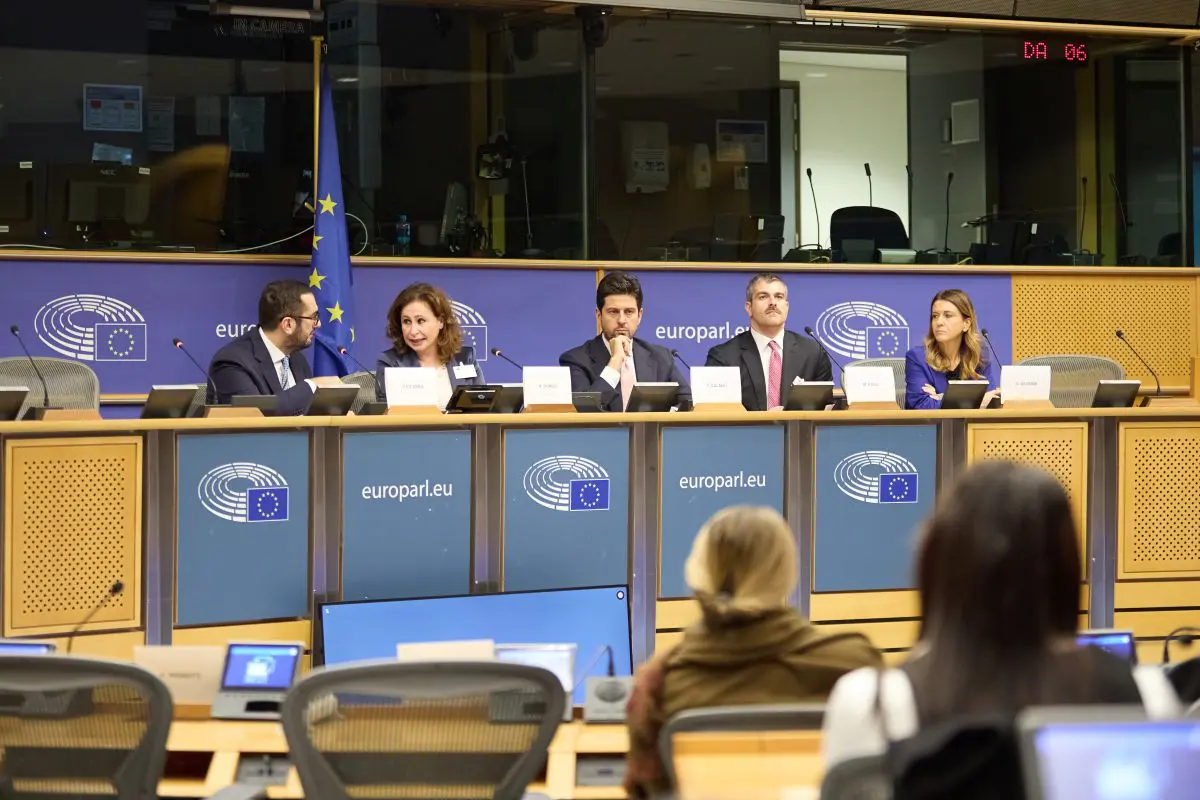
BRUSSELS (ITALPRESS) – The event “Women’s Oncology in Europe was held at the European Parliament: Innovation, equity and new needs”, in conjunction with the Gender Equality Week, the week which Parliament devotes every year to women’s rights and equality policies. The initiative, which brought together representatives of the European institutions, regulatory agencies of the drug, the clinical-scientific community, patient and business associations of the sector, brought in the European agenda the still open needs of women with cancer and the conditions necessary to ensure continuity of oncological research, with a broad conception of female oncology which also includes neoplasias not traditionally associated with women. A first area of comparison has involved early prevention and diagnosis, the first axis of Europès Beating Cancer Plan, on which the health outcomes depend decisively. It has emerged a consequence often neglected in the debate on access: innovation is not reduced to the drug, but also includes diagnostic and profiling tools that allow you to quickly identify pathology and choose the appropriate treatment. “From the perspective of the European Society for Medical Oncology, which is now increasingly positioned as a global scientific society, the priority is the assessment of the clinical benefit of innovation and access policies. ESMO tools, such as the scale of clinical benefit, can help recognize the most valuable therapies and ensure priority access. It is therefore essential that health systems make available the necessary medicines and tests in a timely and fair manner,” explained Giuseppe Curigliano, elected President of ESMO. In breast cancer, the discussion also recalled the value of tertiary prevention: reducing the risk of relapse means protecting over time the health and quality of life of women, helping to prevent the return of the disease, often in metastatic phase, and reducing its impact on the health system and society. Ample space has been dedicated to the quality of life of patients, a recognised dimension in principle but that does not always translate into indicators, paths and dedicated resources: alongside survival, patients measure the outcome of care on the possibility of continuing to work, maintain relationships and design their future. A specific role is given in this context to psychoncology, as Bianca Balti recalled during the event, as the emotional weight of the disease accompanies patients and their families well beyond the acute phase. It is a dimension that extends from treatment to the next phase, to the risk of relapse that does not run out with years of adjuvant therapy. “ When a diagnosis comes, one realizes that the need is not only therapies, but not to feel alone: psychological support and psychoncology are not an accessory service, but a substantial part of the path, for patients and for those who accompany them, starting with those who take care of them, often in turn a woman. Telling your experience also serves to this, to become a point of reference for those who are going through the same thing and do not know who to turn to” Bianca Balti, founder of Mind Your Cancer ETS.The comparison has finally focused on the equity of access and the conditions for research in Europe. The initiative has adopted a broad conception of female oncology, extended to both breast cancer and gynaecological tumors and to neoplasms affecting both sexes but weigh significantly more on women. It has been found that research does not represent an accessory cost, but an investment capable of generating health, skills and value, and how this excellence cannot be given for acquisition: certain times, predictable rules, infrastrappropriate use and stable collaboration between institutions, academic world, clinical and business are the prerequisites for maintaining competitive Italy and Europe. “Being a woman still affects how a tumor is diagnosed and treated. Women are still underrepresented in clinical studies, and we know that sex affects the response to treatments, such as immunotherapy. It is therefore necessary to reduce everything that hinders a timely takeover of patients, which is not only through screening in a broad sense, but must take into account the specific needs of women. The goal is to break down the barriers of all kinds, medical, social or economic, which still restrict patient access to care,” said Valentina Guarneri, President of Women for Oncology Italy. The initiative, realized with the non-conditional contribution of AstraZeneca, Novartis Italia, Bayer Italia and Daiichi Sankyo Italia, has therefore confirmed that the need today is to make sustainable innovation in Europe, accessible and fair, so that future health, industrial and pharmaceutical policies protect oncological research and the taking into charge of patients along the entire treatment path. -photo press office Esperia Advocacy –(ITALPRESS).