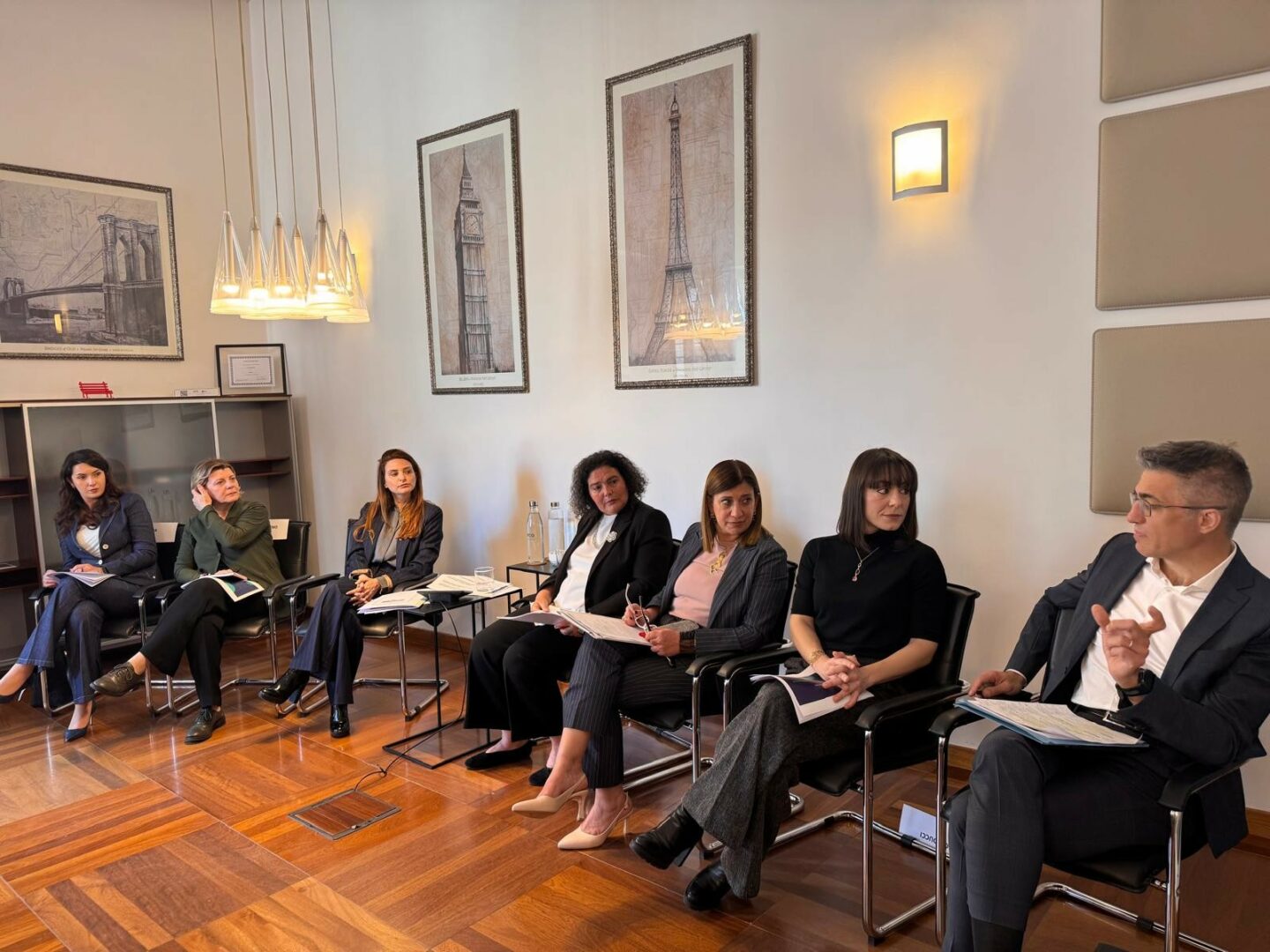
ROMA (ITALPRESS) – The press conference sponsored by Assosalute – National Association of self-medication drugs, part of Federchimica – was held in Rome at the APCO headquarters in Palazzo Lante. A moment of confrontation between institutions, research, health professionals and civic representations to reflect on the central role of women in daily health management and the value of self-medication responsible in the country’s health culture. The meeting wanted to light the spotlight on an increasingly obvious and current figure: the health of women is a central theme not only from a health, but also social and economic point of view, because it directly affects the welfare of families and the community. The data of the Assosalute-Censis Report “Women and self-medication responsible” highlighted a clear reality: 93.9% of women suffered at least a small disturbance in the last year, and 75.7% of at least two.A greater exposure than men who, however, does not translate into fragility, but in experience and capacity. Women, in fact, living more frequently with these disorders, develop a deeper knowledge of their health and a greater ability to manage daily self-medication drugs. Small disturbances affect women’s lives: over half declares a negative impact on the quality of life. To this is added the theme of menstrual pain, which concern 91.8% of women. They negatively affect 71% of cases, confirming that women’s well-being is still conditioned by factors often underestimated in health policies. In this scenario, self-medication, through the use of counter drugs, has been a fundamental resource: 78.8% of women have resorted to it. Thanks to these therapeutic tools women have found response to the need for care, managing to keep their personal, family and professional responsibilities active. For almost 80%, self-medication drugs are a concrete help in everyday life. The most important factor concerns the quality of the female approach to health and care for oneself and its loved ones. Women show high levels of awareness: 93.1% reads the package leaflet, 90.3%check deadlines and 88.2% address to the doctor if the disorder does not pass. The use of AI chatbots – like ChatGPT, Grok or Gemini – to get information about small disorders and automedication drugs represents a new ground of comparison between men and women. In fact, the figures show that 47.5% of women resort to AI ( 10% regularly and 37.5% occasionally), compared with 51.9% of men (16.7% regularly and 35.2% occasionally), with a difference of -4,4 percentage points. A gap that deepens when you move to the dimension of trust: among those who use these tools, 64% of women declare to have confidence in AI (6.6% much, 57.4% enough), against 76.7% of men (11.7% much, 65% enough), with a discard of -12.7 percentage points. Again, a more prudent and selective female approach emerges: AI is used as information support, but without sacrificing critical evaluation and comparison with health professionals, confirming an attitude in the approach to mature and modern health, which integrates technology and responsibility. This attention is not dictated by fear but represents a concrete and evolved form of health empowerment: the ability to choose in an informed way, to independently manage what is appropriate or if necessary, with the support in the first instance of the pharmacist and then of the family doctor. In this context, Assosalute has been involved in the promotion of health education and literacy projects for yearson the aim of spreading a culture of prevention and proper use of drugs, and of helping to strengthen the awareness of citizens and, in particular, of women, increasingly proactive in their health and key actresses of the family and, ultimately, social. Michele Albero, President Federchimica-Assosalute emphasizes: “Women are today the protagonists of an evolved model of health management: more exposed to disorders, but also responsible. Precisely the experience of women in the approach to care highlights how the proper self-medication used is really a crucial tool of daily health and a fundamental means to exercise their autonomy correctly even on an important issue such as that of their own benesserè. “We must support this autonomy through the transmission of correct health information and in step with the times and actions for a greater diffusion, transversal between genders and ages, of a health culture marked by awareness” – concludes Albero – “are areas on which the Association has always been spent because they represent important elements for the health of the present and, above all, of the future. For this reason, we feel and are an active part of this health alliance that emerged from today’s debate, in which everyone plays a different but fundamental role to face the challenges we face. The alliance between professionals, institutions, citizens and communities is the foundation. “The pharmacies and doctors of general medicine – says Marta Schifone, Commission Social Affairs Chamber of Deputies – make up an essential territorial garrison of our health system, ensuring proximity, timeliness of response and continuity of care. In this context, the role of women emerges with particular emphasis, confirming the main protagonists in the management of health not only personal, but of the whole family, including children and elderly families. This function, often carried out silently, contributes significantly to support the National Health Service, especially at times when this effort to provide complete and timely answers. It is therefore essential to promote and strengthen investment policies in women’s health, recognizing their strategic value in terms of overall system sustainability. In this direction, it is a priority to consolidate interventions on prevention, strengthen territorial health and enhance the role of health professionals, who daily ensure a qualified and capillary Presidium on the territory. Angela Margiotta, President Farmacista Together, points out that ‘the pharmacists, who represent a large part of the profession, are every day alongside women and know how much they are a health agent not only personal but also for their families and society as a whole. The pharmacy is often the first proximity to which women turn, the first space in which emerges a need, a fragility or a request for guidance. In this sense the role of the pharmacist is fundamental to accompany correct and conscious self-medication choices. Today more than ever it is important to strengthen the network between health professionals and among all the actors of the health system. Michela Guiducci, SIMG representative, points out that ‘in general medicine we see every day how much the health of women can not be read only on the clinical level, and how fundamental first is the patient’s listening. The time of dialogue is time of care. The quality of care also arises from the quality of the relationship: listening, continuity, trust and ability to read the complexity of the person are now part of the medical approach. As well as the relationship, in dialogue and collaboration between general doctor and pharmacist cannor help to first intercept needs, better accompany people and create a true alliance to support patients and patients, and especially their health. The false myth of a contrast between doctor and pharmacist does not correspond to reality: collaboration is already a concrete tool for the health of citizens, and in particular of donations. Annalisa Mandorino, Secretary-General of Cittadinanzactive states that ‘women have always played a fundamental role as proximity informers and as a daily health presidium within families and communities. Especially in the most fragile contexts. This contribution is huge, but too often remains invisible or is taken for granted. Not only that: women are also majorities in the associative world that deals with health. We could almost say, on the basis of today’s debate, that there is an alliance between women for the sustainability of the SSN. This fundamental contribution, however, must be supported, for this reason the initiatives of education and empowerment are fundamental, and also as Cittadinanzactive we carry out numerous. The last one, only in order of time, involved the students of the Sapienza University of Rome, for example. But we have always been present in schools, and in many other contexts socialized. “From research – says Sara Lena, Researcher Censis – it emerges clearly that women show, compared to men, greater attention and greater caution in health management. The increased exposure of women to small disorders results in a widespread competence in health management. It is a key element of empowerment, also the result of the culture of responsible self-medication that makes them more cautious than the information given by AI and lead to valorize the role of the doctor and pharmacy. -photo press office Assosalute –(ITALPRESS).