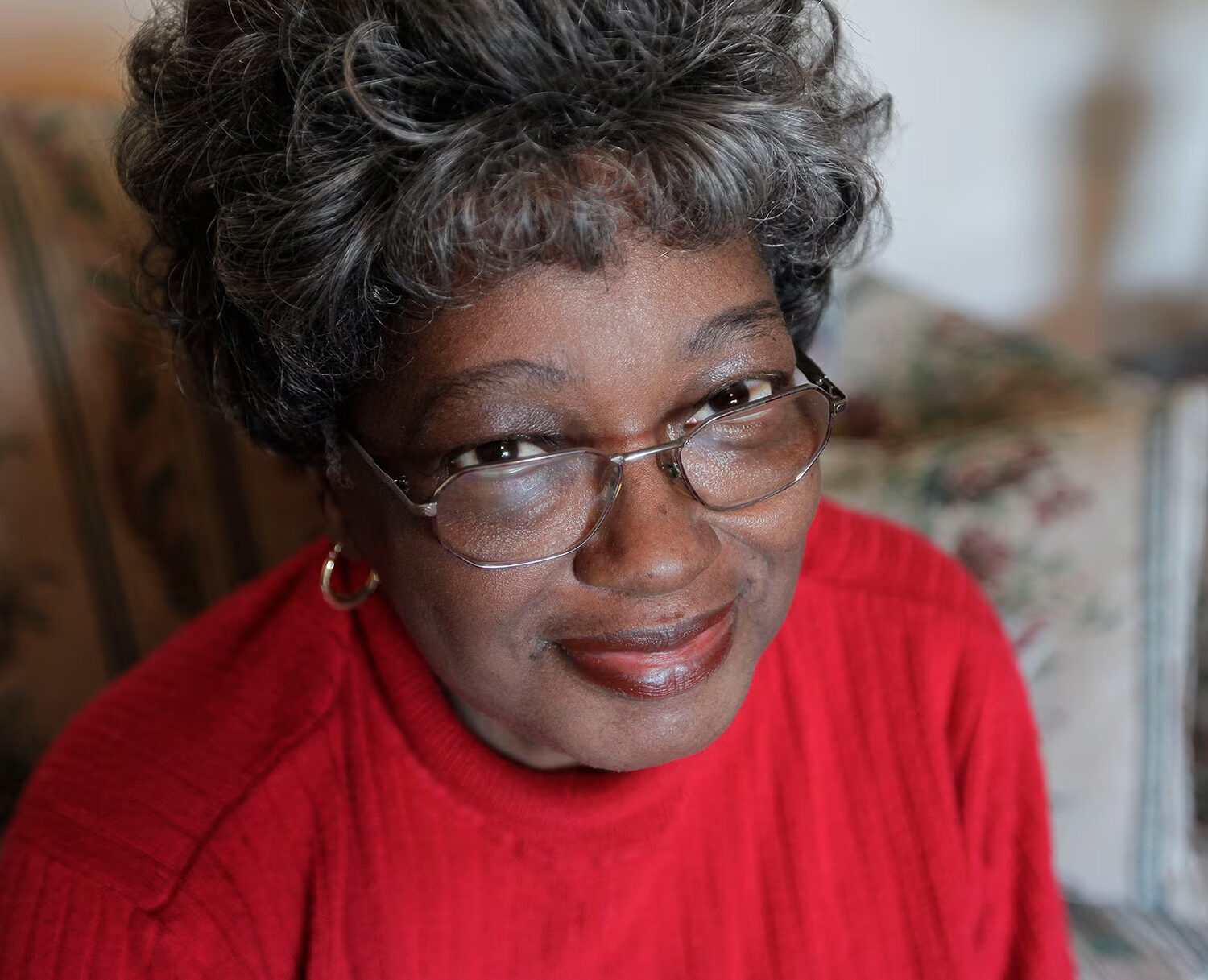
Claudette Colvin died at 86 years in Texas. His disappearance was announced by the Claudette Colvin Legacy Foundation. Colvin was a central but marginalized figure in the history of civil rights in the United States: On March 2, 1955, in Montgomery, Alabama, she was arrested for refusing to give her place on a bus to a white passenger, in violation of the segregationist laws then in force. His gesture took place nine months before that of Rosa Parks, in the same city, and contributed to the tensions that led to the boycott of Montgomery buses.
Colvin was born on September 5, 1939 in Birmingham, one of the symbol cities of segregation in the South of the United States. Shortly after her birth she was entrusted to Mary Anne and Q.P. Colvin, who adopted her and moved to Montgomery. He grew up in a rigidly separate public school system for black and white, regulated by the so-called Jim Crow laws, which regulated access to services, transport and public spaces. At fifteen years he was already aware of the constitutional rights denied to African Americans, also thanks to the lessons of civic education followed in school.
The arrest took place as he returned home after the lessons. According to Alabama law, black passengers were obliged to give way to whites if the bus filled. Colvin refused, claiming that the Constitution granted her that right. She was dragged out of the middle, handcuffed and taken to prison. The charges included violation of the segregation rules and assault on an agent. The local African American community managed to pay bail, but the episode had lasting consequences on his personal and school life.
Despite the importance of the gesture, Colvin was not chosen as a public face of the protest. The leaders of the Civil Rights Movement, including NAACP members, felt that its young age, modest family origin and teenage pregnancy could be used to delegate the legal battle against segregation. The symbolic role was then assumed by Rosa Parks, adult, working and already active in associationism, considered a more difficult figure on the public level.
Colvin’s contribution was decisive on the judicial level. In 1956 he was one of the four main plaintiffs in the Browder v. Gayle case, along with Aurelia Browder, Susie McDonald and Mary Louise Smith. The case came to the United States Supreme Court, which declared unconstitutional segregation on public buses, officially ending that practice in Alabama. After those years, Colvin moved to New York, worked as a nurse and lived away from the spotlight. Only decades after its history has been recognized as an integral part of the struggle for civil rights in the United States.
Article Who was Claudette Colvin, arrested at age 15 for rejecting a place “reserved” to whites comes from IlNewyorkese.