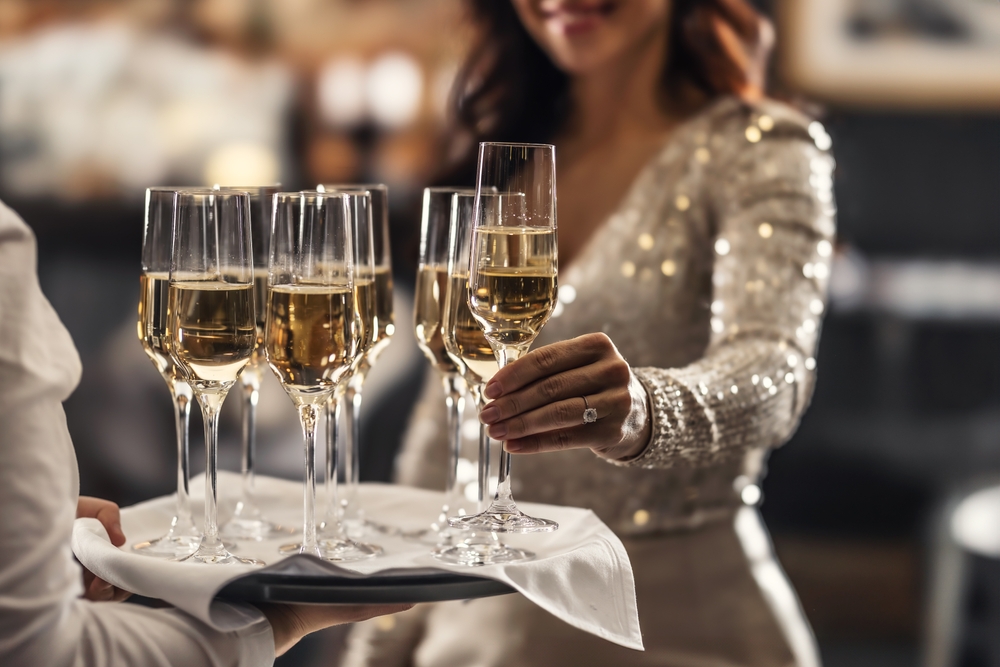
There are wines that drink and wines that are announced. The bubbles make noise before arriving in the glass: They shine, rise, burst, call attention. I am a movement in the liquid state, a light that dances, and maybe that’s why we immediately associate them with the party, the well-being, the feeling that “it’s for something beautiful to happen.” Bubbles speak a universal, immediate, contagious language: put in good mood even before tasting.
It is not only a matter of taste, but of imagination. Perlage is a visual festival: it recalls the spark, the candle lit, the firework. At an emotional level, it transmits energy, vitality, rebirth. Nothing is static in a glass of sparkling wine, everything moves upward, as if the wine itself decided to challenge gravity. And where there is momentum, there is celebration.
This sensory force has been added, over time, a fascinating story. Between the seventeenth and eighteenth centuries, the bubbles conquer the European courts, starting with that of Louis XIV. At Versailles Champagne becomes synonymous with elegance, modernity, luxury. It is the wine of great occasions, parties, power that is staged. The French maisons build a myth that still resists today: stapping a bottle means participating in a ritual that smells of nobility and spectacle. In the nineteenth century, with technical progress and industrialization, bubbles come out of the royal palaces and become protagonists of public events, inaugurations, victories. From that moment on, no celebration seems complete without the dry sound of the jumping cap.
And it’s the opposite of magic. It is a theatrical gesture, a suspended moment that marks a first and a later. That iconic pop is not just a noise: is a collective signal that says “it starts”. Toast is never solitary, even when you are in few. The bubbles ask for sharing, call the smile, shorten the distances.
Italy, with its extraordinary biodiversity, has transformed this energy into a thousand different interpretations. The Classical Method represents the deepest and most solemn side of the Italian bubble: Franciacorta, Trento DOC, Alta Langa, Oltrepò Pavese are territories that have made finesse and complexity their flag. Here the bubbles are thin, persistent, almost aristocratic, born from long refinements on the yeasts and able to tell the time with aromas of bread, butter. They are wines that are not in a hurry, but they know how to surprise.
Next to this most reflexive world, the Charmat-Martinotti Method brings to the stage carefreeness. Prosecco, Asti Spumante, Lambrusco: immediate bubbles, fragrant, fragrant, convivial. Here the party is direct, joyful, without superstructures. They are wines that invite to the second glass, which speak of friendship, aperitifs, laughter. Federico Martinotti first and Eugène Charmat then gave the world a method capable of transforming the aroma of grapes into an explosion of freshness, making the bubbles accessible, democratic, irresistible.
And then comes the time of the year when all this finds its natural stage: parties. At Christmas the bubbles warm the atmosphere, close the dinner as a luminous bracket, accompany the stories, the memory, the pleasure of being together. On New Year’s Eve, instead, they become a gesture full of expectations. Toast to the future, he entrusts to the bubbles the hope that the new year sails light as perlage in the cup. It is an almost uncompromising act, but deeply human.
At the bottom, bubbles like because they do exactly this: they transform a simple wine at a time. Each tinned bottle is a small show, a shared ritual that says, without need of words, that yes, it is worth stopping a moment and celebrating. With enthusiasm, with lightness, with that spontaneous smile that only a glass full of bubbles can give.
What are you waiting for? Run!
Happy Holidays to all.
L’articolo The liquid energy of the festival comes from IlNewyorkese.