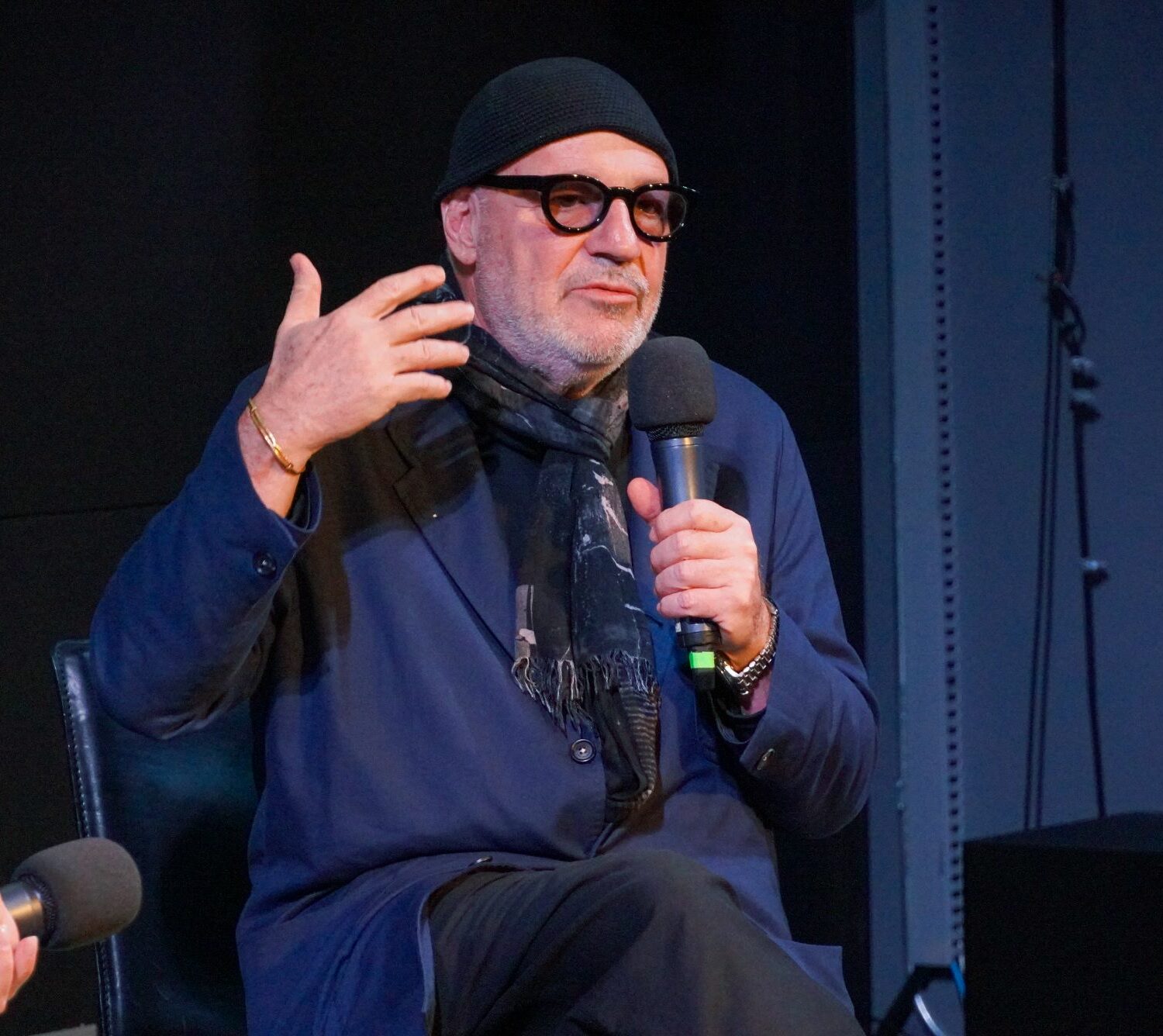
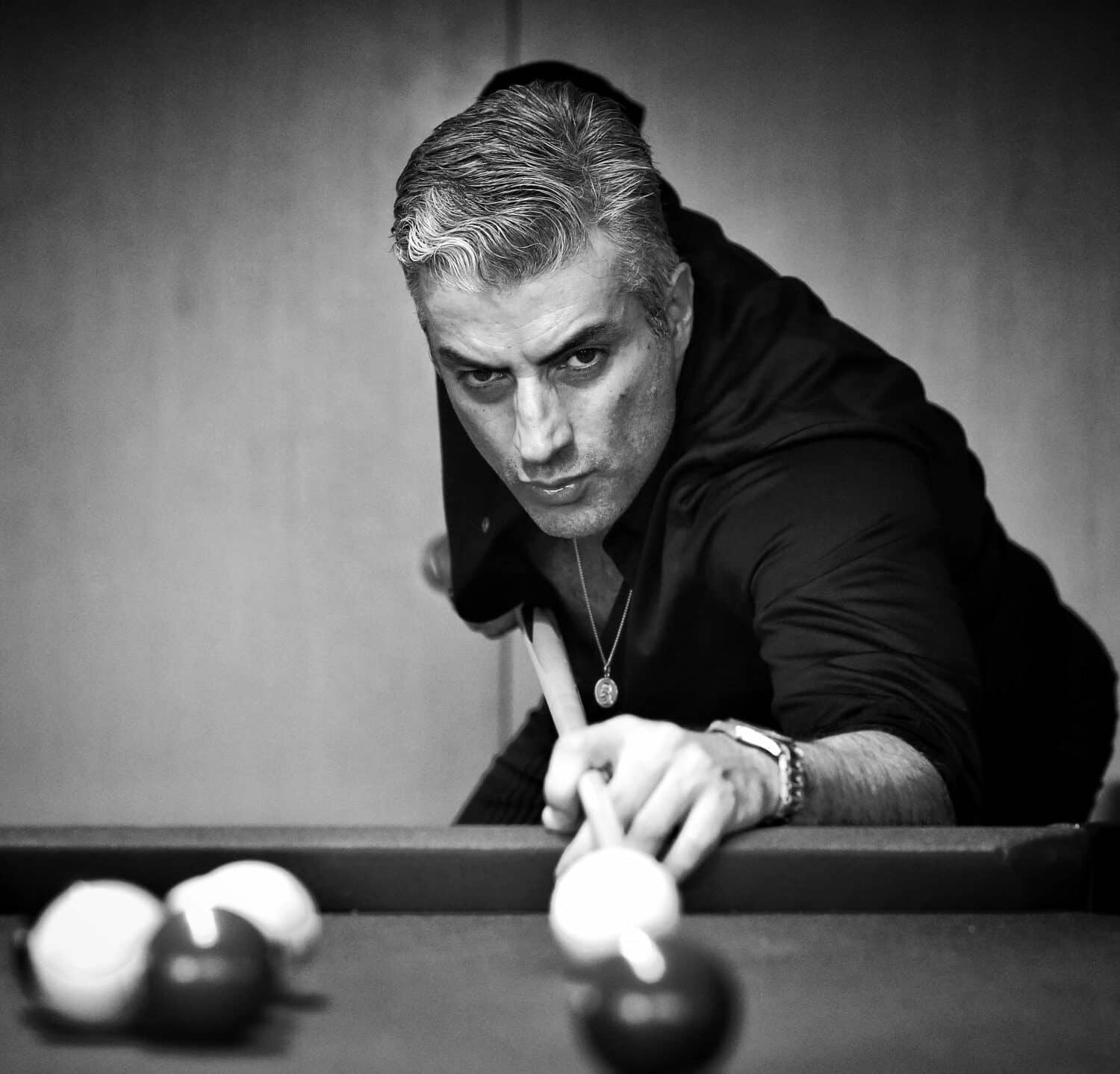
Born in Campobasso in 1969, Fabrizio Brienza studied graphic design in Florence before starting to work as a model in Milan, where he fashioned for Armani, Valentino, Versace and Dolce & Gabbana. In 1997 he moved to Miami, entering the nightlife world of South Beach, and the following year he debuted as an actor in The Versace Murder. From there came roles in Hollywood productions like The Guardians of Destiny, with Matt Damon and Emily Blunt, Duplicity, with Clive Owen, and The Perfect Prey, with Liam Neeson. Today he plays Nico, the sub-chief of Chazz Palminteri’s character, in Godfather of Harlem on MGM+. Between set and set he works as a doorman at Paul’s Casablanca, one of the most famous and selective clubs in New York. He was recently included in the Louis Vuitton City Guide in New York and appeared on the cover of the New York Times. With its recognizable accent, Versace furs and a very clear idea of what it means not to sell, Brienza is one of those Italians that New York tends to remember.
Actor, model, nightlife icon: who are you today?
I come from South Italy, from Molise. And according to me, we Italians have a huge natural talent. We made ourselves, we learned by living, observing, arranging ourselves. For this reason, even acting in a way is natural: because life you have already had to study on yourself. Being Italian in New York is a crazy advantage. It’s like getting to Park Avenue by driving a Ferrari: they notice you before you even say something. When you live in Italy you do not think about it, because you are surrounded by Italians. But when you travel and compare with the rest of the world you understand that Italianity has a weight, a charm, a perceived quality that others immediately recognize.
How did your relationship with America begin?
As a child I wrote letters to the Italian ambassador in Hawaii because I wanted to become a surfer and move there. He really answered me, and I still hold that letter. In Hawaii I never got there, but America always had it in my head. I grew up with American films, with that energy there, with the idea that everything could happen. In Italy, if you want to do something and you’re not someone’s son or someone’s nephew, they often make you feel you don’t even have to try. In America, if you have courage and you play well your cards, someone can also decide to bet on you. That’s the difference to me.
Was being Italian more a lever or obstacle?
A lever, always. When you’re in Italy, you don’t notice, because it seems normal. Then go out, travel, meet people from other countries, and you understand that being Italian immediately gives you a precise picture. Italian is associated with quality, style, taste, recognisability. It’s like a premium brand. For a long time I thought my accent could be a limit. Then I watched Sean Connery: he did fifty years of career with his Scottish accent, playing any character. At one point I realized that my accent was not a defect to correct. It was part of the character. It was my brand.
You refused The Island of the Famous. Why?
They contacted me and I said no right away. I don’t like reality. I’ve never been interested. If we talk about a competition where you really have to prove something, like Top Chef, or a project with a sense to Anthony Bourdain, then I get it. But shutting people together to make them fight, gossip and make scandals is not for me. It gives you popularity, of course. But then what do you do with it? I want to do things that really interest me, not accept anything just because it brings visibility. I don’t go out to show me.
How much does reputation count in New York compared to pure talent?
I lived in many American cities: Los Angeles, San Francisco, Las Vegas, Miami, New York. And every city works in its own way. In Miami, once you’ve built a reputation, you can do your price and often they recognize it. New York is different: every day it seems the first day of school. It doesn’t matter too much who you were yesterday, what you did, who you know or how strong you were before. Here you have to prove it again, every day. You can be the best in your field, but today it starts again. It’s hard, but it keeps you awake.
Social media: how did you get there and what did they give you?
At first I didn’t want to know. I thought they were ballet kids. Then I shot that video during the Covid. Governor Cuomo had said that you could only eat outside. There was a snowstorm, it was nine and a half in the evening and I was already in pajamas. A friend called me and said, “Fabrizio, look out.” At first I told him to let it go. Then I convinced myself. I blended my fur, we set up a table outside the restaurant, the pizza maker prepared a pizza and I sat there, in the middle of the snow, with a beer in my hand, saying more or less: “Thank you, Mr. Governor, this idea of eating out is fantastic.” He made thirty million views in three days. From there I became viral several times. Social media are a huge showcase: they pay me to be myself. And it’s hard to imagine a better job.
What would you say to Fabrizio coming to America with $300 in his pocket?
I’d tell him I might have to get to New York before, instead of staying in Miami seven or eight years. In Miami I spent some of the most beautiful years of my life, that is. But when HBO chose me for a movie with Andy Garcia and the producers told me: “Come to Los Angeles, we want to help you,” I didn’t go. I stayed in Miami, between clubs, parties and fun. If I have to indicate a regret, that’s it. But then I don’t really believe in regrets, because in the end you only learn from things, even from mistakes. If someone tells you not to do something, you probably do the same. You have to put your head down. And for an actor also that counts: every experience adds something to you, makes you more accurate, more interesting.
What are you working on now?
I just finished Zips, a short film produced by Australians: it’s a story of mafia and it’s going to go to festivals. Then I am in Godfather of Harlem on MGM+, with Forest Whitaker, Vincent D’Onofrio, Giancarlo Esposito and Chazz Palminteri. I’m playing his underdog. The series tells the Sixties and Seventies, the relationship between the Italian Mafia and the black community in the fight for control of Harlem. Recently I was placed in the Louis Vuitton City Guide in New York, appeared on the cover of the New York Times and maybe I will do something with John Turturro. There are several things that are moving, and they are very loaded.
L’articolo The Italian who has made a career remaining himself comes from IlNewyorkese.