ROMA (ITALPRESS) – Every year 43 million dead. Chronic diseases that kill three quarters of humanity. Yet the biological mechanism that prepares them — in silence, for years, even before the symptoms appear — is still ignored by political decision makers and food regulators.
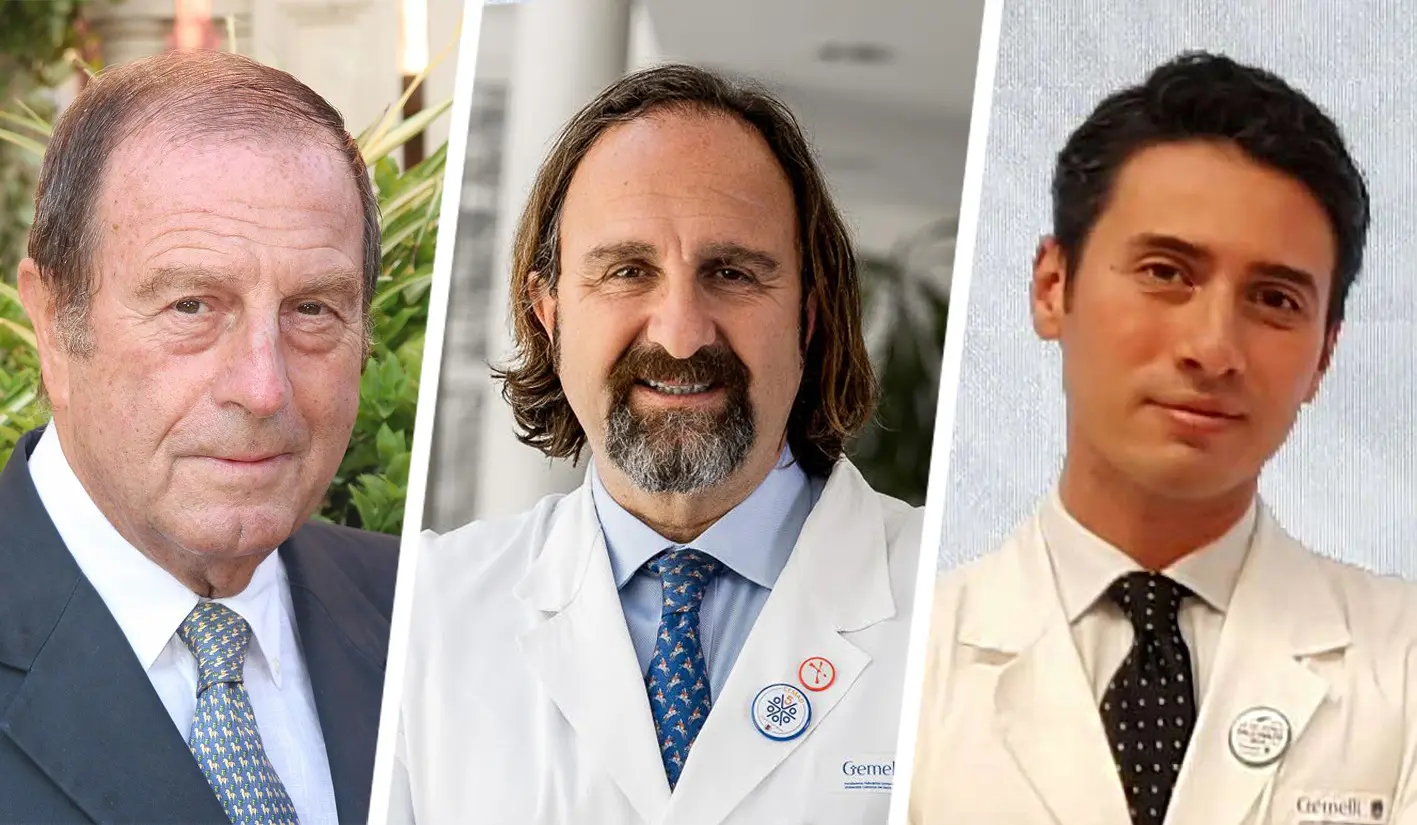
Today this silence is broken by a research published in Nature Reviews Gastroenterology & Hepatology, the most authoritative world magazine in the field of gastroenterology. Professors Antonio Gasbarrini, Gianluca Ianiro and Giovanni Gasbarrini — three generations of scientists from the University Polyclinic Foundation A. Gemelli IRCCS and the Catholic University of the Sacred Heart — demonstrate that intestinal microbiota is not only associated with chronic diseases: it anticipates. They identify in ultra-processed food and industrial additives the main responsible for the silent destruction of the human biological ecosystem.
The intestinal microbiota — the ecosystem of 38 trillions of microorganisms living in our intestine — is the most accurate diagnostic tool that medicine has ever had. Not because you detect the disease already present, but because it sees it coming years, sometimes decades, before it manifests itself. The mechanism is called meta inflammation: a chronic, silent inflammatory state, invisible to standard tests, which progressively erodes metabolism, immune system and nervous system.
When the patient arrives with diabetes, heart attack or tumor, this biological fire was already burning for a long time. “The biological signatures of meta inflammation could be detectable years, or even decades, before the disease manifests itself clinically. This opens up concrete perspectives for a truly anticipatory, preventive and personalized medicine. We do not wait for the disease: we intercept it before it arrives,” explains prof. Antonio Gasbarrini, Scientific Director, Fondazione Policlinico Universitario A. Gemelli IRCCS and Professor in Internal Medicine, Catholic University of the Sacred Heart.
Ultra-processed foods — which in many countries already account for more than half of the calories consumed — do not harm health only for their nutritional composition. They do this through industrial additives: emulsifiers, artificial sweeteners, preservatives and dyes that alter microbiota with molecular mechanisms today documented with scientific precision. The paradox reported by research is shocking: these additives were approved by regulators — EFSA in Europe, FDA in the United States — without ever measuring their effect on the human intestinal ecosystem. Food safety protocols were written before microbiota science existed. They were not updated. “ Their impact on microbiota and intestinal barrier is not a negligible side effect. It is a primary pathogenic mechanism.”.
“We are allowing the industrial restructuring of the human microbiota on a population scale without measuring its consequences. This must end,” says prof. Gianluca Ianiro, medical manager UOC CEMAD, Fondazione Policlinico Universitario A. Gemelli IRCCS. The paper signs three generations of the same scientific school.
Professor Giovanni Gasbarrini, 89, Professor Emeritus of the Catholic University of the Sacred Heart and among the founders of modern European gastroenterology, offers a perspective that spans six decades of medicine: “I have seen this discipline born. What the science of microbiota is revealing today — that health is a property of the ecosystem, not only of the organism — is the deepest conceptual revolution I have encountered in sixty years of clinical practice and research. It is not a hypothesis: it is the biological reality that expected to be measured,” explains Prof. Giovanni Gasbarrini — professor emeritus of Internal Medicine, Catholic University of the Sacred Heart. The search does not stop at the complaint.
It offers a call to action in five pillars: 1. Education — reform nutrition literacy by integrating microbiome science, starting from schools. 2. Agriculture — restructuring agricultural subsidies to encourage the production of fresh and minimally processed foods. 3. Health — introduce the stewardship of antibiotics with microbiome protection metrics; start structured programs of description of protonic pump inhibitors. 4. Economics — to tax food additives with documented disbiotic potential; to reimburse the prevention paths based on microbiome. 5. Research — establish public financing lines dedicated to the prevention of chronic microbioma-malattie, with longitudinal cohorts and intervention trial.
“We ask that the safety assessment of food additives include standardized microbiota assessments. We ask that the effects of additive mixtures be assessed in a real context. And we ask to overcome the separation between nutritional regulations and food safety: we cannot safely declare a food looking only at macronutrients and ignoring what it does to the intestinal ecosystem,” adds prof. Antonio Gasbarrini.
“The intestinal microbiota is the most precise biological mirror that medicine has ever had. Today it gives us an alarming image: millions of dead preventable every year, children whose intestinal ecosystem is already compromised before entering school, and a regulatory framework that allowed all this without ever measuring its consequences. Despite a decade of consolidated scientific evidence, medicine and decision makers have not answered yet. The era of ecological medicine must begin now — not to produce new science, but to save lives”, he concludes.
-Photos print office Policlinico Gemelli-
(ITALPRESS).