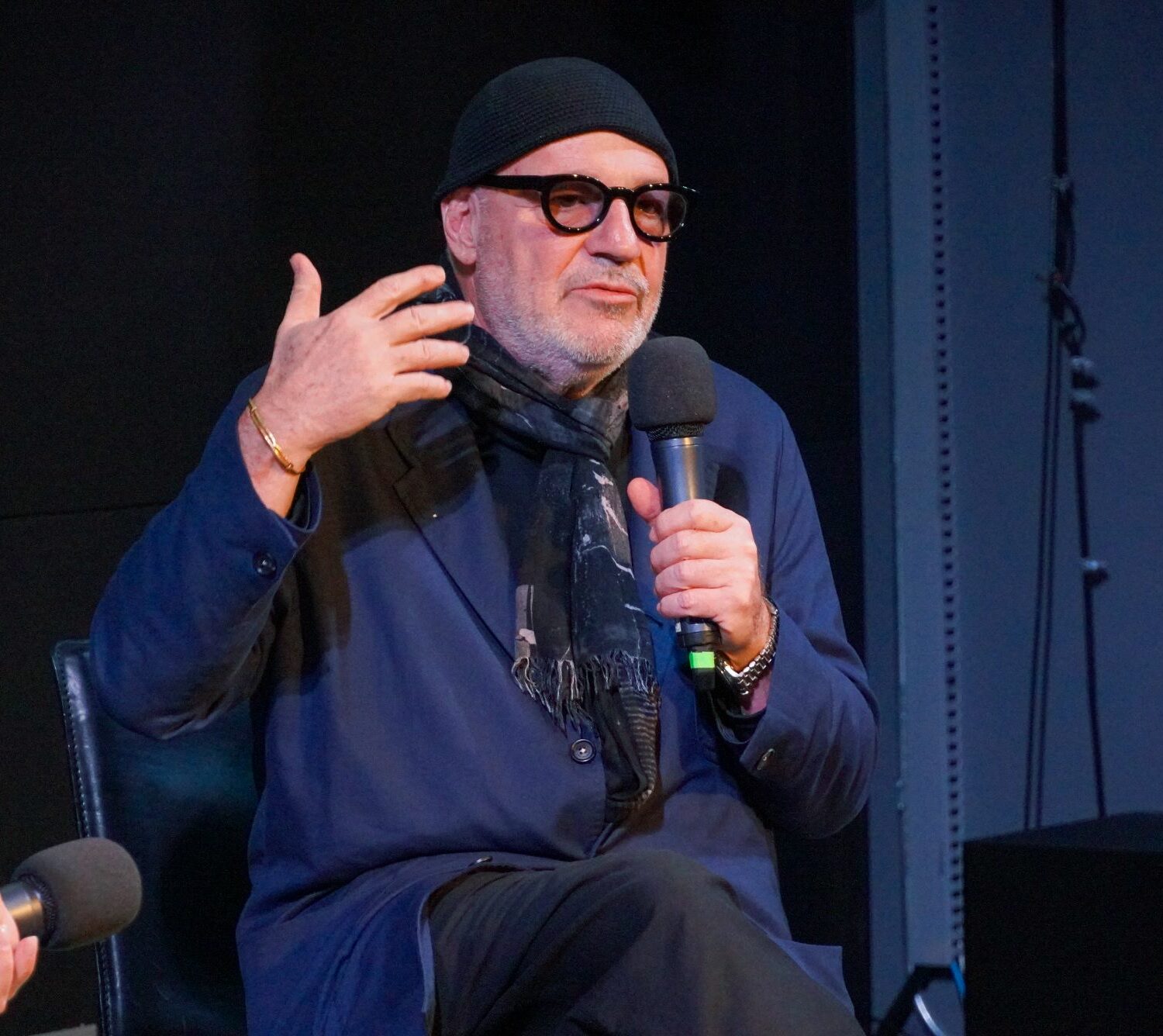
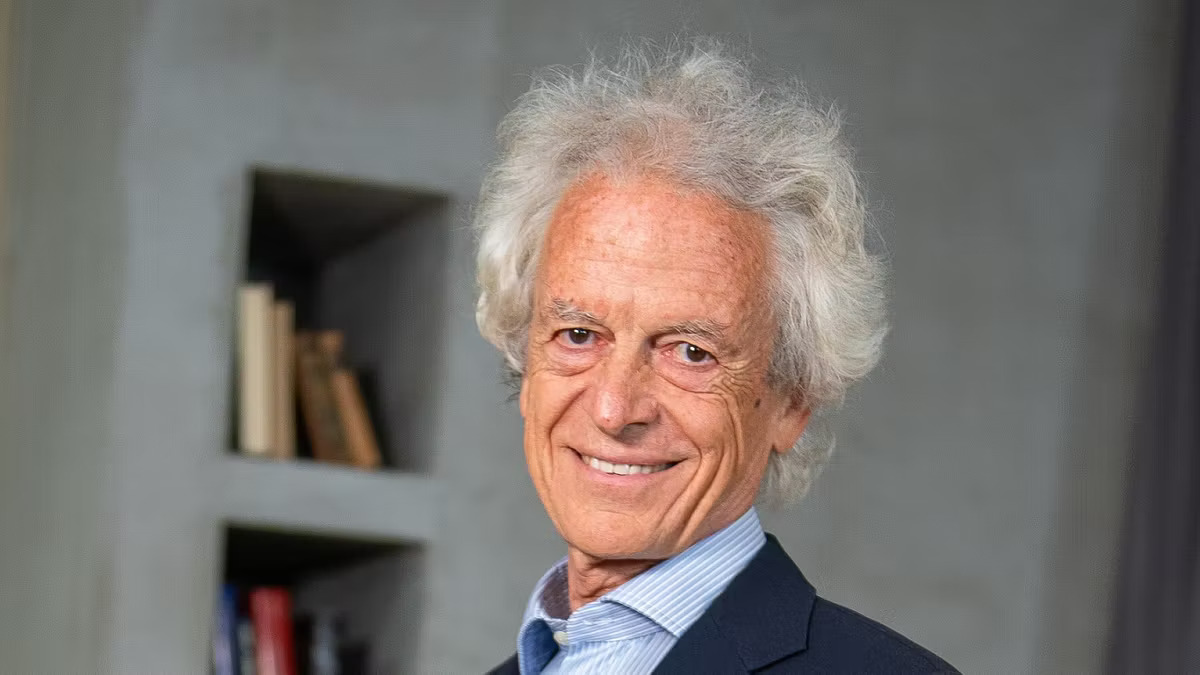
This interview arises from the desire to reflect on the meaning of living among more countries, languages and cultures in an increasingly interconnected world. Federico Rampini represents an important point of reference for many Italians living in the United States and, more generally, for those who built their identity through geographical and cultural boundaries. His personal and professional journey also reflects in part the experience of us students of the Italian School: some arrived from Italy, others already accustomed to international contexts, all committed to redefining their identity in new environments.
How did the experience of different cultures contribute to forming the “Federico Rampini” we see today?
I call myself a global nomad, having lived on three continents. Also the journey continues to be a constant part of my life, even now that I have rooted in America. As a writer and author of television programs, in recent times my interests have brought me back to China and Taiwan, Japan, Saudi Arabia, South Africa and in different countries of Latin America.
Among the most formative experiences of my life I remember: childhood and adolescence in an international school in Brussels; the beginning of my journalistic career in the press of the Italian Communist Party during the era of Enrico Berlinguer (1977); my first assignment as a foreign correspondent in Paris; the transfer to California at the beginning of the new millennium, followed by the transfer to China in 2004; and the trips as correspondent from the White House following three presidents: Obama, Trump and Biden.
With such a vast global experience, what always calls it to Camogli?
My grandparents and great-grandfathers are buried in the cemetery of Camogli: generations of ancestors dating back centuries. Many were captains of ship, since the time of sailing ships; they traveled the world when doing so was much more difficult and dangerous than today.
Maybe my family DNA sentenced me to travel. Liguria of my ancestors is one of the many wonderful corners of Italy where natural landscapes, history, art, culture and gastronomy merge together. I always try to spend there part of my summers.
Having lived in many great cities of the world, which one really gave her the feeling of “home”?
Today I feel at home in New York, to the point that it would be difficult to change once again and root elsewhere. Adapting to new cultures and ways of living has never frightened me; indeed, it was part of the adventure I was looking for.
The real price to pay is another: it is difficult to keep friendships for life when there is an ocean in the middle.
New York is a concentration of all other cities where I lived, for its variety and diversity. I also feel at home because the cultural life of the city never bored: it’s like an endless book to browse.
Now he also owns American citizenship. What pushed her to do that? And do you think today it is possible to talk about global citizenship more than national identity?
My wife Stefania and I took American citizenship after our children had taken it, Constance and Jacopo. At that point it seemed logical to follow their choice.
My Italian citizenship remains my primary nationality and my strongest identity: it represents the language, culture and history that my parents have transmitted to me.
I like to live in a country full of Italian-Americans, where this identity “with the hyphen”, this fusion of cultures, really exists.
You were correspondent in China during crucial years of economic and social transformation. How was the journalist doing in a context often misunderstood in the West?
I have lived permanently in China from 2004 to 2009, but I try to get back often because there is one thing that many Westerners struggle to understand: China continually changes; it cannot be fixed in a photograph a few years ago.
It is also an immense country and does not lend itself to simple definitions. In my recent travels I was struck by a much more advanced technological modernity than ours.
But it remains a difficult and hostile country for a Western journalist: the regime considers us enemies.
Which language best expresses its identity?
Italian remains my favourite language. I liked Latin and classical Greek too.
I was lucky enough to learn as a French and English child, so I also feel my own and read the French and English authors in the original language.
My Spanish is rudimentary, but it allows me to interview. I tried to study also German, Russian and Mandarin, but too briefly: I’m sorry I didn’t persevere.
Looking Italy from afar, what impression has it made? What can Italy and the United States teach each other?
In one of my best-selling books, America (Solferino), I tried to explain this country to Italians. Today the publisher wants to reprint it and it will be challenging to update it: in the meantime we entered the second mandate of Trump and everything was overwhelmed.
In the past, the Italians explained that they knew America because they had spent some vacation here or seen many films. Today the situation has worsened: this presidency has caused explosions of visceral and hysterical anti-Americanism.
Italy does a lot better than the United States, but among these I would not include the ability to inform the rest of the world. Both countries suffer from provincialism and self-referencing.
As for opportunities, the judgment is given by the many young Italians who continue to come here to study or work. Whatever you say, this exodus continues and is unique.
What advice would it give young people looking for their place in the world, often among more countries and identity?
My advice to young people is simple: often turn off your phone and delete your accounts on social media.
The huge time you will earn invested in travel and reading books.
The article The global citizen: Federico Rampini on cultures, continents and identity comes from IlNewyorkese.