There is an invisible threshold that technological innovation crosses every time it stops being simple tool and begins to redefine the very meaning of the person. It is what happens today with the artificial intelligence generated, more and more capable not only of producing texts, images and videos, but also of symbolic appropriation of human identity, transforming the face into a negotiable, replicable and sellable good.
I was impressed by the article published on Il Messaggero, signed by Francesca Altieri, entitled “China, up to $700 to ‘buy’ the faces of users: how the TV series market created with AI changes”, because it clearly focuses a decisive node of our time: the transformation of personal data into economic value and the progressive redefinition of the boundary between consensus, exploitation and market.
The picture described is impressive. In China, writes Il Messaggero, “an increasing number of online platforms began paying users (between $15 and $700) to get the license on their image” in order to generate content with artificial intelligence. The faces are classified by age, gender or aesthetic profile, such as “girl next door” or “supermodel”, and can be used in commercials, video games, drama and television series. It is a huge cultural passage: the face is no longer just personal and unrepeatable, but a resource to put on the market. It is also a new form of glazed bodies, exposed, selected and valued according to logic of visibility, appetite and economic performance.
According to the article, “over 95% of microdrama” produced in the country was made with AI. It is a fact that indicates a radical change in the cultural industry. Even more significant is the fact that, for production houses, obtaining an image usage license is much less expensive than hiring a real interpreter. But economic efficiency does not exhaust the problem. The Messenger recalls that thousands of citizens have seen their face appear in commercials and series without any consent, while ByteDance, a drama platform that uses artificial intelligence, “from the beginning of 2026 was forced to remove over 85,000 videos” containing unauthorized reproductions of artificially generated faces and voices.
Here comes the decisive theme of personal data. The face is not any information: it is a biometric data, that is a key to access our identity. When acquired, stored, modified or resold, it is not only the sphere of privacy, but the very core of individual autonomy. Sociologa Shoshana Zuboff described this logic as the distinctive feature of “surveillance capitalism”: human experience is translated into data, data in anticipation, prediction in profit. In this scenario, the body and the face become informative mines to exploit.
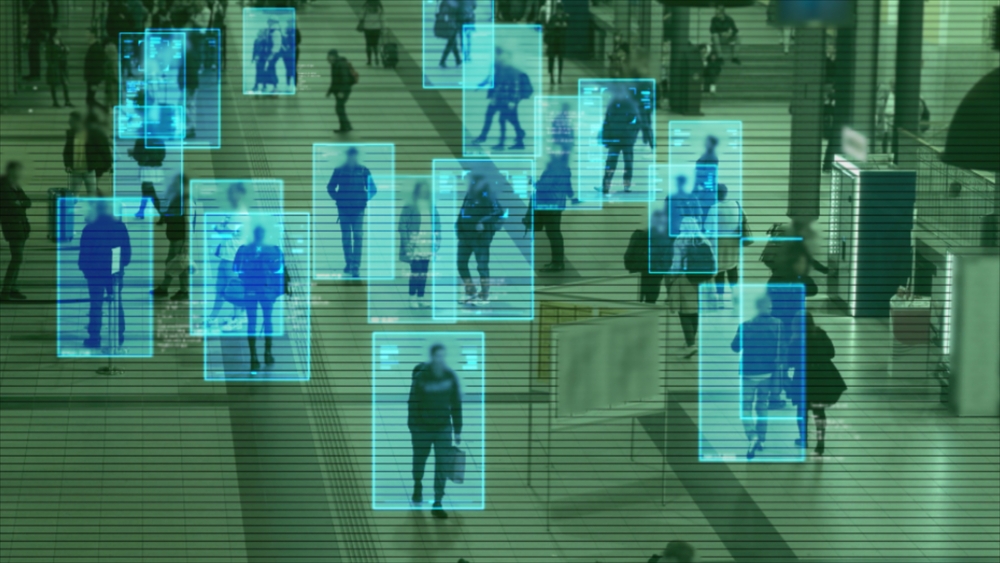
Other scholars also highlighted this process. David Lyon, among the most important sociologists of surveillance, showed that digital control no longer works only through observation, but by classification, profiling and continuous tracking. This is exactly what emerges from this market: catalogued faces, opaque permissions, often indefinite future uses. When, as Yile Deng observes, Beijing’s lawyer specializes in cases related to artificial intelligence image rights, “the license terms are often so vague that it is impossible to know who will actually use the image, or for what purpose”, consent risks becoming a formula only apparent.
The question, then, is not to be favorable or contrary to artificial intelligence. The point is to decide within which limits it can act without compromising fundamental rights. We need clear contracts, digital literacy, biometric data protection, independent control bodies and real sanctions for those who use images without authorization. But it also serves a new public culture of technological responsibility.
Reversing the route is possible, as long as the person gets back to the center. Innovation must not be transformed into an expropriation of identity, nor progress in a market without rules of human lineage. If the face is the first form with which we present ourselves to the world, protecting it means defending dignity, freedom and the future. And that’s where we have to start.
The article The face is goods: IA, personal data and the new identity market comes from IlNewyorkese.