There is a word that we always pronounce without listening to the meaning: “person”. We use it in public speeches, in the news, in daily conversations, and in the meantime its meaning has become thin, almost emptied by habit. Saying a person is too often equivalent today to say an individual: a single person acting on his own, who enters into relationship for convenience, which measures the world on his own advantage. It is a subtle, almost invisible misunderstanding, capable of producing enormous consequences.
I was struck by the article published on Avvenire by Antonio Staglianò, entitled “To return to say ‘person’ means to recognize a plot of relationships”, because it offers a reflection that concerns each of us. The starting point is the catechesis of the General Audience of 16 September, when Pope Leo XIV guided a meditation on the Gaudium et Spes, focusing on the chapter dedicated to the human community. To strike, before the contents, is the perspective: the Pontiff asked “a real reclamation of the language”, warning from the risk of saying “person” thinking “individual”.
When you reduce the person to the individual, writes Staglianò, “you imagine it as an isolated monad, an atom that only relates to calculation or convenience.” In this logic there is room for what the article calls “the culture of power”: subjects that compete, measure, affirm one at the expense of others. It is a model that travels the economy, politics, everyday relationships. The truth is different: “the person is a plot of relationships”, and “to say ‘person’ means ‘to be related’”. Human dignity, we read again, “the dignity of the human person lies in love”. This love is the generational force that pushes us towards the other, making us capable of a deep and irreplaceable empathy.
And the Pontiff remembered that: “The human person, who of his nature absolutely needs a social life, is and must be the principle, subject and end of all social institutions,” admonishing against the risk of “inhabiting to delegate to the algorithms decisions that are solely for human consciousness.”.
This fragmentation is reflected in the analysis of Zygmunt Bauman on the “liquid society”, where human ties become fragile and precarious, consumed as goods instead of kept as values. Already Émile Durkheim, French sociologist, explained that personal consciousness is formed within a collective consciousness, woven with moral constraints and shared rites. George Herbert Mead, American philosopher and sociologist, has shown that “yes” emerges from the confrontation with others: we become ourselves through the gaze of those who stand next to us. A perfect synthesis of this link is found in Norbert Elias, a German sociologist, who spoke of a society of individuals, where the two dimensions are interlinked to become inseparable.
New technologies make this truth more urgent than ever. The digital environment rewards performance, visibility and immediate impact, while it tends to relegate listening, care and slowness to the background.
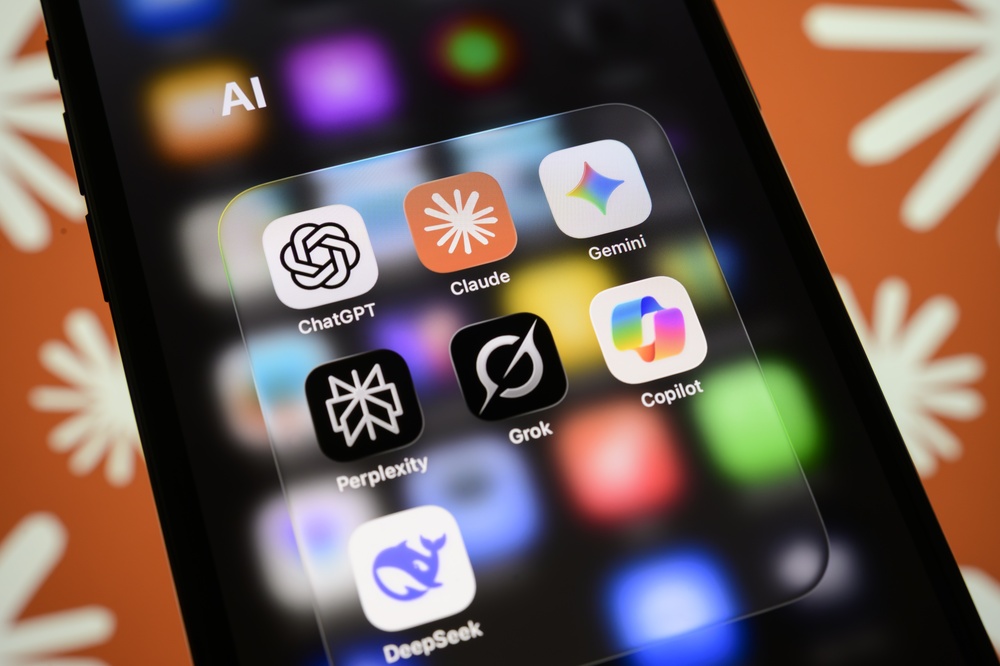
Artificial intelligence amplifies the phenomenon: it entrusts decisions algorithms that belong to consciousness, reduces people to profiles, data, users. The danger is to get used to what should remain firmly in our hands.
Keeping human dignity means then remembering that no machine can replace consciousness, that no calculation can quantify the value of a life, that no convenience can justify the violation of a right.
Against the logic that divides, we can build what Paul VI called “the civilization of love”, able to unite and recompose. The real change lies in the courage to call “person” what lives in relation. It is a commitment to everyone, made of listening, looks, small daily gestures. Recognizing the bond that unites us is the first step towards a more just world, more human and more worthy of being inhabited together.
L’articolo The challenge of dignity: individuals or people in the age of Artificial Intelligence proviene da New York.