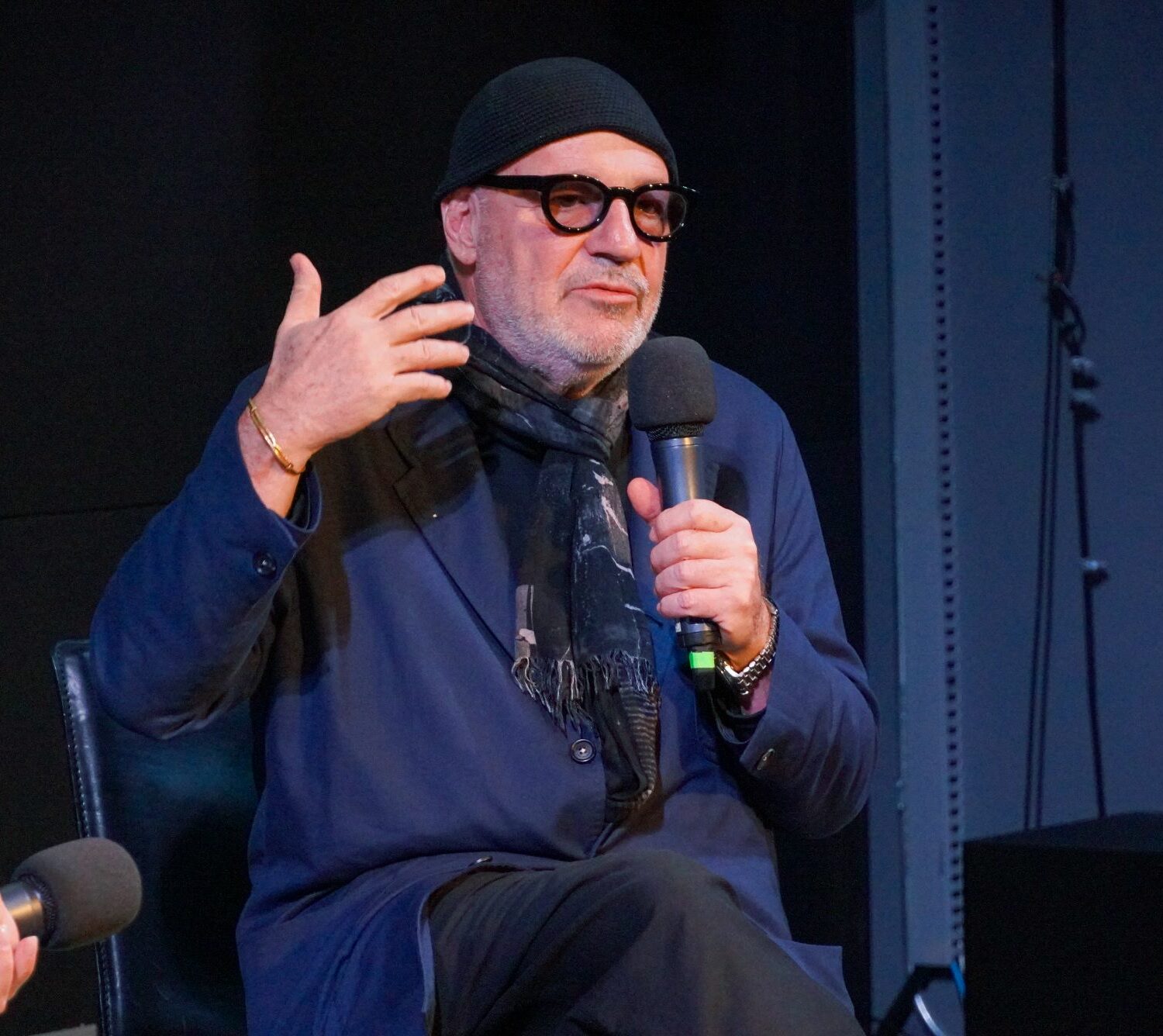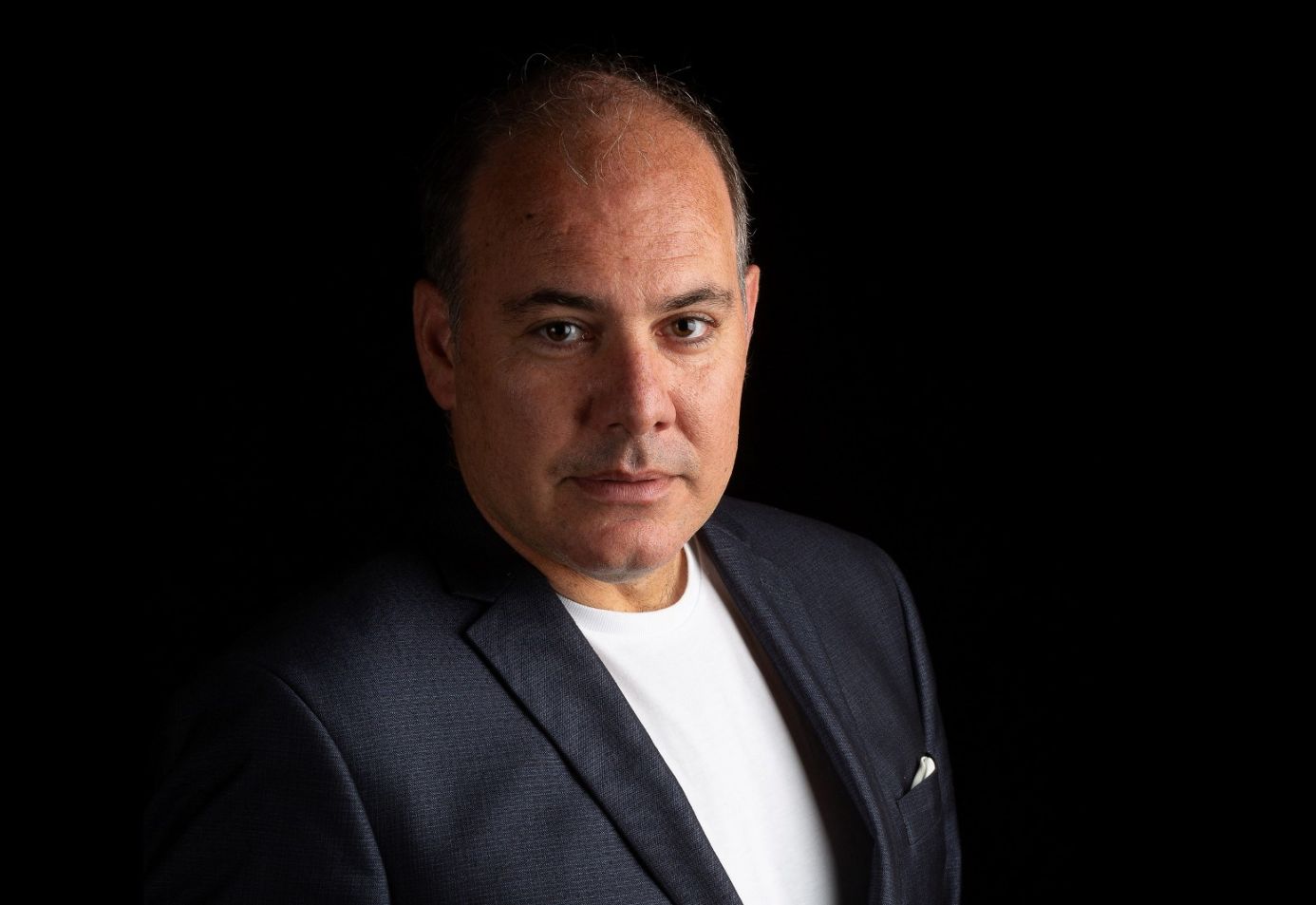
Born in Brindisi and artistically grown between Naples and Milan, Stefano Miceli is today one of the most authoritative and cosmopolitan figures of the international music scene. Conductor, pianist and teacher, has lived in New York for over a decade, where he alternates artistic activity with academic and philanthropic. Speaking at the New York microphones in the podcast Portraits of Claudio Brachino, Miceli retraced the stages of a career marked by a continuous dialogue between Italy and the United States, between tradition and innovation, between art and civil commitment.
“I am very Italian” says Miceli. «I was born in Brindisi, I attended the Conservatory of Naples and then I lived and worked, as a musician and as a cultural agent, between Bergamo and Milan. Eleven years ago I moved to New York for professional reasons, I teach at university here in New York, but since the 1990s I had an intense relationship with the United States. It was a choice in line with my way of living music: international by nature, but with a deeply Italian soul”.
A double membership that has never become a detachment: «I do not miss Italy, neither on the human level nor on the professional one, because my life is still intertwined with the Italian one. Perhaps if I had lived a net bill, I would have questioned myself more about staying or not.”.
Miceli is called “plant by birth and director for a natural evolution”. He began playing the piano at five years and at sixteen debuted in New Orleans, in an America that already seemed destined to cross his way. “Only later, after about ten years of career at the piano, I became conductor. The piano gave me a personal and introspective perspective, the direction, instead, opened me to the collective dimension.
On stage, the pianist is only: even in front of five thousand people, he remains in dialogue with himself. It is a recollection, almost a celebration of one’s interiority. As director, however, the task is opposite: represent all this without having a tool in the hands, coordinating dozens of minds and sensitivity. It is an act of sharing and responsibility”.
A balance that Miceli explores also outside the podium, when he holds conferences for companies on the role of the conductor as a model of leadership: “Motivate, inspire, enhance the talents of a group: they are qualities that belong both to music and to life”.
Thursday 6 November Miceli will be the protagonist of a special event: He will lead Mozart’s Requiem to St. Patrick’s Cathedral on Fifth Avenue. “It is a symbolic place for New York and the Italian Catholic community. The Requiem was not performed there since 1994. I’m excited to know that for months it’s all exhausted: it’s a signal of how much music can still unite. I like to think that when the audience doesn’t go to the theater, it’s the theater that goes to the audience. Directing in the cathedral will be a way to bring music to the heart of the city”.
On stage there will be a hundred artists between orchestra and choir, in a co-production between the Miceli Arts Foundation and St. Patrick’s Cathedral. “I also wanted to include Italian artists: the initial production provided only American musicians, but for me it was important to give space to our tradition. Among the soloists there will be Valeria Girardello, an extraordinary mezzo-soprano that sang at La Scala and the Phoenix. With her, some professors of the La Scala Philharmonic and musicians who have collaborated with me for years. It is a gesture of cultural friendship, but also a way to reaffirm the quality and identity of the Italian school in the world”.
The Requiem, for Miceli, is more than a musical masterpiece: is a reflection on the meaning of life. “Mozart wrote it while he was dying. It is a funeral mass that speaks of hope: It doesn’t close, but it opens. It represents the passage between life and spiritual ascent, a bridge between land and divine. It is the perfect music for the message we want to convey.”.
Beside the artistic career, Miceli carries on a constant commitment in the field of education and philanthropy. The Miceli Arts Foundation was born by the will of a group of non-Italian supporters – Iranians, Ukrainians, Americans – united by a strong philanthropic sensibility. “When they proposed to dedicate it to my activity, I would like to put in the statute a precise commitment: promote not only performative art, but also musical education. The foundation offers scholarships, collaborations with Italian Conservatives and an academy-laboratory, the New York Academy Orchestra, where graduates can grow in an international context. I tend a lot to include Italian students, because studying here is very expensive. It is a way to return what I received: When I studied at Catholic University in Washington, after the Conservatory of Naples, I learned more from comparison with students of different cultures than academic methods. Today I want to offer the same opportunity to the new generations”.
The link with Italy remains alive through its cultural projects. «For five years I have produced in New York the festival Music and Conversations with Stefano Miceli, a format that I will now bring in Italy. It is not just a concert, but a dialogue with the public. Before each song we talk about what the artist hears and how the listener lives that music. At Christmas we will make two events: one in Brindisi and one in Bergamo. It is a way to bring back in Italy a project born in New York and continue to build bridges between the two worlds”.
Being a “cultural bridge”, for Stefano Miceli, means more than traveling between two countries: it is a connection mission. «I receive many messages from young people who want to come to America. Being a bridge is not only helping someone, but creating shared paths, building projects that join the two banks. I believe culture is the true diplomacy of the world: a universal language that opens up conversations even where politics or economy do not arrive. Young people are the protagonists of this dialogue: they can open and close the bridges of the future”.
With the force, discreet but disruptive, of music and the depth of a thought that unites passion and responsibility, Stefano Miceli truly embodies that idea of culture as an instrument of dialogue and peace. “Of course, sometimes it is difficult” he admits. “But I deeply believe that giving cultural voice to young people means strengthening a link that goes beyond borders. A link that unites Italy to the world”.
L’articolo Stefano Miceli: discovering the master who will direct Mozart’s Requiem to St. Patrick’s Cathedral proviene da IlNewyorkese.