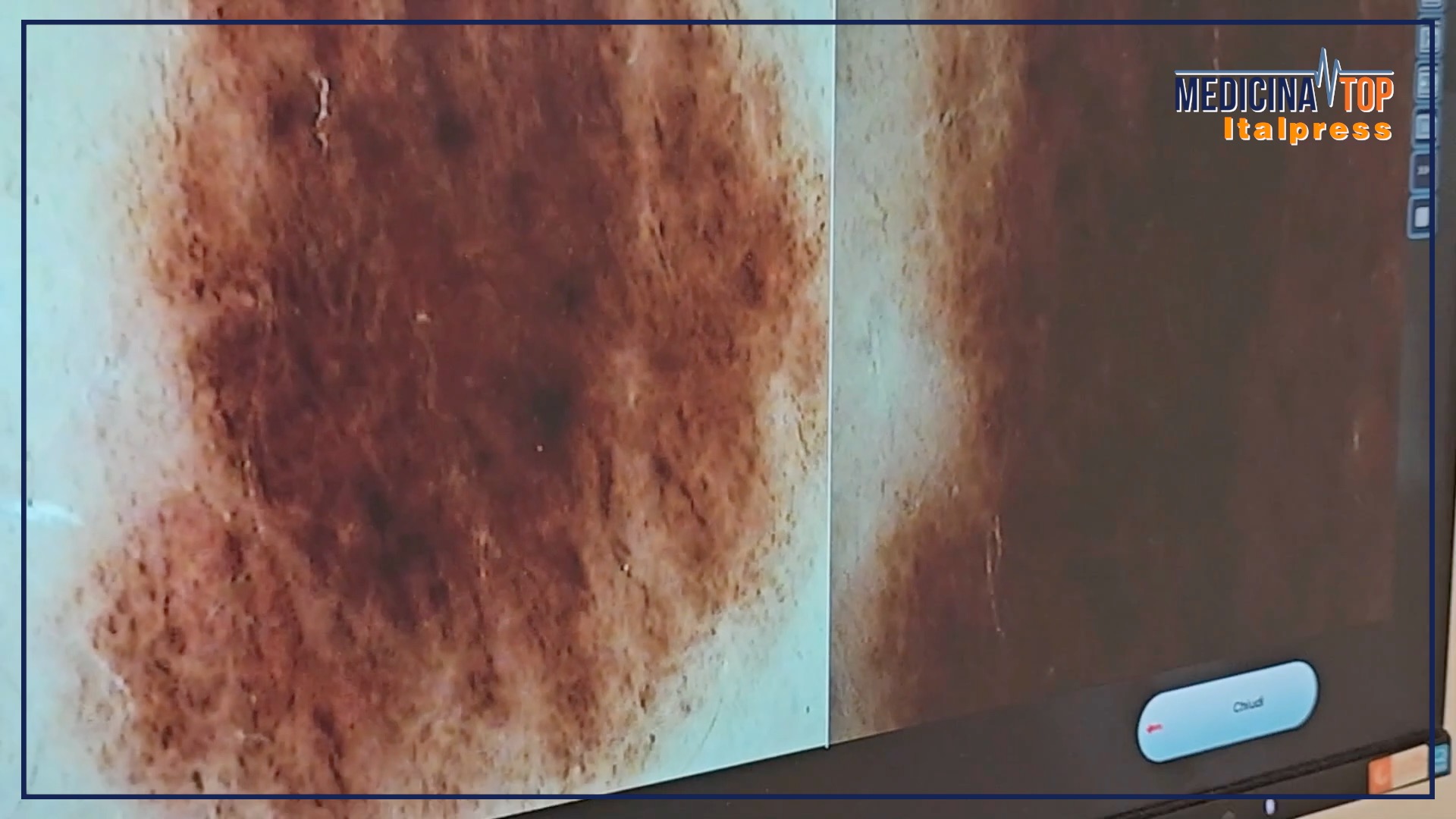
MILAN (ITALPRESS) – Non-Melanoma skin cancers are the most frequent group of tumors in the population and mainly include basal cell carcinoma and spinocellular carcinoma: these are less known and tendentially less aggressive tumors of melanoma, which however constitute a major public health problem precisely for their very high diffusion. In particular in Italy they are constantly increasing, with hundreds of thousands of new cases recorded each year: the increase is linked to several factors, including the ageing of the population and the habits of sun exposure acquired throughout life; these tumors are in fact closely related to exposure to ultraviolet, natural or artificial rays, and develop more often in areas most exposed to the sun such as face, scalp, neck and hands.
“Basom cell and spinocellular carcinomas are the largest part of skin cancers: they are tumors that appear mainly due to solar exposure and are pathologies that are constantly increasing in the population. There is a fact that makes the idea very well: basalioma is the most frequent among carcinomas, a person out of three in life can have experiences of this type of tumor”, said Marco Ardigò, section oncological Dermatology of the Humanitas hospital in Rozzano, interviewed by Marco Klinger for Medicina Top, TV format of the Italpress press agency.
The exposure to the sun, explains Ardigò, “can determine the appearance of these tumors even in young people, while they once most affected people over 50-60 years: they appear as in, so you always have to bring them to the attention of a specialist; the role of dermatology is to discriminate what needs to be removed from what can be simply followed or otherwise has no type of clinical impact. There is a rule that describes a line that starts from the ear and comes to the mouth: all that is above is more commonly a spinocellular, that under a basalioma”.
The main distinctive trait, he adds, “is the aggressiveness: while basalioma has only a local malignancy, then eats the tissues and replaces them, the cell spinocellular can give long-term metastases, so it is much more important to treat it early. It is essential to check that something does not appear rapidly: this is more useful than color selection or edges. For therapies the first choice is surgery, which can have consequences even on the aesthetic plane: the small ones are easier to treat, but sometimes they appear in unhappy anatomical locations.”.
It is essential to maintain an accurate management of the exposure to the sun: according to Ardigò, “it must always be weighted, controlling the hours and using the necessary protections: to protect itself adequately you should use 40 grams per day of cream, I think that no one is able to do so, so you have to resort to other aids such as hats, lycra shirts, sunglasses; one of the base offices is the inner area of the eye”.
The section of Oncological Dermatology of Humanitas concludes its reflection by drawing the perspectives of the discipline: “I am a strong supporter of multidisciplinary approaches: I think the idea that the dermatologist can make available the ability to define the margins trying to give an indication on the point until surgery can be conservative but radical, along with the great ability of the plastic surgeon to do optimized reconstructions and surgically act in difficult anatomical areas, both the sublimation of our work. Each condition has its optimal therapy: there are forms of basaloma that can benefit from local immunotherapy. It is right to talk about it but not to abuse it, because the risk would be to dilate the therapeutic times: it is necessary to have shortness for example with lasers, on whose use for basalomas are not particularly favorable”.
– Photos from Top Medicine –
(ITALPRESS).