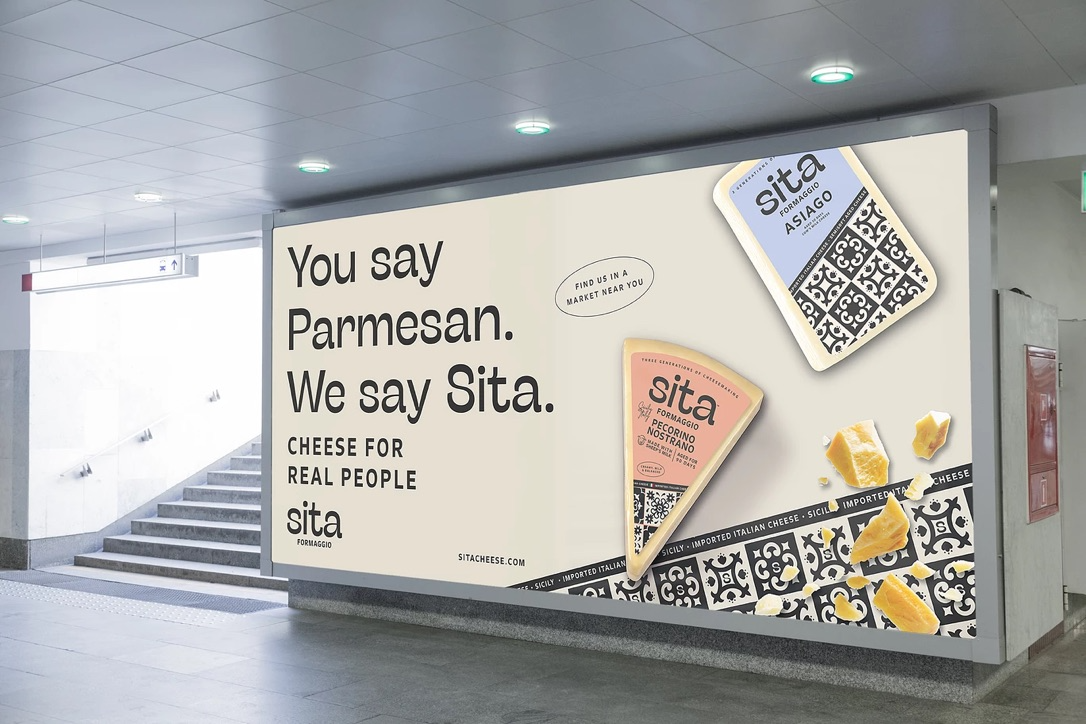
On the occasion of the International Pizza Expo in Las Vegas, Alessandro Sita, under the guidance of Sita Food Inc., traces a shiny and passionate picture of the American market: between increasing demand for authenticity, evolution of taste and new productive borders, the future of pizza speaks increasingly Italian, even outside Italy.
The International Pizza Expo is at the door: with what spirit do you present at this event?
We’re very excited. We arrive at this fair with a project we have been working for months: the launch of our milk mozzarella fior. We speak of a central product for pizza, a fresh mozzarella made Italian, with slow fermentation and without preservatives. The peculiarity is that it is produced in the United States by Italian manufacturers, to better manage shelf life. We are very pleased with the result and the Pizza Expo is the ideal test bench: it is our first participation and the emotion is high.
What value does this launch have for your company and for your family history?
It’s a return to the origins. Our family started from fresh products: ricotta, mozzarella, pasta filate. Then, with international expansion, we also focused on long-standing cheeses and meats, more manageable from the logistic point of view. The fresh is more complex, but also more identity. With mozzarella we enter the heart of the market: it is an important challenge, because in the United States there are already great operators. We have developed a distinctive product, inspired by Agerola tradition, and we believe it can become central to our future. Moreover, it fits perfectly in the evolution of the American pizzeria: today it is not only pizza, but a place of experience, with appetizers, cutters and aperitifs. And that’s where our products find space and story.
How much is the demand for fresh and authentic dairy products growing in the United States?
It grows significantly. In the past they used cheaper products, but today there is greater attention to quality. Also thanks to the arrival of many Italian professionals and not only, who introduced different standards. At the same time, a new dynamic is emerging: local companies producing “Italian”. This opens up an important reflection: not everything must be produced in Italy, the important thing is that it is done according to the Italian criteria, without compromise. Mozzarella, for example, can be produced well in the United States, if you respect method and quality.
We continue to distinguish ourselves as the reference partner of the fresh: 80% of our products are made in Italy, selected par excellence.
Italian sounding and local production “Italian”, is there a risk that sometimes intertwine?
Yeah, enough. Italy is recognized globally by quality and authenticity, so it is natural to be imitated. But today the consumer is more aware: he knows how to distinguish. I always do an example: can you make a good Neapolitan pizza in America? Yes, if you use Italian ingredients and Italian skills. The point is not only where it is produced, but how it is produced. The challenge is to maintain identity and quality, educating the market.
How are they evolving in the United States products such as burrata and stracciatella, less famous than the cousin “mozzarella” and very linked to the territory, to the Italian tradition?
They are growing strongly, but still in an initial phase compared to mozzarella. The burrata has exploded in the last 5-10 years. We chose to work with a traditional Apulian production, because it offers a unique profile. They are very appreciated in catering, where there is greater attention to authenticity. In the large distribution, instead, different logic prevails. But the potential is huge.
How strategic is today the world of pizza for your business?
More and more. Historically we work with gastronomy and fresh counters, but modern pizzeria has become a cultural and gastronomic hub. Not only pizza: cutters, fries, pasta dishes. For us it is a fundamental channel, also because it allows a direct dialogue with professionals. Participating in the Pizza Expo serves to build relationships, not only with distributors but also with end customers.
What are American pizza makers looking for today?
Quality accessible. In the United States, for years, high quality was confined to luxury catering. Today there is a democratization: even a pizzeria can offer excellent ingredients, in balanced portions and at sustainable prices. This is very Italian: eating well, without excesses.
What are the most interesting trends in topping?
In addition to the great classics such as ham, we see growing a lot of products like cheeks and spicy meats. The cheek, for example, is increasingly used also because many pizzerias offer classic pasta dishes such as amatriciana, caccio and pepper and carbonara. Interesting also the evolution of the “pepperoni”: more and more operators look for alternatives of superior quality, such as the Calabrian pavement or versions of more handcrafted meats with spices and natural seasonings. Products like ’nduja are also gaining space.
How can you convey the cultural value of your products to an international audience?
With simplicity and consistency. We reduce assortment and focus on few products, but excellent. We introduce new products gradually, to give time to the market to understand them.
The secret of Italian food is in the ingredients list: short, clean, linked to the territory. That’s the difference. And we work with family companies that share this vision. It’s a teamwork.
What opportunities do you expect from Pizza Expo?
Especially growth on the West Coast. Today we are stronger between New York and Florida, but we want to grow in California and big cities like Los Angeles and San Francisco. We are looking for solid partners, distributors that can represent the entire Sita range. California alone can be a huge market: building a network there is strategic.
What impact has the recognition of Italian cuisine Unesco heritage on your work?
He lit the spotlight, no doubt. For us it is a great pride: we do not sell only food, but a lifestyle, made of quality, balance and well-being. In the United States, where the offer is vast, this recognition helps to direct the consumer. It is also the result of a great system work, between institutions and enterprises. But there is also another fundamental aspect: we are somehow lucky because Italy has had so many emigrants who have become extraordinary ambassadors in the world. In the United States, for example, there are about 20 million people of Italian origin between first and second generation. This is a huge value: not only they represent a basis of consumers, but they contribute to spreading our lifestyle: in food, in the way of being together, even in the way of dressing. Italy is a precious heritage. This international recognition is important, but it strengthens something that exists for some time: a strong and widespread cultural presence, which continues to generate value.
Looking at the future, what role does Sita play in the evolution of food and in particular in the pizza industry?
Pizza is a fundamental channel for us, for its ability to tell Italy directly through the product and create connection with the consumer. But our goal is wider: we want to be through our brand Sita the reference partner of the Italian gastronomy counter (Cheeses, meats and appetizers) in the USA, as we are already in Europe. We are working on new projects, even outside the traditional channels: we think of boxes and cutting boards of Cheeses and salami ordered online, to initiatives that allow us to dialogue directly with the final consumer. We believe that the future also passes from here, between digital, social and new models of purchase. We are a family company, at the third generation, and we look far away: all we do today is to build credibility over time. Quality is the only way, even if it requires patience. The consumption is changing, our children will understand differently from us, and we must be present in the new channels to continue to tell the Italian product. We are still in a construction phase, the pizzeria is one of the pillars, but we will continue to evolve to remain relevant.
L’articolo Sita Food brings Italian authenticity to Pizza Expo proviene da IlNewyorkese.